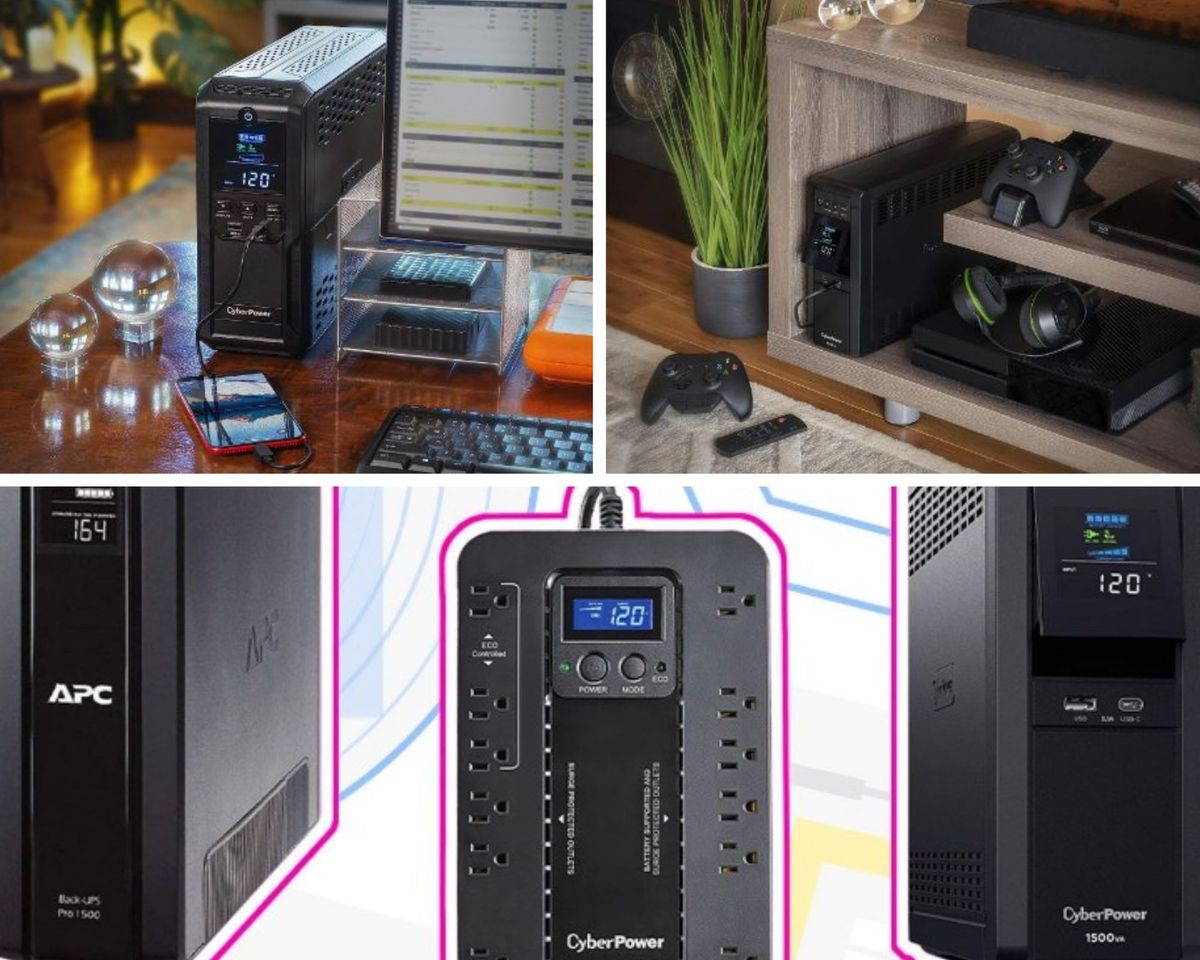
The best UPS for a gaming PC in 2026 is the CyberPower CP1500PFCLCD Sinewave UPS — 1500VA/1000W pure sine wave output, 12 outlets, color LCD panel, 3-year warranty including battery, and a $500,000 Connected Equipment Guarantee. Runner-up with simulated sine wave: CyberPower CP1500AVRLCD3 (same outlet count, same warranty, slightly lower wattage). Best budget pick (surge protection only, not battery backup): APC P11U2 Surge Protector (2880 Joules, 11 outlets, lifetime warranty). Solid mid-range battery backup: APC BX1500M (1500VA/900W, network data line protection, replaceable battery). Best for pure sine wave + smart monitoring: APC SMC1500C (SmartConnect remote monitoring, Energy Star certified). Best compact/space-saving: CyberPower SL700U (700VA/370W, slim profile, ideal for smaller setups).
There's a specific kind of dread that arrives about four seconds after the lights flicker and your monitor goes black mid-raid — not the dread of losing progress, though that's real too, but the slower, colder dread of wondering whether your GPU just took a voltage spike straight to whatever component fails first. Screens go dark all the time for boring reasons. Power failures aren't boring. They're the one interruption your gaming PC genuinely can't just shrug off and reboot from cleanly.
I found this out the unglamorous way — a building-wide brownout, someone's space heater and a hairdryer and a toaster all fighting for the same circuit at once, and my PC went from "mid-render" to "off" with the kind of silence that makes your stomach drop before your brain has even processed what happened. Nothing exploded. Nothing caught fire. But the sudden, ungraceful power-off is exactly the scenario a UPS exists to prevent — and I didn't have one, which is the only reason I'm now the person who writes long, slightly obsessive articles about them.
A UPS — Uninterruptible Power Supply — isn't a glamorous purchase. No RGB. No frame rate implications. It's fundamentally a battery in a box, sitting quietly under your desk, doing absolutely nothing 99% of the time and then, in the other 1%, being the only thing standing between a graceful shutdown and a genuinely bad day for your hardware.
We looked at six. Here's what actually matters when choosing one.
What a UPS Actually Does (Beyond "Backup Battery")
A UPS serves two distinct functions that often get conflated into one vague idea of "power protection," and understanding the difference matters for choosing the right unit.
Battery backup is the more obvious function — when mains power drops or fails, the UPS switches to internal battery power, giving you a window (typically 5-15 minutes under a gaming PC's load) to save your work, shut down cleanly, or simply ride out a brief outage without losing anything. This is the function most people think of first, and it's the one that directly prevents the "screen goes black mid-boss-fight" scenario.
Surge and spike protection is the quieter, arguably more important function long-term. Power surges — sudden, brief spikes in voltage, often caused by lightning strikes on the grid, large appliances cycling on nearby, or utility switching events — can damage sensitive electronics instantly, with no warning and no battery backup required to prevent it; surge protection circuitry absorbs or diverts that excess voltage before it reaches your components. A gaming PC's power supply, motherboard, and GPU are all vulnerable to this kind of damage, and it happens far more often than most people realize — quietly, invisibly, until the day a component simply doesn't turn on anymore.
Automatic Voltage Regulation (AVR), present on most products in this roundup, is a related but distinct feature: it corrects minor voltage fluctuations (brownouts, slightly under- or over-voltage mains supply) by adjusting the output without switching to battery power at all. This matters because unnecessary battery discharge cycles shorten a UPS battery's lifespan — AVR handles the small, frequent fluctuations so the battery is reserved for genuine outages.
Pure Sine Wave vs. Simulated Sine Wave: Why It Actually Matters
This is the single most consequential technical distinction across the products on this list, and it's worth understanding before anything else.
Mains electricity delivers power as a smooth, continuous sine wave.
Pure sine wave UPS units (the CyberPower CP1500PFCLCD and APC SMC1500C on this list) reproduce that same smooth waveform when running on battery power — meaning your PC's power supply, especially modern units with Active PFC (Power Factor Correction) circuitry, receives power that's electrically indistinguishable from the mains it normally expects.
Simulated sine wave (sometimes called "modified sine wave") UPS units — the CyberPower CP1500AVRLCD3 and CyberPower SL700U here — approximate that waveform using a stepped or squared-off signal rather than a true smooth curve. For older or simpler power supplies, this is generally fine. For modern gaming PC power supplies with Active PFC, a simulated sine wave can cause the power supply's internal circuitry to work harder, produce audible humming, or in some cases refuse to run properly on battery power at all.
The practical guidance: if your gaming PC has a modern, Active PFC power supply (which describes the vast majority of PSUs sold in the last several years), a pure sine wave UPS is the safer, more compatible choice — worth the price premium over simulated sine wave alternatives specifically for that compatibility reason, not just a marketing distinction.
Sizing Your UPS: VA, Watts, and Runtime
UPS capacity is rated in both VA (Volt-Amps) and Watts — these aren't the same number, and the gap between them (the "power factor") matters for sizing correctly. As a practical rule, aim for a UPS rated at roughly 1.5 times your gaming PC's actual power draw under load, measured at the wall (not the PSU's maximum rated wattage, which is a ceiling, not a typical draw figure).
For a budget-to-mid-range gaming PC drawing 300-400W under load, a UPS in the 700-1000VA range provides reasonable headroom. For higher-end builds with power-hungry GPUs pulling 450W+ on their own, the 1500VA units that dominate this list are the more appropriate starting point — and give you genuine runtime (5-15 minutes) to save and shut down, rather than the uncomfortably short window an undersized unit would provide.
At a Glance — 2026 Comparison Table
| # | Product | Capacity | Sine Wave | Outlets | Best For | Rating | Price |
|---|---|---|---|---|---|---|---|
| 1 | CyberPower CP1500PFCLCD Best Overall |
1500VA/1000W | Pure sine wave | 12 | High-end gaming PCs, Active PFC | ★★★★½ 4.5/5 |
View on Amazon → |
| 2 | CyberPower CP1500AVRLCD3 Runner-Up |
1500VA/900W | Simulated sine wave | 12 | Mid-to-high end builds | ★★★★ 4.2/5 |
View on Amazon → |
| 3 | APC P11U2 Surge Protector Best Budget (Surge Only) |
N/A — no battery | N/A | 11 | Surge protection only | ★★★★ 4.0/5 |
View on Amazon → |
| 4 | APC BX1500M Mid-Range Backup |
1500VA/900W | Simulated sine wave | 10 | Data line protection needs | ★★★★ 3.9/5 |
View on Amazon → |
| 5 | APC SMC1500C Smart Monitoring |
1500VA/900W | Pure sine wave | 8 | Active PFC + remote monitoring | ★★★★ 3.8/5 |
View on Amazon → |
| 6 | CyberPower SL700U Compact / Budget |
700VA/370W | Simulated sine wave | 8 | Smaller setups, secondary systems | ★★★★ 3.7/5 |
View on Amazon → |
How to Choose the Right UPS for Your Gaming PC
Calculate your actual power draw before buying. Use a wattage meter or check your PSU's typical draw under gaming load (not its maximum rated wattage) and aim for a UPS rated at roughly 1.5x that figure for comfortable headroom.
Check whether your power supply uses Active PFC. Most modern gaming PC PSUs do. If yours does, prioritize a pure sine wave UPS (CP1500PFCLCD or SMC1500C on this list) over simulated sine wave alternatives for genuine compatibility rather than a workaround that technically functions but runs less cleanly.
Don't confuse a surge protector with a UPS. The APC P11U2 on this list is an excellent surge protector, but it provides zero runtime during an actual outage. If graceful shutdown time matters to you — and for a gaming PC with unsaved progress, it should — you need genuine battery backup, not surge protection alone.
Plug the UPS directly into the wall, never into a power strip or another surge protector. Daisy-chaining surge protection devices can cause them to interact unpredictably and may void warranties on either device.
Only connect critical equipment to the battery-backed outlets. Your PC, monitor, and networking equipment matter during an outage. A desk lamp or a phone charger generally doesn't need to draw from your limited battery runtime — save that capacity for what actually needs to survive the outage.
Final Thoughts
A UPS is one of the least exciting purchases in the entire gaming hardware ecosystem, and also one of the purchases most likely to justify itself completely, unexpectedly, on a random Tuesday when the power blinks, and everything downstream of that blink either survives cleanly or doesn't.
The CyberPower CP1500PFCLCD is the safest default for most serious gaming setups — pure sine wave compatibility, generous outlet count, and a warranty package that actually backs up its promises. The CP1500AVRLCD3 is the sensible, slightly cheaper sibling if pure sine wave compatibility isn't a strict requirement for your PSU. The APC P11U2 is excellent budget surge protection, provided you understand it's not battery backup. The BX1500M and SMC1500C each bring specific advantages — data line protection and smart remote monitoring, respectively — worth matching to your specific priorities. And the SL700U is the right, honest choice for smaller setups that genuinely don't need 1500VA of capacity.
None of these units will make your games run better. What they do is make sure the moment the power actually fails, your hardware survives it, and your progress has a fighting chance — which is a genuinely unglamorous, genuinely worthwhile thing to have quietly sitting under your desk.
Can we help? We've done the research for you and found the Best UPS for a Gaming PC on Amazon.
Every day, we read hundreds of reviews and try the highest-rated products we have on our list.
CyberPower CP1500PFCLCD Sinewave UPS System — Best Overall
Rating: 4.5/5
Product information
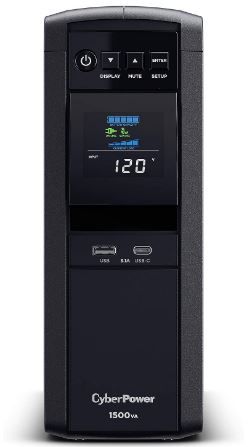
The CP1500PFCLCD earns "best overall" through a combination that's genuinely difficult to beat at this price point: true pure sine wave output specifically engineered for compatibility with Active PFC power supplies — the standard in virtually every modern gaming PC — combined with the highest outlet count and most comprehensive warranty package on this list.
The pure sine wave output is the headline technical advantage. Active PFC power supplies, standard in current-generation gaming rigs, are specifically designed to expect a clean sine wave input; running one on a simulated sine wave UPS can cause inefficient operation, audible coil whine, or in some cases the PSU refusing to draw battery power correctly. The CP1500PFCLCD sidesteps this entirely, delivering power that's electrically indistinguishable from a clean wall outlet even during a full battery-powered outage.
Twelve total outlets — six with battery backup and surge protection, six surge-protection-only — is the most generous outlet allocation on this list, genuinely useful for a full gaming setup: PC, monitor, speakers, a secondary display, networking equipment, and peripherals, without needing a second power strip that would undermine the UPS's surge protection anyway.
The color LCD panel provides real-time, at-a-glance battery and power condition information — a genuinely useful upgrade over the simple LED indicator lights that budget UPS units rely on, and the 22-degree tilt means it's actually readable from a typical desk height without crouching down to check it. Automatic Voltage Regulation handles minor fluctuations without draining the battery, extending its usable lifespan across years of daily brownout-level corrections.
The 3-year warranty explicitly covering the battery — not just the unit — combined with the $500,000 Connected Equipment Guarantee, gives genuinely substantial financial backing in the rare case that a covered power event damages connected equipment despite the UPS's protection.
The one specific complaint worth flagging: at least one reviewer described the included management software/interface as cumbersome, and the lack of configurable load-shedding outlets (the ability to designate which outlets shut off first during extended outages to conserve battery) is a feature found on some more expensive business-grade units that this one omits.
Pros
- True pure sine wave output — ideal compatibility with Active PFC gaming PC power supplies
- 12 total outlets — the most on this list, covering a full desk setup
- Color LCD with 22° tilt for genuine at-a-glance monitoring
- 3-year warranty including the battery, plus $500,000 Connected Equipment Guarantee
- GreenPower UPS technology improves efficiency and reduces energy consumption
- USB Type-A and Type-C charging ports included
Cons
- Management software described by some users as cumbersome or overly complex
- No configurable load-shedding outlets, unlike some pricier business-grade alternatives
- Premium pricing relative to simulated sine wave alternatives on this list
- Larger physical footprint given the higher outlet count and capacity
Our Verdict: The CP1500PFCLCD earns its top spot through genuine electrical compatibility with modern gaming hardware, the most comprehensive outlet and warranty package on this list, and monitoring features that actually make a difference in daily use. For anyone running a current-generation Active PFC power supply, this is the safest and most complete choice.
CyberPower CP1500AVRLCD3 Intelligent LCD UPS System — Best Simulated Sine Wave Runner-Up
Rating: 4.2/5
Product information
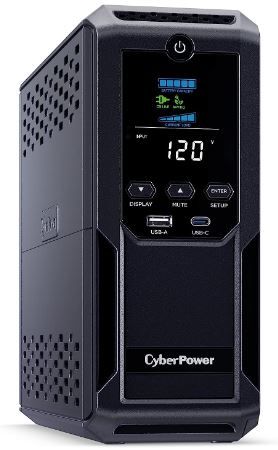
The CP1500AVRLCD3 is, in most practical respects, the CP1500PFCLCD's sibling — identical outlet count, identical warranty terms, identical color LCD monitoring, and nearly identical AVR functionality — with the key difference being simulated rather than pure sine wave output, and a slightly lower wattage rating (900W vs. 1000W).
For gaming PCs without Active PFC power supplies, or older builds, this distinction is largely academic — simulated sine wave power is entirely adequate, and the savings versus the pure sine wave model can be meaningful. For current-generation Active PFC power supplies, the simulated waveform is the honest trade-off worth understanding before buying: it will generally still work, but may run less efficiently or produce more audible noise from the PSU during battery-powered operation than a true sine wave would.
The intelligent LCD interface and AVR functionality carry over identically from the flagship model, meaning you're not sacrificing the monitoring or voltage-correction experience — just the specific waveform fidelity and 100W of capacity. The 3-year warranty terms, including the battery, and the same $500,000 Connected Equipment Guarantee, are genuinely reassuring given this unit's lower price point relative to its sibling.
The mini-tower form factor is flagged by some users as bulky for cramped desk setups — a fair criticism given that both CyberPower units on this list share broadly similar physical footprints despite the wattage and sine wave differences.
Pros
- Same 12-outlet configuration and warranty terms as the flagship CP1500PFCLCD
- Intelligent color LCD panel with real-time battery/power condition monitoring
- AVR corrects minor fluctuations without draining the battery
- More affordable than the pure sine wave flagship model
- 3-year warranty including the battery, plus $500,000 Connected Equipment Guarantee
Cons
- Simulated sine wave output may be less ideal for Active PFC gaming PC power supplies
- Slightly lower wattage rating (900W vs. 1000W) than the flagship model
- Mini-tower form factor described as bulky for cramped workspaces
- Same lack of configurable load-shedding outlets as its sibling
Our Verdict: The CP1500AVRLCD3 is the right choice if you want the monitoring features and outlet count of the flagship model at a lower price, and either don't have an Active PFC power supply or are willing to accept the modest compatibility trade-off. For most casual-to-mid-range gaming builds, this is a genuinely solid, slightly more affordable alternative.
APC P11U2 Surge Protector — Best Budget Choice (Surge Protection Only)
Rating: 4.0/5
Product information
Important clarification up front: this product is a surge protector, not a battery-backup UPS. It does not provide runtime during a power outage — if the power drops entirely, everything connected to it loses power immediately, with no window to save progress or shut down gracefully. It earns its place on this list specifically as the budget-conscious surge protection option for buyers who understand and accept that distinction, not as a substitute for genuine battery backup.
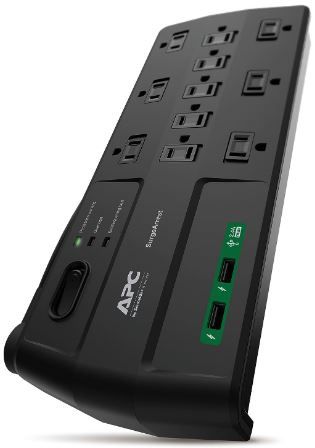
Within that category, the P11U2 performs well. A 2880 Joule surge rating is a robust figure, providing substantial protection against voltage spikes from lightning, grid switching events, or large appliances cycling nearby — genuinely useful even without battery backup, since surge damage can happen instantly and doesn't require an outage to occur. Eleven total outlets, including six transformer-spaced positions for oversized power adapters, is generous for a device in this category, and the lifetime warranty combined with a $250,000 Connected Equipment Protection Policy gives real financial backing.
The two USB charging ports, while a convenient inclusion, share a combined 2.4A output — meaning charging speed drops if multiple devices are connected simultaneously, worth knowing if you're relying on this for phone or tablet charging alongside your PC setup.
Pros
- High 2880 Joule surge protection rating — genuinely robust spike protection
- 11 outlets, including 6 transformer-spaced positions for oversized plugs
- Lifetime warranty plus $250,000 Connected Equipment Protection Policy
- LED status lights for power-on and wiring fault monitoring
- Genuinely affordable relative to full battery-backup UPS units on this list
Cons
- No battery backup whatsoever — power loss means immediate, total shutdown
- Shared 2.4A USB output slows charging with multiple devices connected
- Not a substitute for a genuine UPS if runtime/graceful shutdown matters to you
- Easy to mistakenly compare directly against battery-backup units without realizing the functional difference
Our Verdict: The P11U2 is an excellent surge protector at a reasonable price, but buyers need to understand clearly that it provides zero runtime during an actual power outage. If surge protection alone is your goal — protecting hardware from spikes rather than needing time to save and shut down during a blackout — this is a strong, budget-friendly choice. If you need genuine outage backup, look to the battery-backup units elsewhere on this list instead.
APC BX1500M UPS Battery Backup and Surge Protector — Best Mid-Range Battery Backup
Rating: 3.9/5
Product information
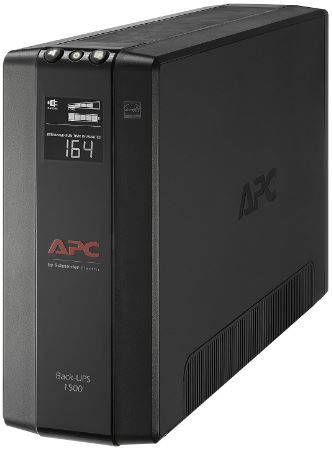
The BX1500M positions itself as a straightforward, genuinely reliable mid-range battery-backup option, with one differentiating feature worth calling out specifically: network data line protection, which shields connected equipment from surges traveling through Ethernet or coaxial data lines rather than just the power line — a genuinely useful protection layer for networking equipment (routers, modems) that pure power-line surge protection doesn't address.
At 1500VA/900W, the BX1500M provides solid capacity for most gaming PC setups, and Automatic Voltage Regulation handles minor fluctuations without unnecessary battery drain, consistent with the other AVR-equipped units on this list. Active PFC compatibility is noted by the manufacturer, though it's worth remembering this is a simulated sine wave unit — the same compatibility caveat that applies to the CP1500AVRLCD3 above applies here.
The user-replaceable battery (APCRBC124, sold separately) is a genuine long-term value feature — rather than replacing the entire UPS unit when the battery eventually degrades (which happens to all UPS batteries over several years regardless of brand), you can simply swap the battery component, extending the practical lifespan of your investment significantly. Energy Star certification confirms genuine energy efficiency credentials.
The honest limitations: 10 total outlets is fewer than the 12-outlet CyberPower units on this list, and the complete absence of USB charging ports is a notable omission relative to competitors that include them as standard.
Pros
- 1GB network data line protection — meaningful additional protection layer for networking gear
- User-replaceable battery extends the UPS's practical lifespan significantly
- Energy Star certified for genuine energy efficiency
- Automatic Voltage Regulation handles minor fluctuations without battery drain
- Solid 1500VA/900W capacity for most gaming PC setups
Cons
- Only 10 total outlets — fewer than the 12-outlet CyberPower alternatives
- No USB charging ports included, unlike most competitors on this list
- Simulated sine wave output — same Active PFC compatibility caveat as other non-pure-sine-wave units
- Replacement battery must be purchased separately when the time comes
Our Verdict: The BX1500M is a solid, dependable mid-range choice, particularly strong for anyone with networking equipment that benefits from the data line protection feature. The user-replaceable battery is a genuine long-term value advantage, though the lower outlet count and absence of USB ports are worth weighing against the CyberPower alternatives.
APC SMC1500C Sinewave UPS Battery Backup — Best for Smart Monitoring
Rating: 3.8/5
Product information
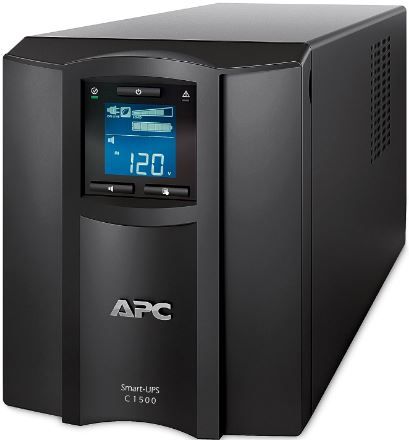
The SMC1500C brings genuine pure sine wave output — matching the CP1500PFCLCD's Active PFC compatibility advantage — combined with a distinctive smart monitoring feature that none of the other products on this list offer: APC SmartConnect, a cloud-enabled remote monitoring portal that provides automatic notifications, firmware updates, and advanced support access without needing to physically check the unit.
For units purchased or registered after August 1, 2023, APC offers a 6-month free SmartConnect trial, and registering through the SmartConnect app also unlocks an additional free year of battery warranty — a genuinely worthwhile incentive to actually register the product rather than letting it sit unregistered in a drawer somewhere, which is what happens to most warranty registration cards.
Pure sine wave output ensures the same clean compatibility with Active PFC power supplies as the CyberPower flagship, and Automatic Voltage Regulation handles the routine minor fluctuations without battery drain. Energy Star certification confirms genuine efficiency credentials, consistent with APC's positioning across this list.
The honest trade-offs: eight total outlets is the lowest count among the full battery-backup units on this list (excluding the surge-protector-only APC P11U2), and several users specifically note the price feels high relative to cheaper alternatives, particularly given the reduced outlet count compared to the CyberPower options.
Pros
- Pure sine wave output — genuine Active PFC power supply compatibility
- SmartConnect remote monitoring provides notifications and firmware updates via secure portal
- Free 6-month SmartConnect trial for units registered after August 1, 2023
- Additional free year of battery warranty for registered units
- Energy Star certified for genuine efficiency
Cons
- Only 8 outlets — the fewest among full battery-backup units on this list
- Priced higher than some alternatives with comparable or greater outlet counts
- SmartConnect's full value requires registration and ongoing engagement with the app/portal
- 2-year base warranty is shorter than the 3-year terms on both CyberPower units
Our Verdict: The SMC1500C is the right choice specifically for buyers who want pure sine wave compatibility plus genuine remote monitoring capability, and who don't need a high outlet count. The SmartConnect ecosystem is a real differentiator if you want visibility into your UPS's status without physically checking it, but the reduced outlet count and higher price are worth weighing against the CyberPower CP1500PFCLCD's similar sine wave quality at a more generous outlet allocation.
CyberPower SL700U Standby UPS System — Best Compact/Budget Pick
Rating: 3.7/5
Product information
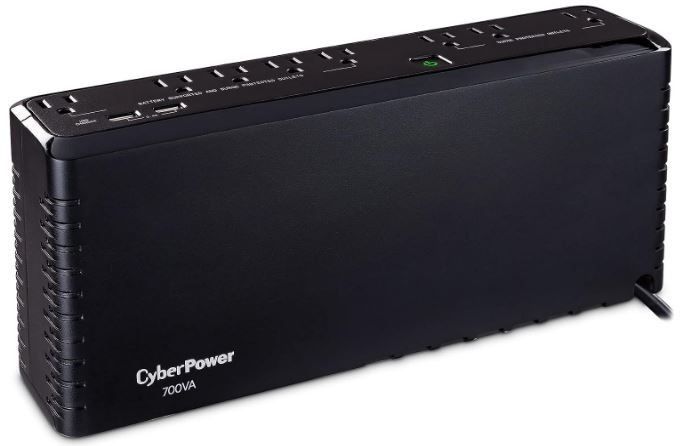
The SL700U is the smallest-capacity unit on this list, and it's positioned accordingly — a genuinely compact, slim-profile UPS suited to smaller gaming setups, budget builds, or secondary systems (a home office PC, a networking closet, a modest gaming rig without a power-hungry flagship GPU) rather than a high-end gaming rig with a demanding power supply.
The Green Power-UPS High-Efficiency Design uses a compact charger and power inverter specifically engineered to reduce energy consumption — a genuinely eco-conscious design choice appropriate for the unit's smaller-scale positioning. Five of the eight outlets provide both battery backup and surge protection, with two of those five widely spaced to accommodate larger power adapter plugs — a thoughtful detail for USB power bricks and similar oversized connectors.
The 3-year warranty including the battery, and the $100,000 Connected Equipment Guarantee (proportionally smaller than the larger units' guarantees, consistent with the unit's lower capacity and price point), still provides genuine reassurance for a budget-tier product.
The honest limitation is simply capacity: 370W is meaningfully below what a modern high-end gaming PC draws under load, particularly with a power-hungry GPU. This unit is well-suited to lighter builds, secondary systems, or non-gaming equipment (routers, modems, smaller entertainment setups) rather than a primary high-performance gaming rig — buyers should size their purchase to their actual PC's power draw rather than defaulting to the smallest, cheapest option if their build genuinely demands more capacity.
Pros
- Compact, slim profile genuinely suited to smaller desks or tight spaces
- Green Power-UPS design reduces energy consumption without sacrificing core function
- 3-year warranty including the battery, plus $100,000 Connected Equipment Guarantee
- Widely-spaced outlets accommodate larger power adapter plugs
- Most affordable option on this list
Cons
- 370W capacity is insufficient for high-end gaming PCs with power-hungry GPUs
- Simulated sine wave output, same Active PFC compatibility caveat as other non-pure-sine units
- Fewer outlets and lower capacity than every other product on this list
- Best suited to secondary systems or budget builds, not primary high-performance rigs
Our Verdict: The SL700U is the right choice specifically for smaller setups, secondary systems, or budget-conscious buyers whose gaming PC genuinely doesn't draw much power. For a serious gaming rig with a demanding GPU, size up to one of the 1500VA units on this list instead — this unit's modest capacity is a real constraint, not just a minor trade-off.
FAQs: UPS for Gaming PC
Do I need to keep my UPS plugged in all the time?
Yes. A UPS is designed to remain plugged in continuously to maintain the charge in its backup battery. Unplugging it, especially overnight, can shorten battery lifespan due to self-discharge. It's fine, and recommended, to leave a powered-off PC connected to a UPS 24/7 — the number and depth of battery discharge cycles affects lifespan more than simply leaving the unit powered on.
What's the minimum size UPS needed for a gaming PC?
At a bare minimum, look for a UPS rated at 350W for budget gaming PCs, though many experts recommend more headroom, such as a 500W unit for a PC drawing 300W or less. For more powerful gaming rigs, a 1200VA UPS or one rated at roughly 1.5 times your power supply's capacity is a commonly recommended target, ensuring sufficient runtime as your system's power needs increase over time.
What shouldn't I plug into my UPS?
Avoid plugging a separate surge protector into a UPS, since the surge protector can trigger unexpected overload conditions as connected devices draw power through it. Similarly, avoid plugging high-draw appliances (space heaters, hair dryers, printers with heating elements) into a UPS — these devices draw far more power than the UPS is designed to back up and can trip the unit or drain the battery unnecessarily fast.
What's the difference between pure sine wave and simulated sine wave UPS units?
Pure sine wave units reproduce the same smooth waveform as mains electricity during battery operation, offering ideal compatibility with modern Active PFC power supplies. Simulated (or modified) sine wave units approximate that waveform with a stepped signal, which is generally fine for older or simpler electronics but can cause inefficient operation or audible noise with Active PFC gaming PC power supplies specifically.
How long does a UPS battery typically last?
Most UPS batteries last three to five years under normal use, though this varies based on how often the battery discharges and how deeply. Units with user-replaceable batteries (like the APC BX1500M on this list) allow you to extend the UPS's practical lifespan by swapping just the battery component rather than replacing the entire unit when it eventually degrades.
You may be interested in checking these other reviews.
 Save With Reviews
 Neil Fajardo
 Neil Fajardo