Buying a digital camera should be fun.
Sometimes it isn't.
You start innocently enough—"I just want something better than my phone"—and twenty minutes later you're comparing APS-C sensors, full-frame sensors, crop factors, autofocus points, bit rates, stabilization systems, and lenses that cost more than your first car.
Photography got complicated somewhere along the way.
The good news is that cameras also got ridiculously capable.
Today's best digital cameras can recognize faces and animals, track moving subjects across the frame, shoot beautiful 4K video, and produce photographs that still make a flagship smartphone look... well, like a smartphone.
And yes, phones take fantastic pictures now.
But when the light drops, a subject starts moving, you want real background blur, or you need a particular lens, a proper camera starts reminding you why cameras still exist.
So which one should you buy?
What Is the Best Digital Camera?
The best digital camera for most people is a mirrorless camera with strong autofocus, a good selection of interchangeable lenses, and a sensor large enough for your photography needs.
For beginners, the Canon EOS R50 is one of the easiest options to start with.
For enthusiasts wanting considerably more performance without jumping into a huge full-frame body, the Sony Alpha a6700 is our strongest all-around APS-C choice.
Want affordable full-frame photography? The Nikon Z5II deserves serious attention.
Content creators should consider the Canon EOS R50 V, while travelers who want full-frame image quality in an unusually small body may be drawn to the Panasonic Lumix S9.
No single camera wins everything.
And that's actually good.
Best Digital Cameras
| Camera | Best For | Sensor | Resolution | Video | Why We Like It |
|---|---|---|---|---|---|
| Canon EOS R50 | Beginners | APS-C | 24.2MP | 4K | Easy to use, excellent autofocus, compact |
| Sony Alpha a6700 | Best Overall APS-C | APS-C | 26MP | 4K | Superb autofocus, IBIS, strong photo/video balance |
| Nikon Z5II | Best Full-Frame Value | Full Frame | 24.5MP | 4K | Full-frame sensor, IBIS, dual card slots, excellent handling |
| Canon EOS R50 V | Video & Content Creators | APS-C | 24.2MP | Up to 4K/60p | Creator-oriented controls, autofocus, vertical video tools |
| Panasonic Lumix S9 | Travel & Social Content | Full Frame | 24.2MP | 4K/6K options | Compact full-frame body, stabilization, creative color tools |
Important: Camera prices on Amazon change constantly. Lens kits can also look almost identical to body-only listings, so check exactly which configuration you're buying before ordering.
That tiny detail has ruined many an exciting delivery day.
Open box.
Camera.
No lens.
Oh.
Which Digital Camera Should You Buy?
Here's the fast answer.
Buy the Canon EOS R50 if...
This is your first interchangeable-lens camera.
You want something relatively affordable, straightforward, and noticeably more capable than a phone.
Our pick: Best for beginners.
Buy the Sony a6700 if...
You want excellent photography and video capabilities in one compact APS-C system.
You also want access to a huge selection of Sony and third-party E-mount lenses.
Our pick: Best APS-C overall.
Buy the Nikon Z5II if...
You're ready for full frame and care about photography, ergonomics, stabilization, and long-term system growth.
Our pick: Best full-frame value.
Buy the Canon EOS R50 V if...
Video comes first.
You create YouTube videos, short-form content, livestreams or podcasts and don't really care about having a traditional viewfinder.
Our pick: Best for content creation.
Buy the Panasonic Lumix S9 if...
You want full-frame image quality in a compact travel-oriented camera, and you're comfortable composing on the rear screen.
Our pick: Best compact full-frame camera.
Mirrorless Camera vs DSLR: Which Is Better?
For most new camera buyers, mirrorless is now the sensible choice.
DSLR cameras aren't suddenly bad.
Far from it.
Some of the greatest digital photographs ever taken were shot on DSLRs, and used DSLR bodies can represent spectacular value.
But manufacturers have overwhelmingly shifted their development toward mirrorless systems.
Modern mirrorless cameras generally offer:
- More advanced subject-detection autofocus
- Electronic viewfinders
- Better integration between still and video autofocus
- Smaller camera bodies
- Newer lens ecosystems
- Faster electronic burst modes
- More sophisticated video tools
If you already own expensive DSLR lenses, the decision becomes more complicated.
Starting from scratch?
I'd buy mirrorless.
What Is a Mirrorless Camera?
A mirrorless camera is a digital camera that uses an electronic viewing system rather than the mirror-and-optical-viewfinder mechanism found in a traditional DSLR.
Light travels through the lens directly toward the image sensor.
The camera then uses sensor information to display a live preview on the rear screen or electronic viewfinder.
Removing the mirror mechanism allows manufacturers to build smaller bodies and perform autofocus calculations directly from sensor data.
That's the technical explanation.
The practical explanation?
You see something much closer to the final photograph before pressing the shutter.
Exposure too dark?
You can often see that in the viewfinder.
White balance weird?
You see it.
That immediate feedback can make learning photography considerably easier.
Is a Digital Camera Better Than an iPhone or Android Phone?
A dedicated camera can produce better photographs than a smartphone, particularly when using larger sensors, interchangeable lenses, optical telephoto lenses and manual controls.
But smartphones have an enormous advantage:
computational photography.
A phone can take several exposures within fractions of a second, analyze them and merge information automatically.
That's why you sometimes photograph a dark restaurant with a phone and think:
How did it do that?
A camera often gives you better raw material.
A smartphone often does more automatic processing.
The difference becomes clearer with:
Wildlife
A real telephoto lens wins.
Portraits
Large sensors and fast lenses create genuine optical background separation.
Sports
Dedicated tracking autofocus, telephoto lenses and fast shutter controls matter.
Low light
Larger sensors and bright lenses offer considerable flexibility.
Professional work
RAW files, external flashes, interchangeable lenses, redundant storage and physical controls matter.
For posting lunch on Instagram?
Use the phone.
Seriously.
You do not need a $2,000 camera to photograph guacamole.
APS-C vs Full Frame: Which Camera Sensor Is Better?
This question causes unnecessary anxiety.
APS-C
An APS-C camera uses a smaller sensor than full frame.
Advantages often include:
- Smaller bodies
- Smaller lenses
- Lower prices
- Extra apparent reach with telephoto lenses
- Excellent image quality
APS-C is particularly attractive for beginners, travel, wildlife, and hybrid photo/video work.
Full Frame
A full-frame sensor is approximately the size of a traditional 35mm film frame.
Potential advantages include:
- Better high-ISO performance
- Greater control over shallow depth of field
- Wider field of view for a given focal length
- Strong professional lens ecosystems
- Excellent dynamic range on many models
But full frame costs more.
Especially the glass.
Don't buy full frame because somebody on a photography forum convinced you that APS-C isn't “professional.”
That's nonsense.
Buy the sensor size that fits your photography.
How Many Megapixels Do You Really Need?
For most photographers:
20–30 megapixels is plenty.
There. I said it.
A 24MP image gives you enough resolution for substantial prints, cropping, and general professional use.
Higher-resolution cameras certainly have benefits.
Landscape photographers love them.
Commercial photographers may need them.
Wildlife photographers often appreciate extra cropping freedom.
But more megapixels also mean:
larger files,
more storage,
longer backups,
more computer processing.
I once watched an enormous batch of RAW photographs import while a laptop fan gradually developed the emotional intensity of a helicopter.
Resolution has consequences.
What Features Matter Most When Buying a Digital Camera?
Forget the marketing sheet for a minute.
These are the things I'd focus on.
Sensor Size
APS-C is an excellent balance of quality, cost, and portability.
Full frame offers additional flexibility if you're prepared for larger lenses and higher costs.
Autofocus
Look for:
- Face detection
- Eye detection
- Animal detection
- Subject tracking
- Good low-light autofocus
Modern autofocus may improve your hit rate more than another six megapixels ever will.
Lens Selection
This is huge.
You're not really buying a camera.
You're buying into a camera system.
Bodies get replaced.
Good lenses may stay in your bag for fifteen years.
Before choosing Canon, Nikon, Sony, Fujifilm or Panasonic, look at the lenses you'll realistically want later.
Image Stabilization
In-body image stabilization—usually abbreviated IBIS—physically compensates for small movements while holding the camera.
It can be extremely helpful for:
- Low-light photography
- Handheld video
- Non-stabilized lenses
- Slower shutter speeds
The Sony a6700, Nikon Z5II and Panasonic S9 include in-body stabilization.
Video
If video matters, don't simply see “4K” and stop reading.
Look at:
- Maximum frame rate
- Cropping
- Recording limits
- Autofocus
- Microphone input
- Headphone monitoring
- Stabilization
- 10-bit recording
- Log profiles
- Overheating behavior
Two cameras can both say 4K on the box and behave completely differently.
Viewfinder
Photography-first?
I'd strongly consider a camera with an electronic viewfinder.
Video-first?
You may be perfectly happy without one.
Battery Life
Mirrorless cameras consume more power than old mechanical film cameras—surprising nobody.
Buy a spare battery.
Then wonder why you waited so long.
What's the Best Digital Camera for a Beginner?
The Canon EOS R50 is our preferred beginner choice because it combines a 24.2MP APS-C sensor, straightforward controls, good subject-detection autofocus, and 4K video in a compact body.
The Fujifilm X-M5 is another interesting alternative for beginners and creators who prioritize portability and Fujifilm's color rendering.
The key is not to buy too much camera at once.
A beginner with a $700 camera who takes 5,000 photographs will usually improve more than somebody with a $3,500 camera sitting beautifully untouched on a shelf.
Photography is practiced.
Not purchased.
What's the Best Digital Camera for Professional Photography?
There isn't one universal professional camera.
A wedding photographer may prioritize:
- Dual memory-card slots
- Full frame
- Low-light autofocus
- Battery life
- Flash support
A wildlife photographer may prioritize:
- Burst speed
- Subject tracking
- Telephoto lenses
- Buffer depth
A commercial studio photographer may care more about:
- Resolution
- Tethering
- Color
- Lens quality
Within the cameras in this guide, the Nikon Z5II provides the strongest step toward traditional professional full-frame photography.
Higher-end cameras such as the Nikon Z8/Z9, Canon EOS R-series professional bodies and Sony Alpha full-frame models go considerably further—but so do their prices.
What's the Best Camera for Travel?
Travel changes priorities.
That giant professional camera you admire online feels less romantic somewhere around mile seven in 95-degree weather.
Look for:
- Compact body
- Compact lenses
- USB-C charging
- Good battery life
- Weather resistance where needed
- Stabilization
- Strong JPEG output
- Easy smartphone transfer
The Panasonic Lumix S9 is particularly interesting for travelers wanting full-frame quality.
The Canon EOS R50 is a lighter and less expensive alternative.
Should You Buy a Camera Body or a Camera Kit?
Beginners should generally consider a lens kit.
A kit usually includes a practical zoom lens covering everyday focal lengths.
It gets you shooting immediately.
More experienced photographers may prefer body-only because they already know which lens they want.
On Amazon, pay close attention here.
You'll often see:
Body Only
18-45mm Kit
Two Lens Kit
Creator Kit
Accessory Bundle
They aren't equivalent.
And some third-party bundles include a mountain of cheap accessories to make the package look valuable.
Ten accessories aren't necessarily better than one good lens.
How We Selected These Digital Cameras
Save With Reviews does not claim that every camera in this guide has been personally laboratory-tested by our editorial team.
Our selections are based on a combination of:
- Current manufacturer specifications
- Product generation and relevance
- Independent professional camera testing
- Lens-system considerations
- Intended user
- Image and video capabilities
- Autofocus features
- Portability
- Current U.S. retail availability
- Relative value
We also favor cameras that are currently useful purchases rather than keeping outdated models simply because they appeared in an older version of this article.
That's important.
A review page shouldn't become a museum.
Are Digital Cameras Still Worth Buying?
Yes—if photography or video matters to you beyond casual snapshots.
Phones have eliminated much of the cheap compact-camera market.
And deservedly so.
Why carry another object when the camera already in your pocket does the job?
But interchangeable-lens cameras occupy a different territory.
Wildlife.
Portraits.
Sports.
Weddings.
Landscapes.
Low light.
Professional video.
Creative lenses.
That's where proper cameras still stretch their legs.
A smartphone is a remarkable camera that happens to make phone calls.
A mirrorless camera is a photographic tool that doesn't care about your email.
Sometimes that's wonderfully refreshing.
Our Final Verdict
If you're buying your first serious digital camera, start with the Canon EOS R50.
If you want a compact camera you can grow into for photography and video, the Sony Alpha a6700 is our favorite APS-C all-rounder.
Want full frame without immediately climbing into ultra-premium pricing? The Nikon Z5II is the standout.
For a video-first creator, choose the Canon EOS R50 V.
And if travel, style, portability, and full-frame image quality matter more than having a traditional viewfinder, take a close look at the Panasonic Lumix S9.
But here's perhaps the most useful camera advice in this entire article.
Don't spend three months searching for the theoretically perfect camera.
Eventually you need to stop reading specifications... and take photographs.
Need help? We've done the research for you and found the Best Digital Cameras on Amazon. Every day, we read hundreds of reviews and try the highest-rated products we have on our list.
The Best Digital Cameras
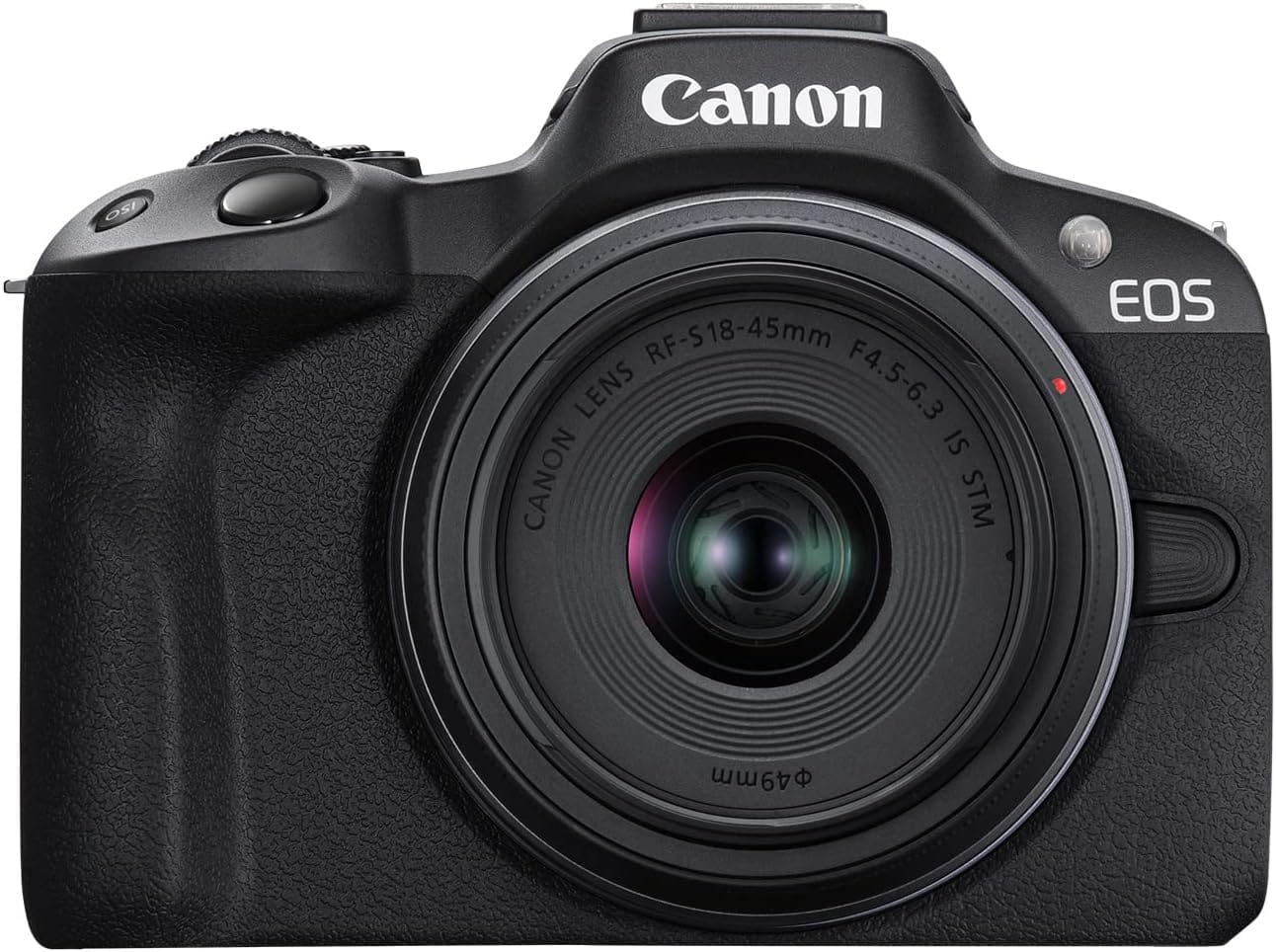
Canon EOS R50 — Best Digital Camera for Beginners.
Product information
If you're moving up from smartphone photography, the Canon EOS R50 makes a lot of sense.
Not because it's the most powerful camera here.
It isn't.
That's partly why I like it for beginners.
The EOS R50 uses a 24.2-megapixel APS-C sensor and Canon's DIGIC X image processor. It also uses Canon's Dual Pixel CMOS AF system, with broad frame coverage for subject detection and tracking.
Translation?
You point it at people, pets or everyday life and the camera does a surprisingly good job of figuring out what you're trying to photograph.
That matters enormously when you're learning.
Nothing kills enthusiasm faster than taking 70 photographs of your dog and discovering the sofa behind him is beautifully sharp.
The R50 can also record uncropped 4K video at up to 30 fps, derived from higher-resolution sensor data, and its fully articulating screen is useful for low-angle photographs, family videos, and occasional self-recording. Independent testing has also praised its combination of compact size, image quality and modern autofocus.
Best for:
Beginners, families, travel photography and people upgrading from a smartphone.
Why we like it:
- 24.2MP APS-C sensor
- Dual Pixel autofocus
- Subject detection
- 4K video
- Fully articulating touchscreen
- Compact and lightweight
- Canon RF lens mount
- Beginner-friendly controls
What we'd think about first:
The smaller Canon RF-S lens range isn't as extensive as Sony's APS-C ecosystem.
That doesn't make the camera bad—not remotely—but lenses matter if you plan to stay with a system for years.
Our verdict:
Best beginner camera in this group.
If someone told me, “I've never owned a proper camera, and I want something good without learning photography engineering,” this would be one of my first recommendations.
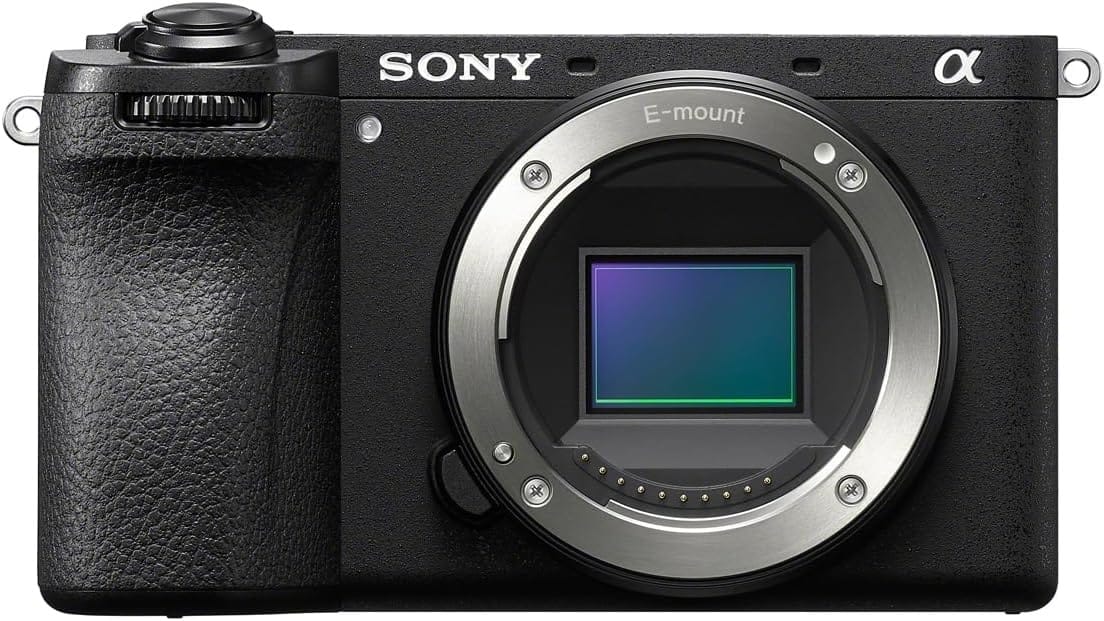
Sony Alpha a6700 — Best APS-C Digital Camera Overall.
Product information
The Sony Alpha a6700 is where things become more serious.
Still compact.
Still APS-C.
But underneath that relatively small body is a camera that can handle travel, portraits, wildlife, family photography, YouTube work and surprisingly demanding video.
Sony uses a 26-megapixel APS-C Exmor R CMOS sensor, and the camera includes sensor-shift five-axis image stabilization. Continuous shooting reaches around 11 frames per second.
And autofocus?
This is where Sony has built a reputation.
Modern subject-recognition autofocus can feel slightly eerie the first time you use it. You're trying to follow a moving face, the camera locks onto an eye and...
it just stays there.
Mostly.
No autofocus system is psychic. Although camera advertising occasionally behaves as if we've reached that point.
The a6700 is particularly attractive because it doesn't force you to choose between still photography and video.
It does both very well.
Amazon U.S. currently carries the Sony Alpha a6700 body and lens-kit configurations.
Best for:
Enthusiasts who want one camera for photography and video.
Why we like it:
- 26MP APS-C sensor
- Five-axis in-body stabilization
- Strong subject-recognition autofocus
- Up to 11 fps continuous shooting
- Advanced 4K video capability
- Excellent E-mount lens selection
- Compact body
- USB-C connectivity
What we'd think about first:
It costs considerably more than beginner cameras.
And Sony's menus—while much improved—can still make you feel as though you're configuring a small spacecraft when you first dig into them.
Lots of options.
Sometimes too many options.
Our verdict:
Best all-around APS-C camera here.
For someone who has outgrown beginner equipment but doesn't necessarily want a larger full-frame setup, the a6700 hits a very appealing middle ground.
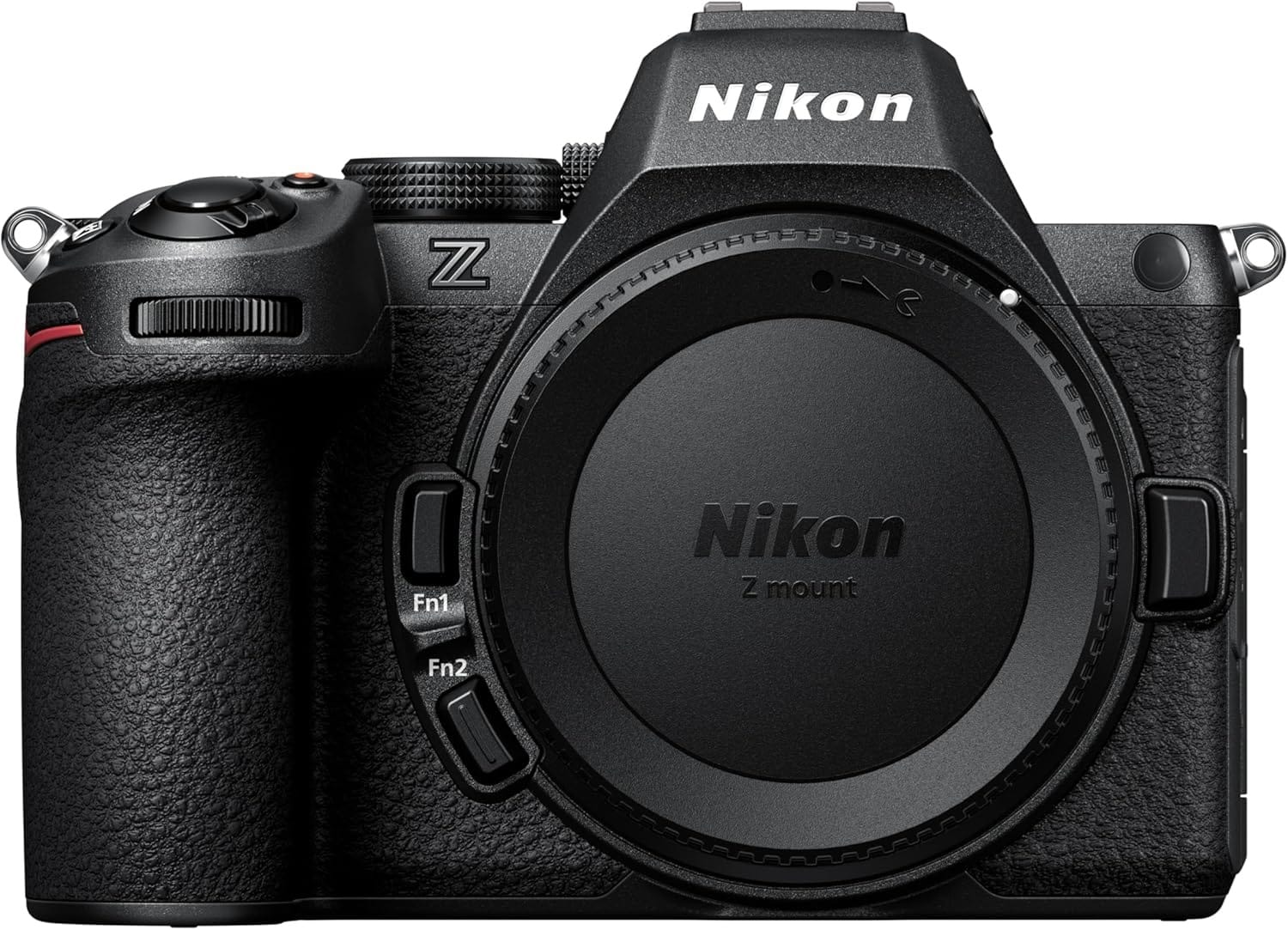
Nikon Z5II — Best Full-Frame Camera for the Money.
Product information
The original Nikon Z5 was already an interesting entry into full-frame photography.
The Nikon Z5II is a much more ambitious camera.
It uses a 24.5-megapixel full-frame BSI CMOS sensor, Nikon's EXPEED 7 processing engine, in-body image stabilization, and two UHS-II SD card slots. It can shoot up to 14fps in RAW under appropriate settings and considerably faster in JPEG modes.
That's a lot of camera.
Especially when you remember where “entry-level full frame” used to sit.
The full-frame sensor is particularly attractive for portraits, events, landscapes and lower-light photography. Larger sensors aren't automatically superior in every possible situation, but they give photographers more flexibility with depth of field, lens choices and high-ISO work.
The Z5II also has something Nikon generally gets right.
The grip.
This sounds absurdly unimportant until you've held a camera for five hours.
Buttons, grip shape and control placement rarely get the headline treatment, yet ergonomics can determine whether a camera feels like a creative tool or an expensive object you're fighting.
The Z5II's Amazon U.S. listing is current, including body-only and kit configurations.
Best for:
Enthusiasts moving into full frame, portraits, events, travel and general photography.
Why we like it:
- 24.5MP full-frame sensor
- EXPEED 7 processor
- In-body stabilization
- Strong autofocus
- Two SD card slots
- Vari-angle touchscreen
- Bright electronic viewfinder
- Nikon Z lens system
- Strong low-light capability
What we'd think about first:
Full-frame lenses tend to be bigger and more expensive than APS-C alternatives.
That $1,500-ish body can become a $3,000 bag remarkably quickly.
Cameras reproduce when nobody is looking. Bodies, lenses, filters, batteries...
Suddenly there's an entire family in the closet.
Our verdict:
Best full-frame value among our five picks.
In fact, DPReview selected the Z5II as its camera of the year for 2025, praising how close it gets to considerably more expensive models.
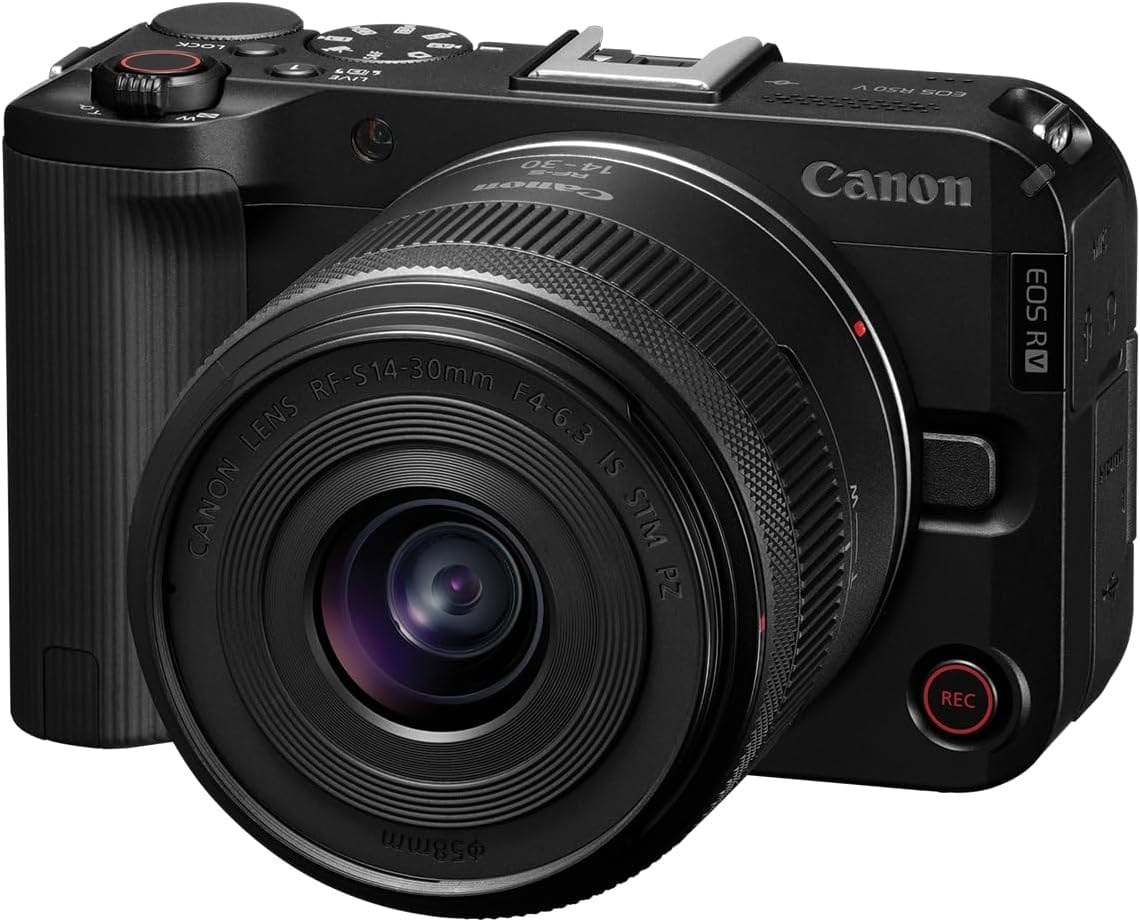
Canon EOS R50 V — Best Digital Camera for Vlogging & Content Creation.
Product information
The Canon EOS R50 V looks related to the normal R50 because, well, it is.
But the priorities are different.
This is a video-first interchangeable-lens camera.
Canon introduced creator-oriented controls including a front recording button, vertical-video tripod mounting, and a redesigned interface. It uses an approximately 24MP APS-C sensor and DIGIC X processor.
The R50 V can shoot oversampled 4K/30p and cropped 4K/60p video, while Canon's Dual Pixel CMOS AF II handles subject tracking.
More importantly, the controls make sense when you're standing in front of the camera rather than always behind it.
That's easy to underestimate.
A traditional photography camera assumes a photographer is operating it.
Content creation often involves one person being photographer, presenter, sound engineer, lighting assistant, editor and unwilling IT department at the same time.
You need buttons in sensible places.
Best for:
YouTube, TikTok, Instagram, podcasts, livestreaming and video-first creators.
Why we like it:
- 24.2MP APS-C sensor
- 4K video
- 4K/60p option with crop
- Dual Pixel CMOS AF II
- Fully articulating screen
- Creator-oriented recording controls
- Vertical-video support
- Interchangeable Canon RF lenses
- Compact body
The strange bit:
There's no electronic viewfinder.
For a video-first user, perhaps irrelevant.
For someone who primarily photographs wildlife or landscapes in bright sunlight?
That's different.
I wouldn't buy the R50 V over the normal R50 purely for still photography.
Our verdict:
Buy the R50 for photography-first use. Buy the R50 V for video-first use.
Simple distinction.
And one that can save a lot of buyer's remorse.
Amazon currently lists the EOS R50 V both body-only and with its RF-S 14-30mm power-zoom lens.
Panasonic Lumix S9 — Best Compact Full-Frame Camera for Travel.
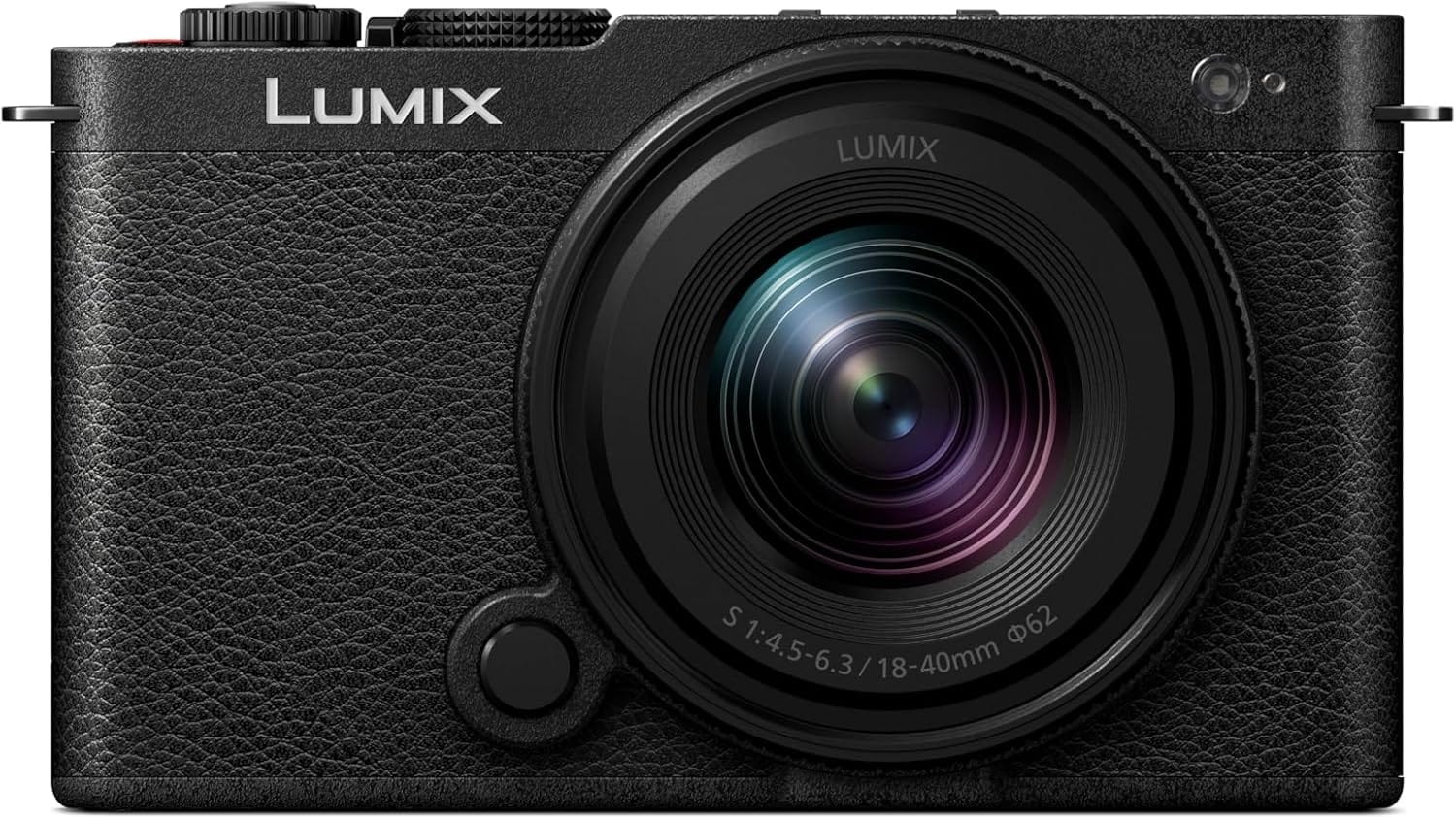
Product information
The Panasonic Lumix S9 is an unusual little thing.
Full-frame sensor.
Small body.
Strong stabilization.
Lots of emphasis on getting finished-looking photos and videos onto social media quickly.
It's aimed at people who like serious image quality but perhaps don't want to look as though they're covering the Super Bowl every time they take a vacation photograph.
Amazon currently offers the 24.2MP full-frame S9 in body-only and lens-kit configurations, including the compact 18-40mm kit.
The S9's creative strength is Panasonic's emphasis on color and LUT-based workflows.
In plain English, you can create distinctive finished looks without necessarily spending Saturday night moving tiny sliders around in editing software.
Although some of us strangely enjoy that.
Photography does odd things to people.
Best for:
Travel, street photography, lifestyle content and social-media creators wanting full-frame quality.
Why we like it:
- 24.2MP full-frame sensor
- Compact body
- In-body image stabilization
- Phase hybrid autofocus
- Strong video features
- Interchangeable L-mount lenses
- Creative color/LUT tools
- Travel-friendly design
What we'd think about first:
The S9 does not have a built-in electronic viewfinder.
That makes the design smaller, but photographers who prefer composing through an EVF may immediately cross it off the list.
Fair enough.
Our verdict:
The Lumix S9 isn't trying to be a traditional professional camera.
That's precisely its appeal.
It's a compact full-frame camera for photographers and creators who value portability and modern sharing workflows more than old-school camera ergonomics.
FAQs: Digital Cameras
How do digital cams work?
Unlike a conventional movie video camera, in a digital camera, the light is focused onto an image-sensing unit called a CCD (charge-coupled device). The CCD is a collection of light-sensitive photosites that create an electric charge when struck by light. These charges are exchanged numbers that are kept in the memory (normally on a memory chip). From there, the entire image can be shown, sent to a computer system, or perhaps printed straight on a printer.
Is the electronic zoom crucial?
No, it is not. Unlike optical zoom, only several of the light-sensing units are used to generate a picture while digital zoom is used, generating a lower-quality picture. The very same result can be achieved by using the focus of the image-processing software program. Digital zoom is a marketing trick that allows electronic camera suppliers to declare a higher zoom variable than their video cameras can truly achieve.
Is picture stabilizing important?
Photo stabilization is extremely important when selecting a digital camera with a high optical zoom variable (> 4). Without this feature, the majority of pictures were taken while focusing, or at longer direct exposure times, and holding the cam in your hand will certainly be obscured. Keep in mind that nearly all digital video cameras have photo stabilization.
What resolution do I require for top-notch images?
For 4-inch by 6-inch photos, you require at least 0.9 megapixels. For 5x7 prints, you need at least 1.3 megapixels. For 8x10 prints, you require at the very least 3.0 megapixels. For 8.5 x 11 prints, you require a minimum of 3.5 megapixels. For installing photos on websites, a 2.0-megapixel video camera should suffice.
What is the shutter rate?
Shutter rate is the amount of time the shutter permits light onto the CCD. The shutter speed is measured in seconds (or fractions of a second for the majority of common pictures). The slower the shutter speed, the more movement is videotaped by the video camera. A tripod or a stable base might be needed to utilize slower shutter rates without blurring the picture.
What is a mirrorless camera?
Mirrorless cameras are a subcategory of digital cameras that are popular because they are compact and have a built-in lens with a small range of focal lengths. There are many benefits to using a mirrorless camera, including the ability to take high-quality photos that are not limited by the size of the lens. Mirrorless cameras are typically smaller than medium-format and large-format cameras, which are typically attached to a professional digital camera system that is used by photographers. Mirrorless cameras are also the camera of choice for photography enthusiasts who are on the move and do not want to carry around a large and heavy camera.
What is a compact camera?
A compact camera is a small digital camera without a viewfinder. These cameras are usually a little bit less expensive than DSLRs and other types of digital cameras. They are small in size and are easy to use. They are also small enough to fit inside a purse or a bag. There are many different types of compact cameras, including point-and-shoot cameras and mirrorless cameras. There are also hybrid cameras that can take photos with DSLR-like quality.
What do digital cameras need for shooting video?
If you're interested in shooting video, you'll need a digital camera that can handle the task. Different types of cameras can shoot video, including DSLRs and other compact cameras. What you need for shooting great video is a camera that has a good sensor, which is the heart of the camera. You'll also need a body that can hold it, so you'll want a camera that has a good zoom. Finally, you'll need a camera that can take great low-light pictures, which is why you'll want a good image sensor. To take great low-light pictures, you'll want a camera with a sensor that is larger than usual because it will be able to better collect light.
What is the best digital camera for beginners?
The Canon EOS R50 is an excellent beginner digital camera because it combines a 24.2MP APS-C sensor, strong autofocus, interchangeable lenses, 4K video, and straightforward controls in a small body.
What is the best digital camera for photography?
The best camera depends on the type of photography. The Nikon Z5II is a strong full-frame general photography option, while the Sony a6700 provides an excellent balance of image quality, autofocus and portability with an APS-C sensor.
Are DSLR cameras still worth buying?
DSLR cameras can still produce excellent images, and used models may offer strong value. However, most major camera development now centers on mirrorless systems, making mirrorless the better long-term choice for many new buyers.
Is mirrorless better than DSLR?
Mirrorless cameras generally provide newer autofocus technology, electronic viewfinders, advanced video features, and more compact designs. DSLRs can still be excellent, especially for photographers who already own compatible lenses.
How many megapixels do I need?
Around 20–30 megapixels is enough for most photographers. Higher resolutions are useful for heavy cropping, large prints and certain commercial applications, but they also create larger files.
Is full frame better than APS-C?
Not automatically. Full-frame cameras can provide advantages in low light and depth-of-field control, while APS-C systems are generally smaller, lighter and less expensive. Both can deliver professional-quality images.
What camera is best for YouTube?
The Canon EOS R50 V is particularly well suited to YouTube and content creation because its controls and video features are designed around creators working in front of the camera.
What is the best camera for travel?
Compact mirrorless cameras are usually ideal for travel. The Panasonic Lumix S9 provides a compact full-frame option, while cameras such as the Canon EOS R50 offer a smaller and less expensive APS-C alternative.
Can a digital camera take better photos than a smartphone?
Yes. A dedicated camera can provide larger sensors, interchangeable lenses, optical telephoto capability, stronger manual controls and better flexibility in demanding photographic situations. Smartphones remain more convenient for everyday snapshots.
Should a beginner buy a full-frame camera?
Not necessarily. APS-C cameras usually provide excellent image quality at lower cost and with smaller lenses. A beginner should choose full frame only when its particular advantages justify the additional cost and size.
Which camera brand is best?
Canon, Nikon, Sony, Fujifilm and Panasonic all make excellent cameras. The better question is which system offers the camera controls, lenses, autofocus, video capabilities and pricing that best suit your needs.
 Neil Fajardo
 Neil Fajardo
 Neil Fajardo