

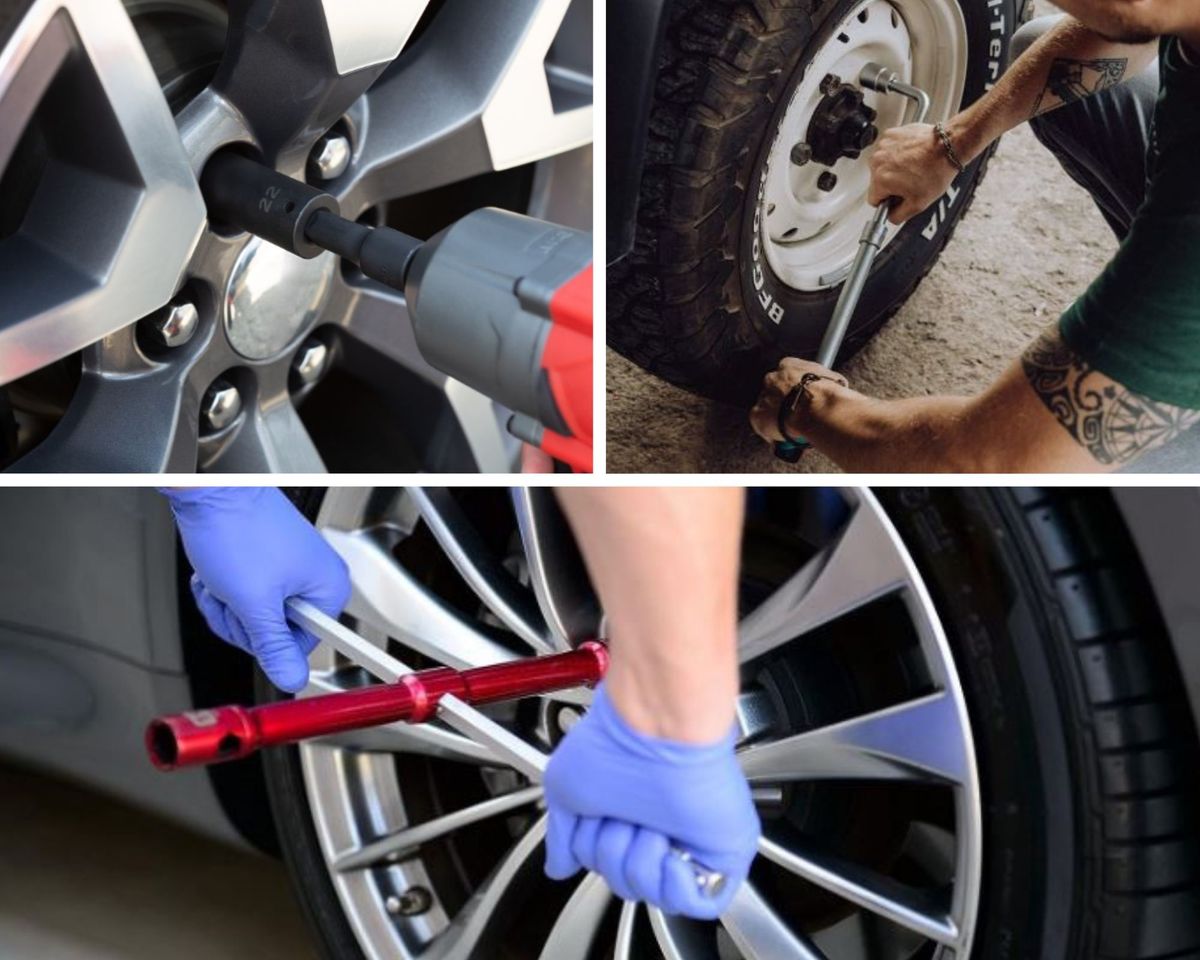
The best lug wrench for most drivers in 2026 is the WIESEMANN 1893 Telescopic Wheel Nut Wrench — six-position locking telescopic handle (39cm to 53cm), 2-in-1 sockets covering 17mm/19mm and 21mm/23mm, over a century of German tool-making heritage. Best hybrid power/control design: GTE TOOLS LugStrong Compact Set (built-in 17mm/¾"/19mm/21mm sockets, doubles as a breaker bar). Best value heavy-duty: EPAuto Universal Lug Wrench (14-inch forged carbon steel, four socket heads covering SAE and metric). Best maximum leverage: Gorilla Automotive Telescoping Power Wrench (extends to 21 inches, compacts to 14). Best for extra-tight nuts: Performance Tool Cross Lug Wrench (drop-forged, ASME PALD-2009 compliant). Most portable: Performance Tool Way Cross Lug Wrench (breaks into two pieces, chrome-plated, universal fit).
There's a specific kind of cold that settles into your hands on the shoulder of a highway at night, rain finding its way past your collar, one tire flat and the spare already out of the trunk — and only then do you discover the lug wrench that came with the car has all the mechanical authority of a bent coat hanger. It doesn't grip. It doesn't torque. It exists, technically, but it doesn't do anything, and by that point you've already called someone, or you're standing there rehearsing the exact tone you'll use when you complain about this later.
The factory-supplied lug wrench tucked under most spare tire compartments is, generously, a compromise. Manufacturers optimize for cost and storage footprint, not for the actual mechanical task of loosening a lug nut that's been torqued on by an impact gun at 100+ ft-lbs and left to season in road salt for two winters. The gap between "technically included" and "actually usable in an emergency" is wider than most drivers realize until the moment it matters.
A proper lug wrench closes that gap. Not glamorous. Not something you'll ever brag about at a dinner party. But the specific, quiet relief of having a tool that actually loosens the nut on the first honest attempt — rather than the wrench flexing, slipping, or rounding off the corners of the nut while you apply increasingly desperate body weight to it — is worth more than its modest price tag suggests.
We tested six. Here's what actually holds up when the nut fights back.
What Makes a Lug Wrench Actually Good (Beyond "It's Metal")
Socket sizing accuracy matters more than it should have to. Several products in this category advertise specific sizes — 17mm, 19mm, 21mm, and so on — but user feedback across this list repeatedly flags sockets that run slightly loose or don't perfectly match their labeled dimension. A socket that's even marginally oversized will round off lug nut corners under torque rather than gripping cleanly, turning a routine tire change into a genuinely frustrating problem. Precision matters here more than most buyers expect from what looks like a simple metal tool.
Leverage — length and design — is the core mechanical principle at work. Torque is force multiplied by distance from the pivot point; a longer wrench arm applies more rotational force for the same amount of physical effort. This is why telescoping designs (three products on this list) are genuinely valuable rather than a gimmick: they let you extend the handle specifically when you're fighting a stubborn, over-torqued, or rusted nut, then retract back to a compact size for storage.
Material and heat treatment determine whether the wrench survives real-world abuse or fails at the worst moment. Forged, heat-treated carbon steel and drop-forged alloy steel (both referenced across this list) undergo manufacturing processes specifically designed to increase hardness and resistance to bending or snapping under load. The alternative — cheaply cast or under-tempered steel — can flex, bend permanently, or, in worse cases, snap outright when significant torque is applied, which is a genuinely dangerous failure mode if it happens while you're braced against the tool with your full body weight.
Storage footprint vs. leverage is the honest trade-off buyers need to weigh. A longer, non-telescoping cross wrench provides excellent leverage but consumes real trunk space and doesn't compact down for glovebox or spare-tire-well storage. Telescoping designs solve this by extending only when needed and collapsing to a genuinely compact size the rest of the time — the mechanical trade-off being a slightly more complex design with more parts that could theoretically fail, versus a simpler fixed-length tool that simply takes up more permanent space.
4-Way Cross Wrench vs. L-Shaped vs. Telescoping: Which Type Do You Need?
4-way (cross) wrenches put four socket sizes on a single X-shaped tool, meaning one wrench covers most common lug nut sizes across different vehicles — genuinely useful if your household has more than one car, or if you're the person who ends up helping neighbors or family with roadside tire changes. The trade-off is bulk; the cross shape doesn't compact down, and it takes up meaningfully more trunk space than slimmer alternatives.
L-shaped wrenches are the simplest, lightest option — one socket size, a straight handle, sometimes a pry-bar end useful for hubcap removal. They're the right choice if you know your exact lug nut size, want minimal storage footprint, and don't need the flexibility of multiple socket sizes.
Telescoping wrenches — the category most products on this list belong to — combine a cross or L-shaped socket head with an extendable handle, letting you choose between compact storage and extended leverage depending on the situation. This is generally the best all-around choice for most drivers in 2026, since it addresses both the storage-space problem and the leverage problem that plague the simpler fixed designs.
Beyond the Basic Wrench: Breaker Bars, Torque Wrenches, and Impact Wrenches
Breaker bars are long-handled tools designed specifically for loosening — not tightening — stubborn, rusted, or over-torqued nuts. The extended handle length maximizes leverage precisely for the moment a standard lug wrench simply isn't generating enough rotational force. Several products on this list (GTE TOOLS specifically) double as both a lug wrench and a breaker bar, which is a genuinely useful two-in-one function rather than requiring separate tools.
Torque wrenches solve the opposite problem: precise, controlled tightening to a manufacturer-specified torque value (commonly 80-100+ ft-lbs for passenger vehicle lug nuts, though this varies by vehicle — check your owner's manual). Overtightening with an unregulated tool risks stripped threads, warped brake rotors, or lug studs that are genuinely difficult to remove next time; a torque wrench removes the guesswork.
Impact wrenches are powered tools (pneumatic or battery-electric) primarily suited to fast lug nut removal — not installation or final tightening. Using an impact wrench to tighten lug nuts without a torque-limiting attachment risks significantly overtightening them, which is precisely the stripped-thread, warped-rotor scenario torque wrenches exist to prevent. Impact wrenches are excellent for the removal half of a tire change; they're the wrong tool for the final tightening step.
| # | Product | Handle Length | Socket Sizes | Material | Best For | Rating | Price |
|---|---|---|---|---|---|---|---|
| 1 | WIESEMANN 1893 Telescopic Best Overall |
39cm–53cm (6 lock positions) | 17/19mm, 21/23mm | Forged steel | All-round use | ★★★★½ 4.5/5 |
View on Amazon → |
| 2 | GTE TOOLS LugStrong Set Hybrid + Breaker Bar |
Telescoping | 17mm, ¾", 19mm, 21mm + adapter | Ultra-strong steel | Stubborn nuts, versatility | ★★★★ 4.1/5 |
View on Amazon → |
| 3 | EPAuto Universal Lug Wrench Best Value |
14 in. (some units 20 in.) | 11/16",¾",13/16",7/8" / 17,19,21,22mm | Forged, heat-treated carbon steel | Heavy-duty on a budget | ★★★★ 4.0/5 |
View on Amazon → |
| 4 | Gorilla Automotive Telescoping Max Leverage |
14 in. compact / 21 in. extended | Standard 4-way sizes | Hardened steel | Over-torqued nuts | ★★★★ 3.9/5 |
View on Amazon → |
| 5 | Performance Tool Cross Wrench Extra-Tight Nuts |
Large cross design | 7/8", 15/16", 1", 1-1/16" | Heat-treated alloy, drop forged | Trucks, larger vehicles | ★★★★ 3.8/5 |
View on Amazon → |
| 6 | Performance Tool Way Cross Most Portable |
Breaks into 2 parts | 11/16, ¾, 13/16, 15/16 | Heat-treated, chrome-plated | Tight storage spaces | ★★★★ 3.7/5 |
View on Amazon → |
How to Properly Install a Wheel After Changing a Tire
Getting the tire off is only half the job — reinstalling it correctly is what actually prevents a wheel from working loose or a lug nut from seizing permanently. Here's the sequence that matters:
1. Line up the wheel on the hub, ensuring it sits flush against the mounting surface before threading any nuts.2. Finger-tighten in a criss-cross (star) pattern, not a circle. Threading nuts in sequential circular order can seat the wheel unevenly, creating a slight wobble that becomes a genuine vibration issue at highway speed. A criss-cross pattern distributes pressure evenly as the wheel seats.3. First-pass tightening with the lug wrench, still following the criss-cross pattern, applied lightly rather than to full torque. Go around the full pattern once, then a second time — you'll likely find one nut has loosened slightly relative to the others after the first pass, which is normal as the wheel settles.4. Lower the vehicle to the ground before final tightening. Full, final torque should be applied with the wheel's full weight resting on the ground (not while the car is still elevated on a jack), using firm hand pressure — not standing on the wrench or applying body weight through a foot, which risks overtightening beyond safe torque specifications.5. Follow the same criss-cross pattern for final tightening. Overtightening risks stripped threads or a lug nut that's genuinely difficult to remove next time; undertightening risks the wheel working loose during driving. If precision matters to you, a torque wrench set to your vehicle manufacturer's specified torque value (check your owner's manual — commonly in the 80-100+ ft-lb range for passenger vehicles) removes the guesswork entirely.
Final Thoughts
Nobody buys a lug wrench because they're excited about lug wrenches. It's a purchase made entirely in anticipation of a bad moment — rain, a shoulder, a flat tire, and the specific hope that when that moment arrives, the tool in your trunk actually works rather than becoming a second problem layered on top of the first.
The WIESEMANN 1893 is the one I'd put in most trunks by default — the locking telescopic mechanism and efficient socket coverage solve the two real problems (leverage, size compatibility) better than most alternatives here. The GTE TOOLS LugStrong is for anyone who wants breaker-bar capability built into the same tool. The EPAuto is the value pick for genuine heavy-duty steel at a reasonable price, with some labeling caveats worth checking. The Gorilla Automotive wins on raw leverage. The Performance Tool Cross Wrench is the specialist for trucks and larger vehicles. And the Way Cross is the answer if storage space is genuinely your binding constraint.
None of these tools will make changing a tire fun. What they will do is remove the second problem — the wrench itself — from an already inconvenient situation. That's the entire job. Do it once, correctly, and you stop thinking about it until the day you're glad you did.
Can we help? We've done the research for you and found the best Lug Wrenches on Amazon.
Every day, we read hundreds of reviews and try the highest-rated products we have on our list.
Lug Wrenches - Reviews
WIESEMANN 1893 Telescopic Wheel Nut Wrench — Best Overall
Rating: 4.5/5
Product information
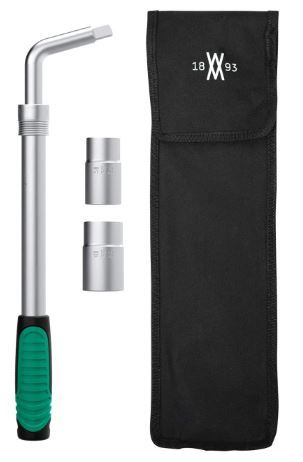
The WIESEMANN 1893 earns its position through a combination that's genuinely difficult to beat in this category: a telescopic design with six distinct locking positions (rather than the simpler two-position or infinitely-adjustable-but-less-secure designs common elsewhere), 2-in-1 sockets that cover four total lug nut sizes across just two socket pieces, and a manufacturer with genuine century-plus tool-making history behind the engineering.
The six-position locking mechanism, secured via a retractable self-locking ring, is the standout mechanical feature. Rather than a telescoping handle that can slip or wobble mid-torque, this design lets you select a specific extension length and lock it firmly in place — meaningfully safer and more stable than a friction-only telescoping mechanism, particularly when you're applying significant force to a stubborn nut and don't want the handle unexpectedly retracting or extending under load.
The 2-in-1 socket design (17mm/19mm combined in one socket, 21mm/23mm in the other) is genuinely efficient — two physical pieces covering four common lug nut sizes, meaning the kit handles the vast majority of passenger vehicles without needing additional socket adapters. Combined with universal 1/2 inch (12.5mm) drive compatibility, the wrench also works with other sockets you might already own, extending its usefulness beyond the included pair.
The German heritage angle is genuine rather than purely marketing — Wiesemann's century-plus tool manufacturing history reflects real accumulated engineering experience, and reviewers specifically note it outperforming OEM factory-supplied wrenches in ease of both loosening and re-tightening lug nuts. The adjustable lever length is repeatedly cited as a genuine mechanical advantage over fixed-length alternatives.
The honest caveat, acknowledged directly by the product's own positioning: manufacturing takes place in China (even if design heritage traces to Germany), and quality control inconsistency means a small percentage of units may have defects — a caveat that, to be fair, applies to virtually every product on this list to varying degrees, not uniquely to this one.
Pros
- Six-position locking telescopic handle — more secure than friction-only telescoping designs
- 2-in-1 sockets cover four common sizes (17/19mm, 21/23mm) in just two pieces
- Universal 1/2 inch drive compatibility extends usefulness beyond included sockets
- Genuine century-plus German tool-making heritage behind the engineering
- Includes a dedicated storage bag for organized, always-ready storage
- Outperforms OEM factory wrenches in both loosening and tightening ease, per user feedback
Cons
- Manufactured in China — quality control inconsistency affects a small percentage of units
- Premium positioning means a higher price than the most basic alternatives on this list
- Six-position locking adds mechanical complexity versus simpler fixed-length designs
Our Verdict: The WIESEMANN 1893 earns "best overall" through genuinely thoughtful engineering — the locking telescopic mechanism and efficient 2-in-1 socket design solve the two biggest practical problems (leverage and size coverage) better than most competitors on this list. For most drivers who want one reliable wrench and don't want to think about it further, this is the safest first choice.
GTE TOOLS LugStrong Compact Lug Wrench Set — Best Hybrid Power + Control Design
Rating: 4.1/5
Product information
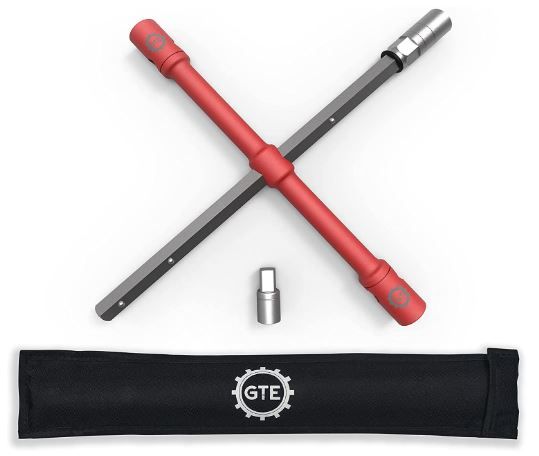
The LugStrong positions itself specifically as a hybrid between two tool categories that are usually purchased separately: a 4-way wrench's multi-size control, and a telescoping breaker bar's torque advantage. The result, per the manufacturer's framing and echoed in reviews, is a single tool that handles both routine lug nut removal and the genuinely stubborn, rust-seized nuts that standard wrenches struggle against.
The built-in socket sizes (17mm, ¾", 19mm, 21mm) cover the most common passenger vehicle lug nut dimensions directly, while the included universal adapter extends compatibility to less common sizes without needing to buy separate socket sets — a genuinely practical inclusion that several competitors on this list don't offer in the same combined package.
The anti-slip grip is a detail worth calling out specifically: applying significant torque to a stubborn nut requires a firm, secure hand position, and a wrench handle that slips or rotates in your grip under load is both less effective and a genuine safety concern (skinned knuckles, sudden loss of control mid-application). Reviewers specifically praise the tool's performance against extra-tight nuts and bolts, consistent with its dual breaker-bar functionality.
The honest limitation, flagged in feedback: some units show a steel hardness or tempering inconsistency — a manufacturing quality control issue that, while apparently affecting only a portion of units, is worth being aware of if you're specifically buying this tool for its promised heavy-duty, breaker-bar-level performance against seized nuts.
Pros
- Hybrid design combines 4-way wrench control with breaker bar torque in one tool
- Built-in sockets (17mm, ¾", 19mm, 21mm) cover the most common sizes directly
- Included universal adapter extends compatibility to additional sizes
- Anti-slip grip improves control and safety under high-torque application
- Genuinely effective against stubborn, rust-seized nuts per user feedback
- Compact enough for spare tire compartment storage
Cons
- Some units report steel hardness/tempering inconsistencies
- Hybrid complexity means slightly more moving parts than a simple fixed wrench
- Heavy-duty breaker bar performance depends on getting a properly tempered unit
Our Verdict: The LugStrong is the right choice for drivers who specifically want one tool covering both routine tire changes and stubborn, rusted nut removal without buying a separate breaker bar. The tempering inconsistency reported by some users is worth watching for, but the core hybrid concept is genuinely well executed.
EPAuto Heavy Duty Universal Lug Wrench — Best Value Heavy-Duty Pick
Rating: 4.0/5
Product information
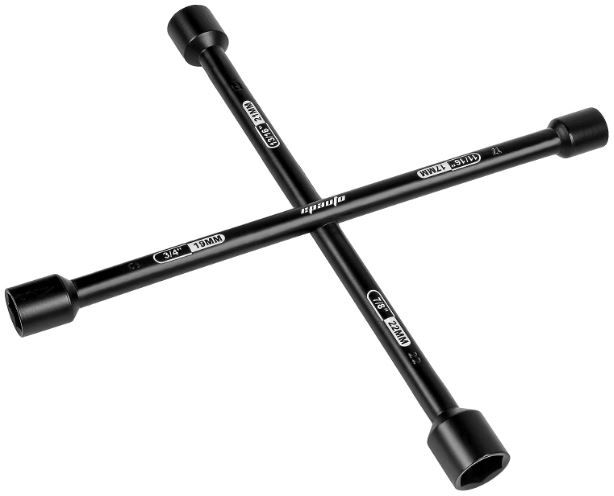
The EPAuto targets buyers who want genuine heavy-duty durability without paying premium pricing, and largely delivers on that promise through material choice: forged, heat-treated carbon steel construction that's specifically engineered for strength and longevity rather than the softer, less durable steel used in bargain alternatives. The corrosion-resistant treatment further extends usable lifespan, particularly relevant for a tool that typically lives in a trunk or spare tire compartment exposed to humidity and temperature swings over years.
The four socket heads covering both SAE (11/16", ¾", 13/16", 7/8") and Metric (17mm, 19mm, 21mm, 22mm) sizing gives genuinely broad compatibility across both American and metric-standard vehicles — a meaningful advantage if your household has vehicles from different manufacturers with different lug nut conventions.
The 14-inch body length provides solid leverage for most standard applications, and reviewers specifically note satisfaction with competitive pricing and reliable delivery — practical purchasing concerns that matter as much as the tool's mechanical performance for many buyers.
The honest inconsistencies, drawn directly from user feedback, are worth flagging clearly: some buyers received a 20-inch version rather than the advertised 14-inch length (a pleasant surprise for leverage, but a labeling inconsistency worth noting), and there's a reported discrepancy where a wrench marketed as "metric" actually uses SAE sizing standards according to its own label — including an 11/16" size that's slightly larger than a genuine 17mm lug nut, which could create a loose, imprecise fit if you're expecting true metric precision. Color fulfillment errors (ordering silver, receiving black) were also reported by at least one buyer.
Pros
- Forged, heat-treated carbon steel construction — genuine heavy-duty durability
- Corrosion-resistant treatment extends usable lifespan in trunk storage conditions
- Four socket heads cover both SAE and Metric sizing — broad vehicle compatibility
- Competitive pricing relative to the durability offered
- Some units shipped with a longer 20-inch body, providing extra leverage
Cons
- Labeling inconsistency reported: a "metric" marketed unit using SAE sizing standards
- 11/16" socket runs slightly larger than genuine 17mm lug nuts — check fit precision
- Length and color fulfillment inconsistencies reported by some buyers
- Quality control variability similar to other budget-to-mid-tier options on this list
Our Verdict: The EPAuto is a strong value pick specifically for the material quality (genuine forged, heat-treated steel) at its price point, though the labeling and fulfillment inconsistencies reported by users are worth double-checking against your specific vehicle's lug nut sizing before you're relying on it roadside.
Gorilla Automotive Telescoping Power Wrench — Best Maximum Leverage
Rating: 3.9/5
Product information
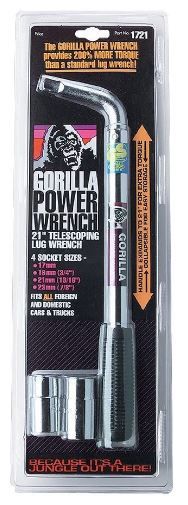
The Gorilla Automotive wrench leads with the single longest maximum extension on this list — 21 inches, meaningfully more leverage than most fixed-length or more modestly telescoping alternatives — while still compacting down to a genuinely storage-friendly 14 inches when not extended. For the specific problem of a severely over-torqued or rust-seized nut that other wrenches on this list struggle against, that extra leverage headroom can be the difference between success and a frustrating standoff.
Hardened steel construction with precision engineering underpins the durability claim, and the extendable-then-compact design directly addresses the storage-versus-leverage trade-off that this entire product category has to navigate — you get maximum mechanical advantage exactly when you need it, without permanently sacrificing trunk space the rest of the time.
The honest limitation, drawn from user feedback: socket sizing accuracy is inconsistent, with at least one reviewer specifically noting that a socket marketed as true 21mm doesn't grip as precisely as expected and can slip over the lug nut rather than seating firmly — a meaningful concern given that a slipping socket under torque is both ineffective and a genuine risk of rounding off the nut's corners, making future removal harder rather than easier.
Pros
- Longest maximum extension on this list (21 inches) for maximum leverage against stubborn nuts
- Compacts to a genuinely storage-friendly 14 inches when retracted
- Hardened steel construction with precision engineering for durability
- Serves as a capable alternative to a standard fixed lug wrench for both routine and difficult removals
Cons
- Socket sizing accuracy reported as inconsistent — may not grip as precisely as labeled
- Risk of socket slipping over the lug nut under torque if fit isn't precise
- Not all vehicles' lug nuts match the exact advertised socket dimensions
Our Verdict: The Gorilla Automotive wrench is the right choice specifically when maximum leverage is the priority — 21 inches of extension handles genuinely stubborn nuts that shorter tools struggle against. Just verify the socket fit precisely against your specific vehicle's lug nuts before relying on it in an actual emergency, given the reported sizing inconsistency.
Performance Tool Cross Lug Wrench — Best for Extra-Tight or Large Nuts
Rating: 3.8/5
Product information
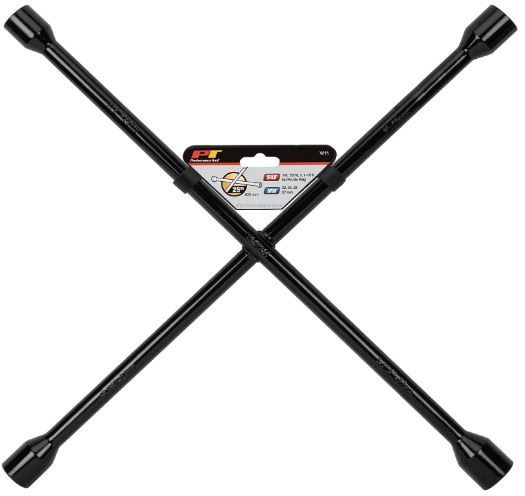
The Performance Tool Cross Wrench targets a specific niche within this category: larger vehicles or heavy-duty applications requiring bigger socket sizes than the standard passenger-car range covered by most other products on this list. The SAE sizing here (7/8", 15/16", 1", 1-1/16") skews toward trucks, larger SUVs, and heavier-duty vehicles rather than compact passenger cars.
Drop forging — a manufacturing process that shapes metal through repeated hammering under high pressure — produces a denser, more structurally sound tool than cast or machined alternatives, and the heat treatment further enhances hardness and wear resistance. This combination is specifically well-suited to the large-torque scenarios this wrench's oversized socket range implies.
ASME PALD-2009 compliance is a genuine, verifiable safety standard specific to portable automotive lifting devices and related tools — compliance here signals the manufacturer has met a recognized third-party benchmark rather than making unverified safety claims, which is a meaningfully different assurance than most budget tools in this category provide. The included safety chain, designed for securing a transmission during related maintenance work, extends the tool's usefulness slightly beyond pure lug nut duty.
The honest limitation, echoed by reviewers directly: tempering inconsistency is reported here too, with some units described as potentially brittle and prone to snapping if excessive force is applied — a genuinely concerning failure mode for a tool specifically marketed around handling stubborn, high-torque nuts. The large cross-wrench size, appropriate for its heavy-duty size range, also creates a genuine storage challenge in smaller vehicle trunks.
Pros
- Drop-forged, heat-treated alloy steel construction built for genuine heavy-duty torque
- SAE sizes specifically suited to trucks and larger SUVs (7/8" through 1-1/16")
- ASME PALD-2009 safety standard compliance — verifiable third-party benchmark
- Included safety chain adds transmission-securing functionality
- Delivers substantial torque for genuinely stubborn, over-tightened nuts
Cons
- Tempering inconsistency reported — some units described as brittle and prone to snapping under excessive force
- Large physical size creates storage challenges in smaller vehicle trunks
- Sizing skews toward larger vehicles — not the right fit for standard passenger car lug nuts
- Not the most refined build quality relative to price among this list's options
Our Verdict: The Performance Tool Cross Wrench is the right specialized choice for truck and larger SUV owners specifically needing the oversized socket range it offers, and the ASME compliance is a genuine reassurance. The reported tempering inconsistency is worth being cautious about — avoid applying maximum force in a single aggressive motion, and consider a controlled, steady application of force instead.
Performance Tool Way Cross Lug Wrench — Most Portable
Rating: 3.7/5
Product information
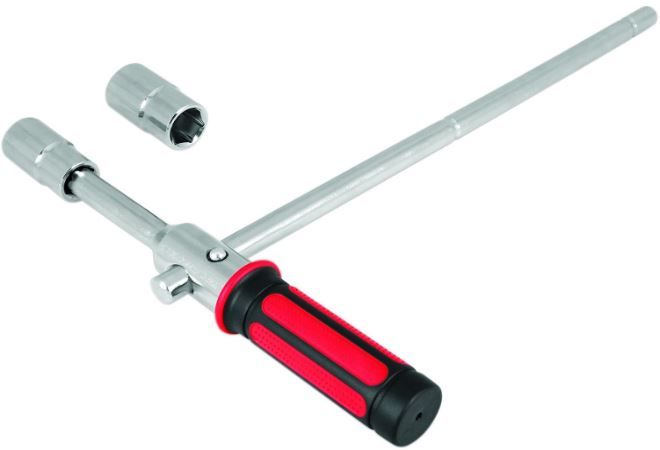
The Way Cross Wrench's defining feature is its breakdown design — rather than a fixed one-piece cross shape, this tool splits into two separate parts for storage, meaningfully reducing its footprint compared to a solid cross wrench of similar size. For anyone genuinely tight on trunk or spare-tire-compartment space, this is the most storage-conscious option on this list.
The double-ended design across four sizes (11/16", ¾", 13/16", 15/16") gives reasonable coverage of common SAE lug nut sizes, and the heat-treated steel construction with a rust-resistant, chrome-plated finish addresses the corrosion concern that any tool living in a trunk over multiple years and weather seasons eventually faces. Universal compatibility across cars, light trucks, SUVs, RVs, and vans is a genuinely broad claim, appropriate for a tool positioned as a general-purpose roadside emergency kit component.
The honest assessment, and it's a fair one directly reflected in the product's own review summary: this is a straightforward, no-frills tool that does exactly what it's supposed to do without additional refinement, which is either a feature or a limitation depending on what you're looking for. The tempering issue that recurs across several products on this list appears here too — reported instances of the tool becoming brittle and snapping after repeated use, which is a genuine durability concern for what's marketed as an emergency-reliability tool.
Pros
- Breaks down into two parts — most storage-conscious design on this list
- Rust-resistant, chrome-plated finish suited to long-term trunk storage
- Universal compatibility across a wide range of vehicle types
- Straightforward, no-frills functionality that does the basic job reliably
- Reasonable size coverage across four common SAE sizes
Cons
- Tempering issues reported — some units described as brittle, with reports of snapping after repeated use
- Basic design lacks the leverage advantages of telescoping alternatives on this list
- Lowest overall rating on this list, reflecting genuine quality control concerns
- Not ideal for genuinely stubborn or over-torqued nuts given the durability concerns
Our Verdict: The Way Cross Wrench is the right choice, specifically if storage space is your primary constraint and you want the most compact breakdown design available. Given the reported tempering and durability issues, it's worth using measured, controlled force rather than maximum effort in a single motion, and treating this as a basic backup tool rather than your primary heavy-duty solution.
FAQs: Lug Wrench
What size lug wrench do I need for my car?
Check your vehicle's lug nut size directly — commonly 17mm, 19mm, or 21mm for most passenger vehicles, though trucks and larger SUVs often use larger SAE sizes (7/8", 15/16", 1", or larger). Multi-socket wrenches covering several common sizes, like the WIESEMANN 1893 or EPAuto on this list, remove the guesswork if you're unsure or if your household has multiple vehicles with different lug nut sizes.
Is a telescoping lug wrench better than a fixed cross wrench?
Generally, yes, for most drivers — telescoping designs give you extended leverage exactly when you need it (a stubborn or over-torqued nut) while compacting down for storage the rest of the time. Fixed cross wrenches provide solid, reliable leverage without any moving parts to fail, which some users prefer for pure simplicity and reliability, but they take up more permanent storage space.
Can I use an impact wrench to tighten lug nuts?
Not recommended without a torque-limiting attachment. Impact wrenches are excellent for fast removal of lug nuts, but using them for final tightening without torque control risks significantly overtightening, which can strip threads, warp brake rotors, or make the lug nuts extremely difficult to remove during a future tire change. Use a torque wrench for final tightening to a manufacturer-specified value.
Why do lug wrenches sometimes snap or become brittle?
This typically results from inconsistent heat treatment or tempering during manufacturing — several products across this category report this issue to varying degrees. Steel that hasn't been properly tempered can become brittle rather than flexible under stress, increasing the risk of snapping when significant torque is applied. Applying steady, controlled force rather than sudden, maximum-effort force reduces this risk somewhat, though it doesn't eliminate a genuine manufacturing defect if one is present.
What's the correct order to tighten lug nuts?
Always use a criss-cross (star) pattern rather than a sequential circular order. This distributes clamping pressure evenly as the wheel seats against the hub, preventing the wobble or uneven seating that a circular tightening pattern can cause. Finger-tighten first in this pattern, then do a first pass with the wrench, then a final pass with the wheel's full weight on the ground.
You may also like to check out these reviews.
 Save With Reviews
 Save With Reviews
 Save With Reviews