
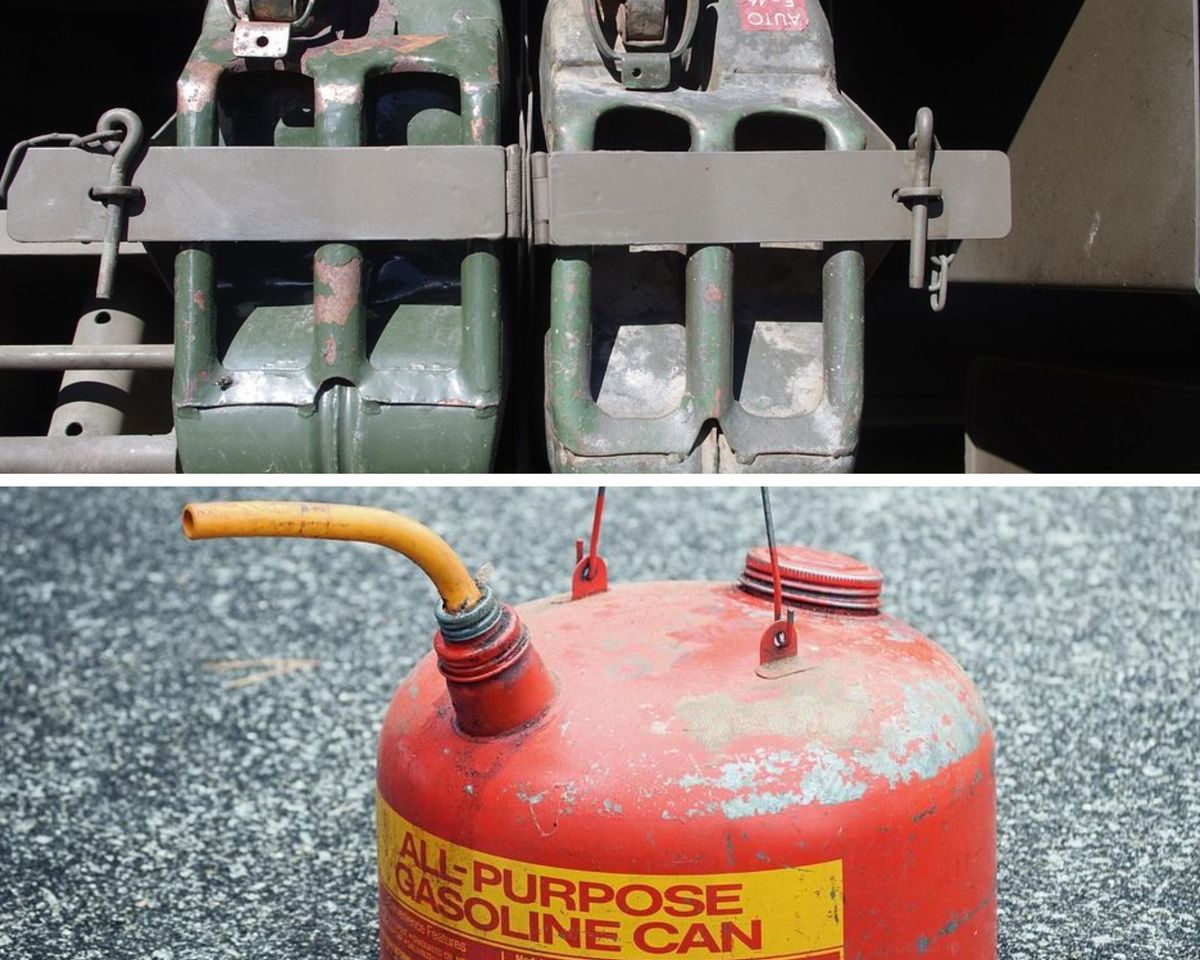
A good gas can stores gasoline securely, limits spills, and gives you a controlled way to refuel lawn equipment, generators, pressure washers, and other gas-powered machines. It is not merely a red container sitting in the corner of the garage. At least, it shouldn’t be.
Gasoline is useful, familiar, and honestly a little terrifying when handled carelessly. One loose cap or awkward spout can leave fuel running down the side of a mower, across your glove, and onto the concrete—followed by that sharp, unmistakable smell that seems to hang around forever.
The best gas can for frequent use is a properly certified safety can with a self-closing lid, pressure-relief mechanism, and controlled pouring system. For commercial settings or buyers who prioritize durability, the Justrite Type II Gasoline Safety Can is our top safety-focused choice. Homeowners who want something lighter may prefer a plastic model from SureCan, Scepter, or the No-Spill 1405.
Best Gas Cans at a Glance
| Gas can | Best for | Capacity | Material | Key feature | Amazon.com |
|---|---|---|---|---|---|
Justrite Type II Gasoline Safety Can, Red Galvanized Steel, FM Approved | Best overall safety can | 5 gallons | Galvanized steel | Separate fill and pour openings with flexible hose | View on Amazon |
Eagle UI-50-FS Type I Safety Can | Best Type I metal can | 5 gallons | Galvanized steel | Self-closing lid and flame arrester | View on Amazon |
SureCan SUR5S2 Gas Can | Best controlled-pour design | 5 gallons | HDPE plastic | Bottom-fed rotating spout | View on Amazon |
Scepter SmartControl Gas Can | Best for occasional home use | Varies | HDPE plastic | Push-controlled fuel flow | View on Amazon |
No Spill 1405 2.5 Gallon Gasoline Gas Can | Best compact option for small equipment | 2.5 gallons | HDPE plastic | Thumb-button pour control with automatic flow stop | View on Amazon |
Check the Amazon product page before ordering to confirm current capacity, certification, included accessories, price, and availability.
Why You Need a Portable Gas Can
A portable gas can lets you refuel equipment, keep a generator supplied during an outage, and transport fuel from a service station to an approved storage location.
That is the plain answer. The longer answer gets messier.
Lawn mowers, chainsaws, snow blowers, pressure washers, leaf blowers, generators—many households own several gasoline-powered machines, and each one seems to run empty at the least convenient moment. Half the lawn is cut. A storm is coming. The lights just went out, and the refrigerator has started its ominous silence.
Then the boring red can in the shed becomes very interesting.
Keep Outdoor Power Equipment Running
Routine equipment refueling is the most common reason to own a gas can. A mower runs dry, you add fuel, and the job continues.
Container quality determines whether that simple task stays simple. A secure cap, dependable seal, and controllable spout help prevent gasoline from dripping onto your hands, shoes, equipment, or ground.
A poorly designed nozzle can turn a routine fill-up into a tiny environmental tragedy. Dramatic? Maybe. But gasoline spreading across warm concrete feels dramatic when you are standing over it.
Prepare for Power Outages
A gas can may also support emergency generator use during hurricanes, winter storms, wildfires, or extended grid outages. Recent severe-weather events have shown how quickly fuel availability can become uncertain, particularly when local stations lose electricity or supply deliveries are delayed.
Store only a reasonable quantity permitted by the manufacturer and local fire codes. Rotate older fuel, use an appropriate stabilizer when recommended, and never refill a generator while it is running or hot.
A generator should also be operated outdoors, far from doors, windows, and vents. Carbon monoxide is odorless, unlike gasoline—and vastly more deceptive.
Roadside Emergencies: Use Caution
A gas can can help if a vehicle runs out of fuel, but a filled gasoline container should not be stored permanently in a trunk or passenger compartment. Heat, vapor accumulation, damaged seals, and collision risks make long-term in-vehicle storage unsafe.
If you need to transport gasoline:
- Use an approved container.
- Place it upright and secure it against movement.
- Keep it out of the passenger area whenever possible.
- Drive directly to your destination.
- Remove the container from the vehicle immediately.
- Never leave it inside a hot parked car.
For everyday roadside preparedness, a fuel-delivery membership or roadside-assistance plan is usually safer than carrying gasoline continuously.
Gas Can Safety Tips
Gasoline vapors can ignite from flames, sparks, pilot lights, electrical equipment, or static discharge. Safe handling is not complicated, but shortcuts are a bad gamble.
1. Use an Approved Fuel Container
Never transport gasoline in water jugs, drink bottles, buckets, or improvised containers. Use a container specifically manufactured and labeled for gasoline.
For workplace use, check applicable OSHA requirements and local fire codes. Certification and approval markings can differ by product and jurisdiction, so confirm them on the current product listing and manufacturer documentation.
2. Put the Can on the Ground Before Filling
Do not fill a gas can while it is sitting in a trunk, truck bed, or on a plastic liner. Place it directly on the ground.
Keep the pump nozzle in contact with the container’s fill opening throughout the process. This helps reduce the risk of static discharge.
3. Do Not Overfill
Gasoline expands as its temperature rises. Follow the manufacturer’s fill-level instructions and leave the required expansion space.
That little gap is not wasted capacity. It is there because physics is stubborn and doesn’t care that you wanted an even five gallons.
4. Keep the Container Closed
Secure every cap, lid, vent, and spout after filling. If you notice persistent fuel odor around a closed can, inspect it for a damaged gasket, loose closure, or crack.
Do not continue using a leaking container.
5. Store Gasoline Away From Living Areas
Do not store gasoline in a basement, living area, or near ignition sources. Water heaters, furnaces, pilot lights, electrical tools, battery chargers, and anything that sparks require distance.
Storage rules vary considerably. Follow the can manufacturer’s directions along with local fire-code requirements, and consider a compliant outdoor storage cabinet or detached structure where permitted.
6. Let Equipment Cool Before Refueling
Never pour gasoline into a running or hot mower, chainsaw, generator, or other engine. Shut it down and allow sufficient cooling time.
One splash onto a hot component can transform an ordinary chore into something much worse. Quickly, too.
7. Use the Correct Fuel
Do not assume every machine uses straight gasoline. Some two-stroke engines require a specific gasoline-and-oil mixture, while diesel equipment requires diesel-rated containers.
Label containers clearly and never rely only on color.
Type I vs. Type II Gas Cans
The main difference is the number of openings.
Type I Safety Cans
A Type I safety can has one opening used for both filling and pouring. This design is relatively simple and may cost less than a comparable Type II can.
Advantages:
- Straightforward construction
- Fewer external components
- Often less expensive
- Suitable for general fuel handling
Limitations:
- Less precise pouring
- The can must usually be tilted more aggressively
- One opening manages both airflow and fuel flow
Type II Safety Cans
A Type II safety can has separate fill and pour openings. The dedicated pouring outlet often uses a flexible hose, while the fill opening helps provide smoother airflow.
Advantages:
- Better pouring control
- Smoother fuel flow
- Flexible hose can reach awkward tanks
- Well suited to frequent or professional use
Limitations:
- More expensive
- Additional parts require inspection
- Steel versions are relatively heavy
For regular generator or workshop use, Type II is generally the more convenient choice. For occasional residential tasks, a Type I or well-designed consumer container may be sufficient.
How to Choose the Best Gas Can
Capacity
Choose a capacity you can lift safely.
A five-gallon can is useful for generators and larger equipment, but gasoline weighs roughly six pounds per gallon. Once the container’s weight is included, a full metal can can be cumbersome.
One- and two-gallon cans are easier to manage for string trimmers, chainsaws, and compact lawn equipment.
Material
Plastic gas cans
High-density polyethylene containers are lightweight, corrosion-resistant, and usually less expensive. They are practical for many residential users, provided they are approved for fuel and remain undamaged.
Metal safety cans
Galvanized-steel safety cans are heavier and more expensive, but they are durable and may include self-closing lids, flame arresters, and pressure-relief features required or preferred in professional environments.
Spout Design
The best spout is one you can operate safely without contorting your hand or losing control of the can.
Look for:
- Controlled fuel flow
- A secure shutoff
- A drip-resistant seal
- Compatibility with the equipment you refuel
- Replacement components from the manufacturer
A clever spout is not automatically a good spout. Sometimes engineering becomes interpretive dance.
Safety Features
Depending on the intended use, useful features may include:
- Self-closing openings
- Flame arresters
- Pressure-relief mechanisms
- Flexible pouring hoses
- Spill-resistant controls
- Durable seals and gaskets
- Recognized testing or approval markings
Intended Use
A homeowner filling a mower twice a month has different needs than a landscaping crew handling fuel every day.
Choose based on frequency, environment, required compliance, and the size of the equipment tank—not solely on price.
Final Verdict
The Justrite Type II Gasoline Safety Can, Red Galvanized Steel, FM Approved is the best choice in this comparison for buyers who prioritize robust construction, controlled pouring, and safety-focused features. Its separate fill and pour openings make it especially useful for generators, workshops, and frequent refueling.
For lighter residential use, the SureCan SUR5S2 offers an easier-to-position pouring system, while the Eagle UI-50-FS is a solid Type I metal alternative.
Whatever model you choose, use it only for its labeled fuel, inspect it regularly, and follow the manufacturer’s storage and handling instructions. A gas can is simple equipment, but gasoline is not simple at all. Treat it with respect—even when you are tired, annoyed, or halfway through mowing the backyard.
Can we help? We've done the research for you and found the Best Gas Cans on Amazon. Every day, we read hundreds of customer reviews, search for the most relevant ones, and test the highest-rated products on our list.
Gas Can - Reviews
Justrite Type II Gasoline Safety Can — Best Overall
Rating: 4.6
Product information
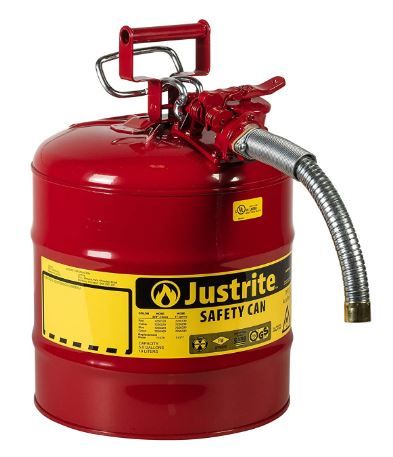
The Justrite Type II Gasoline Safety Can, Red Galvanized Steel, FM Approved is designed for people who want something more substantial than an ordinary plastic fuel jug. It has separate openings for filling and pouring, which helps produce smoother flow and gives you better control when refueling.
Its galvanized-steel body is built for repeated use, while the self-closing openings help limit spills and vapor release. A flexible pouring hose also makes it easier to reach generator tanks and awkward equipment openings. Less twisting, less balancing, less gasoline sloshing around like an angry cup of coffee.
This is a particularly strong choice for workshops, farms, maintenance facilities, and frequent generator users. It may be heavier and more expensive than a consumer plastic can, but its safety-oriented construction is the entire point.
Best for: Frequent use, commercial environments, generators, and buyers prioritizing certified safety features.
Potential drawback: A five-gallon steel can is heavy when full and may be excessive for occasional lawn-equipment refueling.
Eagle UI-50-FS Type I Safety Can — Best Type I Metal Can
Rating: 4.7
Product information
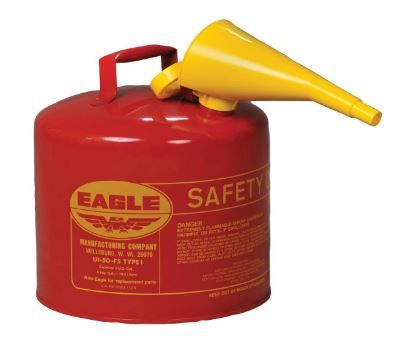
The Eagle UI-50-FS uses a traditional Type I configuration, meaning one opening handles both filling and pouring. Its galvanized-steel construction, self-closing lid, pressure-relief design, and flame arrester make it a practical safety-can option for garages and job sites.
A Type I can is mechanically simpler than a Type II model. That can be a virtue—fewer components, straightforward operation—but pouring may not feel as precise because air and fuel share the same opening.
The included funnel helps when filling equipment with smaller tank openings. Still, five gallons of gasoline weighs more than 30 pounds before accounting for the can itself. That gets tiring fast. Your forearm will notice.
Best for: Buyers who want a durable metal safety can without paying for a Type II pouring system.
SureCan SUR5SFG2 — Best Controlled-Pour Plastic Gas Can
Rating: 4.6
Product information
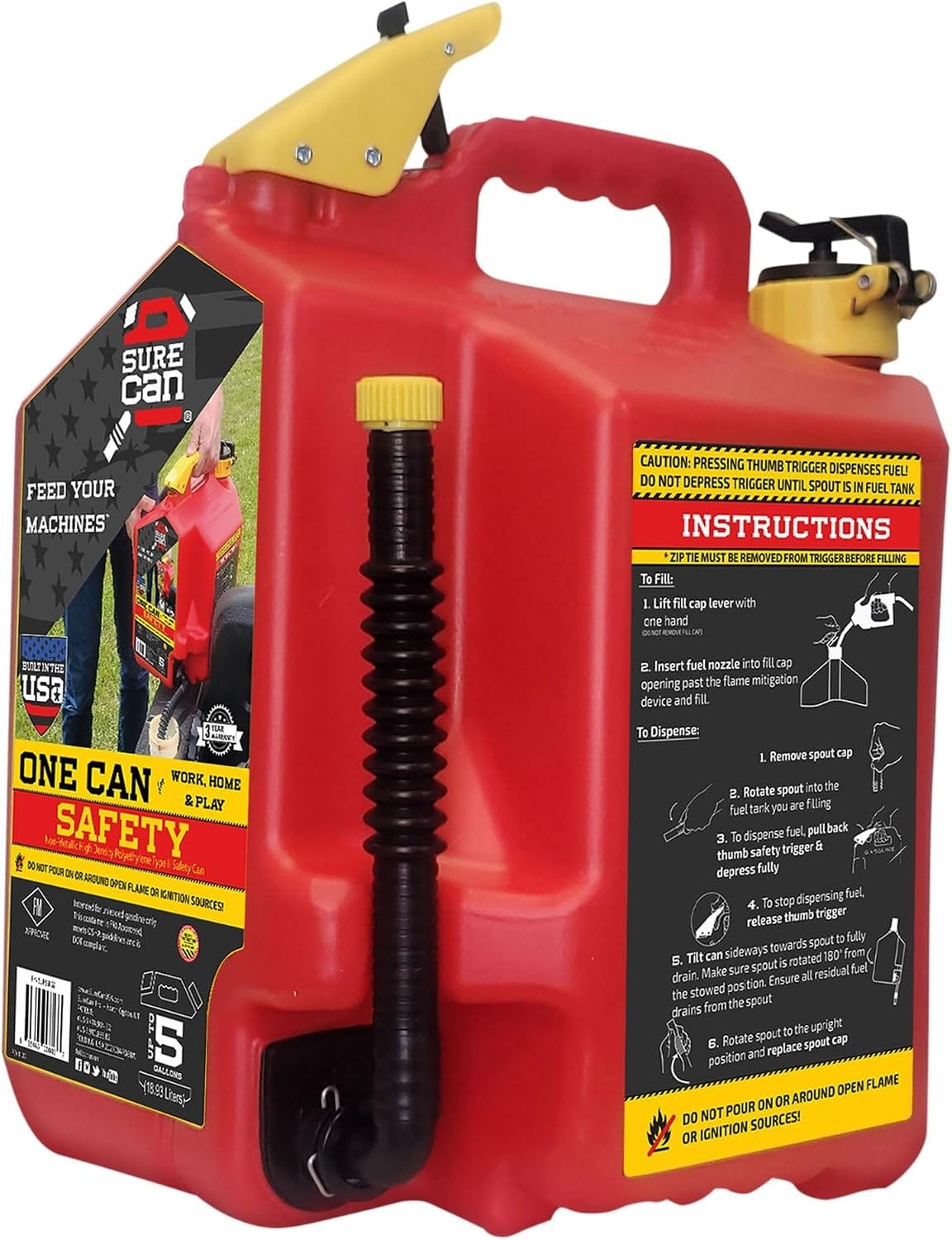
The SureCan takes an unusual approach: its rotating spout dispenses fuel from the bottom of the container. Instead of lifting the entire can high above a mower or generator, you position the nozzle, rotate it downward, and use the trigger to control flow.
That design can be much easier on your arms and back, particularly when the container is full. It is also useful for tanks tucked beneath handles or equipment frames—those maddening little spaces apparently designed by someone who never had to pour gasoline into them.
As with any multi-part spout, seals and moving components should be inspected regularly. The design is convenient, but it is more mechanically complex than a basic safety can.
Best for: Homeowners who want controlled pouring without holding a full five-gallon container at an awkward angle.
Scepter SmartControl Gas Can — Best for Occasional Home Use
Rating: 4.3
Product information
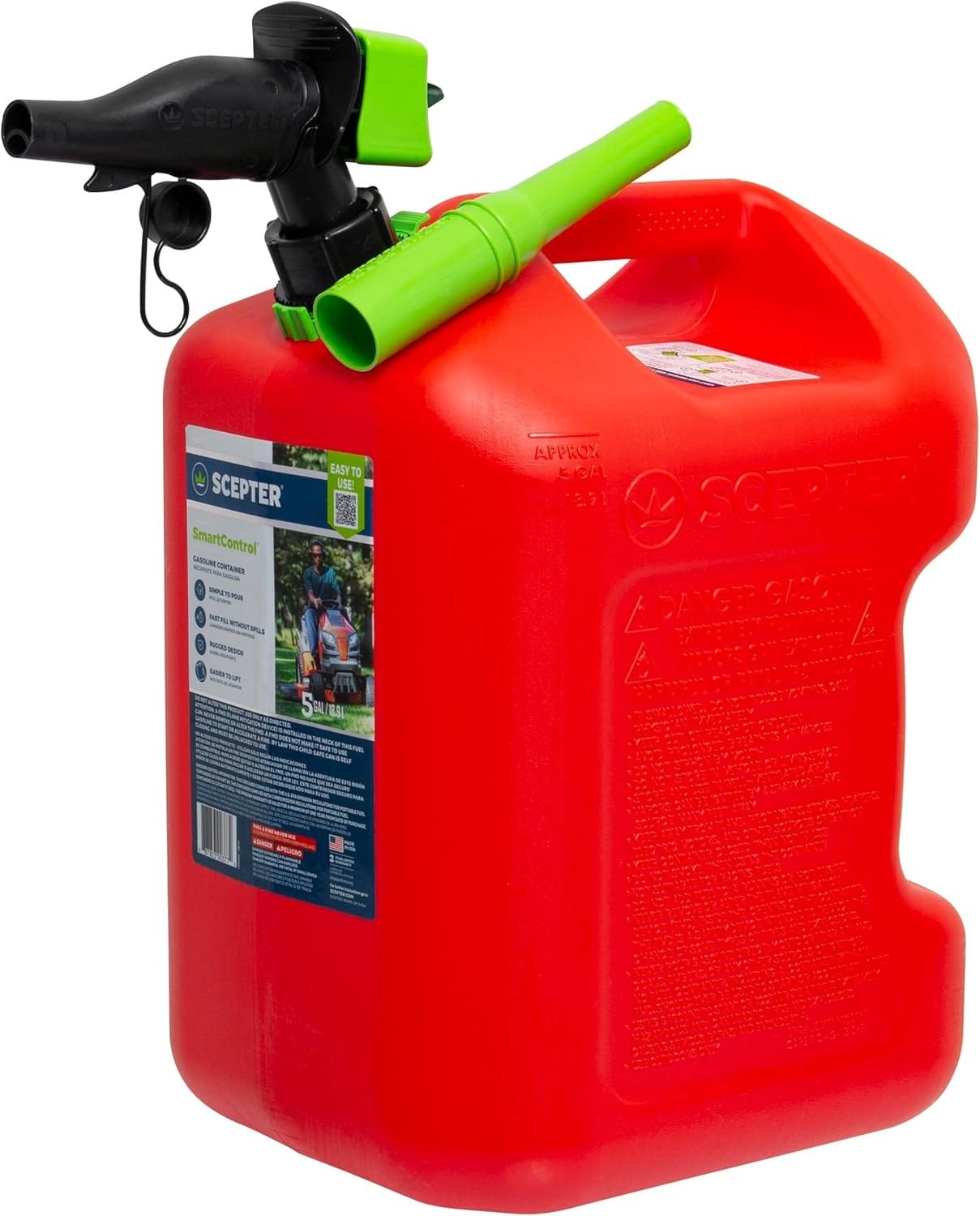
The Scepter SmartControl line is intended to provide user-controlled flow through its spout mechanism. Different sizes may be available, making it easier to choose a container that suits a lawn mower, snow blower, or other small engine.
A smaller gas can is often the sensible option. Bigger sounds better until you are trying to hold 30-plus pounds over a narrow fuel opening while a mosquito circles your ear and the machine’s engine is still ticking with heat.
The SmartControl mechanism may require a little practice. Read the instructions before filling it—yes, actually read them—and test the controls while the container is empty.
Best for: Occasional residential use and buyers who want multiple capacity choices.
No Spill 1405 2.5 Gallon Gasoline Gas Can
Rating: 4.6
Product information
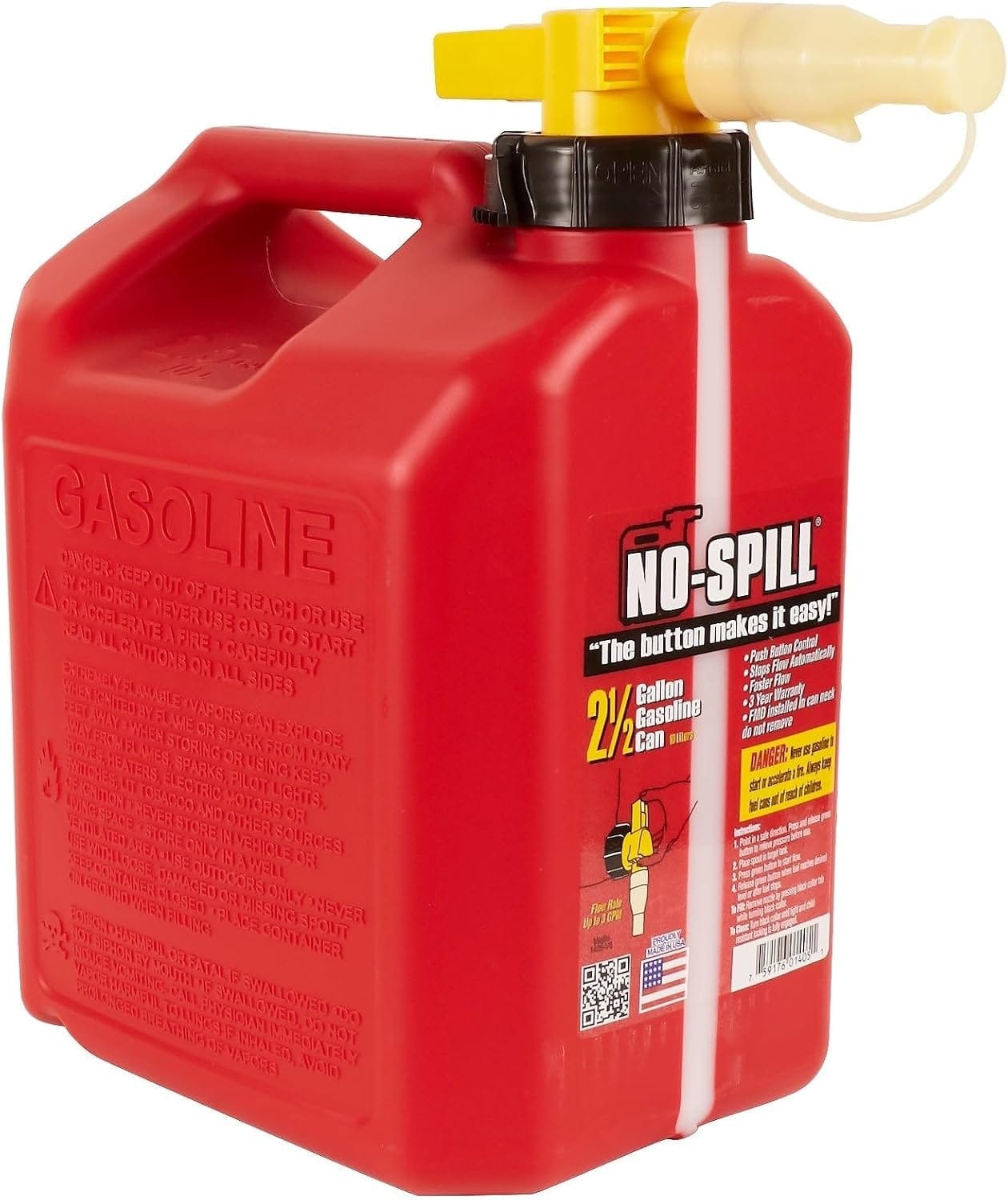
The No-Spill 1405 is the smallest can on this list, and that's the point. It holds 2.5 gallons in a high-density polyethylene body that stands about 13 inches tall, and it pours through a push-button spout: press the thumb button to start the flow, let go to stop it. An automatic flow stop is built in to cut fuel off before it spills over. The 7/8-inch spout is sized for the small fuel openings on mowers, trimmers, and chainsaws, and a dust cover keeps it clean between jobs.
Size is the real advantage here. Gasoline weighs about six pounds a gallon, so a full 2.5-gallon can carries roughly 15 pounds of fuel—a very different experience from hoisting 30-plus pounds over a mower deck. A fuel-level stripe on the side lets you see how much is left without shaking the can like a maraca, and listings cite a flow rate of up to 3 gallons per minute, so a typical small-engine fill-up is over quickly.
This is a consumer plastic container, not a metal safety can like the FM-approved Justrite or the Eagle, so it fills a different role. It is CARB-compliant and child-resistant, includes a flame mitigation device, and carries a three-year manufacturer warranty. Replacement O-rings and nozzle assemblies are sold separately, which is reassuring, because seals are the first thing to check on any can with a moving spout.
Owner feedback is generally favorable but not unanimous. Buyers like the controlled pour and how easy the can is to handle. Some report that the automatic shutoff can be finicky and that long-term durability varies. The spout takes a few tries to learn, so test it with the can empty before you need it at the edge of a half-mowed lawn.
Best for: Mowers, string trimmers, chainsaws, and other small equipment—and anyone who finds a full five-gallon can too heavy to handle comfortably.
Potential drawback: At 2.5 gallons, it needs refilling twice as often as a five-gallon can, which is a nuisance with generators or large equipment, and owner feedback on the automatic shutoff and long-term durability is mixed.
FAQs: Gas Cans
Which is better: metal gas cans or plastic gas cans?
Everything depends on how long you will be keeping your gas. For lasting gas storage space, go with a steel gas container. Steel containers will not expand or contract with ambient temperatures and, unlike plastic containers, there are no chemicals to contaminate the gasoline, keeping it fresher for a longer time.
There is no risk of plastic fuel gas canisters corroding, and in a situation of a fire, the plastic gas container will simply melt. However, a steel can will possibly explode. Therefore, whether you use metal or plastic, if there is a fire in the garage, it will not be a nice place to be in.
Why doesn't my new car take gas from gas cans?
Tried to add some gas to the gas tank and couldn't. This is an issue you might have and not understand why.
New cars without an alternate gas cap normally have 2 flaps: the first flap serves as a closure at the top, and the second flap further down the filler neck. Most of the time, the gas spout doesn't have enough length to push the 2nd flap open. Therefore, the gasoline will fill up the section between the first flap and the second flap, and that's it. If you keep pouring the gasoline, it will overflow and pour over your nice paint.
So far, there is no standardization regarding how long or how short the distance between the centers of the two flaps is, or just how narrow the filler neck has to be. Some Original Equipment Manufacturers (OEMs) may supply a long-neck funnel with the vehicle, but some do not. If you are ever stuck by the side of the road, this is not the place to learn about or address this issue.
What is the best gas can for most homeowners?
For most homeowners, the best gas can is a two- to five-gallon compliant container with a secure cap, controlled-flow spout, sturdy handle, and manageable filled weight. The No-Spill 1450 is a practical five-gallon option, while the smaller No-Spill 1405 is easier to lift.
What is the difference between Type I and Type II gas cans?
A Type I safety can uses one opening for filling and dispensing. A Type II safety can has separate fill and pour openings, usually with a flexible hose for more controlled dispensing. Both should use self-closing closures, pressure relief, and flame-arresting features when sold as approved safety cans.
Can I keep a full gas can in my car?
A full gas can should not be stored in a vehicle or passenger compartment. For short transport, use an approved container, keep it upright and secured, maintain ventilation, drive directly to the destination, and remove the can immediately after arrival.
How long can gasoline be stored in a gas can?
Gasoline can begin degrading within several months, although storage life varies with fuel formulation, temperature, container quality, and the use of stabilizer. Rotate stored fuel regularly and follow the fuel and equipment manufacturers’ instructions.
Should a gas can be filled on the ground?
Yes. Place a portable fuel container on the ground before filling it. Do not fill it inside a vehicle, in a trunk, or on a plastic-lined truck bed because static electricity can build up and ignite gasoline vapors.
Where should gasoline be stored at home?
Store gasoline in an approved, tightly closed container in a cool and well-ventilated detached garage or shed when permitted. Keep it away from living areas, pilot lights, heaters, sparks, flames, and direct sunlight, and follow local fire codes.
You may be interested in these other automotive reviews.
 Save With Reviews
 Save With Reviews
 Save With Reviews