
,The best automatic transmission fluids in 2026 are full-synthetic formulations matched to your manufacturer's specification — with top-rated options including Valvoline MaxLife Multi-Vehicle ATF, Castrol Transmax Full Synthetic, and Mobil 1 Synthetic ATF available on Amazon for $10 to $30 per quart, depending on type and vehicle compatibility.
There's a particular sound a transmission makes when it's running low on fluid. Not a dramatic knock or a screech — more of a hesitation. A barely-there pause between when you ask for a gear and when the car actually decides to give it to you. Easy to miss. Easy to chalk up to "just how the car is." I drove a Camry for three months with that exact symptom before a mechanic looked at me the way mechanics look at you when the answer was obvious, and you just didn't know to look for it.
Transmission fluid is one of the least glamorous topics in automotive maintenance — and one of the most expensive to get wrong.
The thing is, it's doing three completely different jobs simultaneously. Hydraulic fluid. Coolant. Lubricant. All at once, all the time, under conditions that would dissolve lesser fluids within a few thousand miles. The wrong fluid — or the right fluid at the wrong level — doesn't just cause inconvenience. It causes slipping, shuddering, delayed engagement, overheating, and eventually the kind of catastrophic transmission failure that makes experienced mechanics wince when they quote you the repair cost.
This guide is for anyone who wants to understand what they're buying before they buy it. No filler.
Key Takeaways
- Full-synthetic ATF outperforms conventional fluid in heat resistance, oxidation stability, and cold-weather flow — worth the modest price premium for most modern vehicles
- Manufacturer specification is not optional — using the wrong ATF type can void warranties and damage internal clutch packs within thousands of miles
- CVT fluid, DCT fluid, and standard ATF are not interchangeable — know which transmission type your vehicle has before purchasing anything
- Fluid color and smell are diagnostic tools — healthy ATF is red and mildly sweet; dark brown, black, or burned-smelling fluid means problems already in progress
- Top-rated ATF options on Amazon range from $10–$18 per quart (standard multi-vehicle) to $25–$30 per quart (OEM-spec synthetic)
What Automatic Transmission Fluid Actually Does (Most Guides Skip This)
The marketing copy on ATF bottles tends to be vague in an almost impressive way — "smoother shifts," "extended protection," "advanced formula." Fine. But none of that explains the actual mechanism, and understanding the mechanism is what makes buying decisions obvious rather than arbitrary.
Your automatic transmission operates through a hydraulic control system. Pressurized fluid — your ATF — actuates clutch packs and bands that engage different gear ratios. No fluid pressure, no gear engagement. It's not mechanical in the intuitive sense; it's hydraulic logic, with fluid as the operating medium. This is why "low fluid" doesn't just mean "less lubrication." It means insufficient hydraulic pressure to fully engage clutches, which produces the slipping, hesitation, and rough shifting that signal a problem.
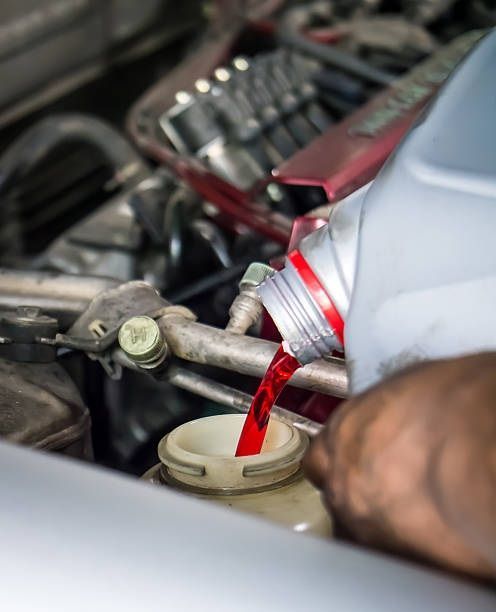
Simultaneously, the fluid carries heat away from friction surfaces inside the transmission, passing through an external cooler (usually integrated with the radiator or a standalone unit on performance and towing applications) before recirculating. A fluid that breaks down under heat doesn't just stop lubricating. It stops cooling. The failure mode accelerates.
And then there's the lubrication function itself — gear teeth, bearing surfaces, bushings, the torque converter internals. All of it running in constant contact, all of it depending on a fluid film maintained by the ATF's viscosity characteristics.
Three jobs. One fluid. The reason manufacturer specifications exist is that those jobs require different — sometimes competing — properties, and different transmission designs balance those properties differently.
Types of ATF: What the Labels Mean and Why They're Not Interchangeable
Multi-Vehicle Full Synthetic ATF
Formulated to meet multiple manufacturer specifications simultaneously — GM DEXRON-VI, Ford MERCON V, Toyota WS-adjacent, and others — in a single bottle. Convenient. Genuinely good for a wide range of applications.
Not a universal replacement for OEM-spec fluids in every case. Vehicles with very specific fluid requirements (certain Honda CVTs, newer ZF 8-speed transmissions, some Aisin units) may not be fully compatible with multi-vehicle synthetics despite the packaging's confident claims. Always verify against your owner's manual before using a multi-vehicle product in a specialty application.
OEM-Specification ATF (DEXRON, MERCON, Toyota WS, Honda DW-1)
Fluid formulated to meet the precise specification published by the vehicle manufacturer. DEXRON-VI for most modern GM vehicles. MERCON LV for recent Ford applications. Toyota World Standard (WS) for Toyota/Lexus. Honda's DW-1 or Z-1 for Honda/Acura.
These spec designations aren't marketing — they reflect actual formulation requirements tested against that manufacturer's transmission hardware. The difference between DEXRON-VI and an older DEXRON-III formulation, for instance, involves shear stability, friction modifier chemistry, and viscosity index characteristics that affect how clutch packs engage. Wrong spec, wrong friction characteristics, premature clutch wear.
CVT Fluid
Continuously Variable Transmissions use a belt-and-pulley or chain-and-pulley system with fundamentally different lubrication and friction requirements than conventional planetary gear automatics. CVT fluid is not ATF, and ATF is not CVT fluid. Using standard ATF in a CVT — even briefly — can cause belt slippage and significant internal damage.
Nissan NS-3, Toyota CVT Fluid FE, Honda HMMF — these are not interchangeable across brands either, as different CVT designs have different friction coefficient requirements.
Dual-Clutch Transmission (DCT) Fluid
DCTs straddle the line between manual and automatic — two automated clutch packs handling odd and even gears respectively. They require fluid optimized for wet clutch operation rather than the hydraulic actuator focus of traditional ATF. Volkswagen/Audi DSG fluid, Ford PowerShift fluid — distinct formulations for distinct mechanisms.
How to Check Your Transmission Fluid (And What You're Actually Looking For)
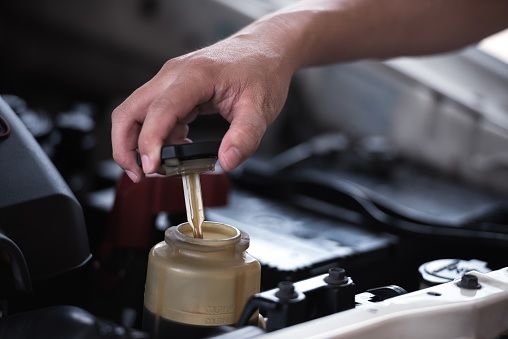
Quick answer: With the engine warm and running (for most vehicles — some require engine off; check your manual), locate the transmission dipstick, withdraw it, wipe clean, reinsert fully, withdraw again, and read against the HOT MIN/MAX markers. Color and smell matter as much as level.
The Process
Warm the engine first. Transmission fluid expands with heat. Checking the ATF level on a cold transmission gives a false low reading on most vehicles. Run the engine for 10–15 minutes, including a few shifts through the gear selector if possible, before checking.
Locate the dipstick — typically a red or orange handle toward the rear of the engine bay on most front-wheel-drive vehicles, or toward the passenger side on rear-wheel-drive applications. Some modern vehicles (many BMW, Mercedes, and Ford applications) have sealed transmissions with no dipstick. These require specialized service procedures. If you can't find a dipstick, check the owner's manual before assuming there isn't one.
Read the color and smell, not just the level. Healthy ATF is transparent red with a mildly sweet, slightly chemical odor. Pink and milky coloration indicates water contamination — possibly coolant intrusion through a failed transmission cooler in the radiator, which is a serious problem requiring immediate attention. Dark brown indicates oxidation from excessive heat. Black indicates severe degradation. Burned smell — distinctly sharp, acrid — means friction material has been overheating.
A fluid that looks fine on the dipstick but smells burned is still telling you something important.
When to Change Transmission Fluid
The old-school advice of "transmission fluid lasts the life of the vehicle" has been quietly walked back by most manufacturers who originally promoted it — because "life of the vehicle" turned out to mean "until the transmission fails at 120,000 miles and needs a $3,000 rebuild."
More realistic guidance: every 30,000–60,000 miles for most vehicles under normal driving conditions. Severe service — towing, mountainous terrain, stop-and-go urban driving, hot climates — shortens that interval. Cold climates with lots of short trips also accelerate ATF degradation because the fluid never reaches full operating temperature, preventing normal moisture burn-off.
Toyota's official WS fluid recommendation is "lifetime" for non-severe service — but many Toyota-specialized mechanics recommend a 60,000-mile drain-and-fill regardless, and the consensus in Toyota enthusiast communities has shifted strongly toward proactive service.
Your owner's manual is the starting point. Experience with your specific driving conditions adjusts from there.
Signs Your Transmission Fluid Needs Attention Right Now
Some symptoms can wait for a scheduled service. These cannot.
Slipping between gears — engine revs climb without a corresponding increase in vehicle speed. Insufficient hydraulic pressure from low fluid or degraded fluid that has lost viscosity.
Delayed engagement from Park — you shift to Drive or Reverse, and there's a notable pause before the transmission catches. Low fluid or worn clutch packs. Either way, don't ignore it.
Shuddering during acceleration — a rhythmic vibration or shudder between roughly 25–45 mph, particularly on light throttle. Often, the torque converter clutch slips — sometimes resolved by fluid change, sometimes indicating more serious wear.
Unusual noises in Neutral — whining, humming, or buzzing that change with engine RPM. Can indicate fluid pump issues or bearing wear that a proper fluid level might not fully resolve.
Fluid leak — reddish fluid under the vehicle after parking, particularly toward the center or rear. Transmission pan gasket, cooler line fittings, or front pump seal. Address before the fluid level drops into the danger zone.
Final Thoughts
Transmission fluid sits in a strange category of automotive maintenance — technically simple, genuinely consequential, and almost universally under-prioritized right up until the moment it becomes extremely expensive.
The calculus is straightforward once you look at it directly: a quart of full-synthetic ATF costs $12. A transmission rebuild costs $2,500 to $5,000. Regular fluid maintenance — correct spec, correct interval, proactive rather than reactive — is one of the highest-return maintenance habits in automotive ownership, and it requires almost no skill beyond reading the owner's manual and buying the right bottle.
Use the right fluid for your transmission type. Check it when you check your oil. Change it on schedule, or slightly before if you tow or drive in demanding conditions.
The transmission that's been running on clean, correctly specified fluid for its entire service life shifts like new at 150,000 miles. The one that's been running on degraded, wrong-spec fluid tells you about it at 90,000 — loudly, expensively, at the worst possible moment.
Read the dipstick. Buy the right fluid. Don't gamble on the $3,000 lesson.
Need help? We've done the research for you and found the Best Automatic Transmission Fluid on Amazon.
Every day, we read hundreds of reviews and try the highest-rated products we have on our list.
Best Automatic Transmission Fluid
The Best
Product information
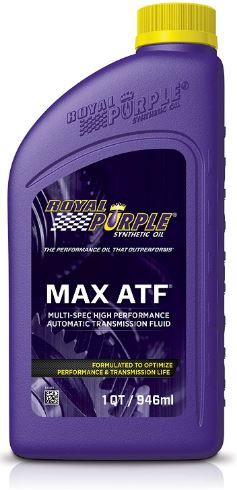
When it comes to ensuring the longevity of your automatic transmission, high film-strength transmission fluid plays a crucial role. The remarkable ability of this fluid to significantly reduce heat and wear is a game-changer for any vehicle owner. Automatic transmissions, known for generating substantial heat during normal operation, rely on transmission fluid not just for smooth functioning, but also for effective cooling and protection.
By opting for transmission fluid with high film strength, you're making a proactive choice to extend the life of your transmission system. This fluid doesn't just offer basic compatibility; it can be seamlessly mixed with other automatic transmission fluids, providing unparalleled flexibility. Whether you're managing a fleet of multiple passenger vehicles or simply seeking optimal performance for your ride, this fluid comes highly recommended for its outstanding heat reduction capabilities.
In conclusion, prioritizing the use of high-film strength transmission fluid equates to a smart investment in the long-term health of your vehicle's transmission. By choosing a product that offers full compatibility and exceptional heat reduction, you're taking a proactive step towards safeguarding your transmission system against wear and tear, ultimately ensuring its sustained performance and durability.

This is a high-performance transmission fluid. If you care about your transmission, look after it with Royal Purple.

Customers reported receiving engine oil instead of transmission fluid. A bit pricey.
Our Thoughts - This is a great product. If you want to have a cooler operating transmission and hence last longer, this is it. Always check when on delivery. Always check the owner's manual.

Very Good
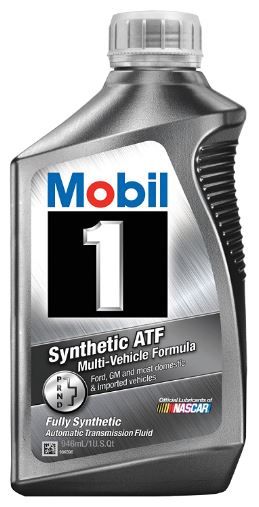
Product information
Ensuring optimal transmission performance in your vehicle necessitates the use of a high-quality lubricant that can withstand extreme temperatures. Notably, the lubricant should be capable of offering prompt and steadfast lubrication to the transmission system even in ambient temperatures plummeting to as low as -54 degrees Celsius. This feature is essential for maintaining the smooth and efficient operation of the transmission, especially under severe weather conditions.

It does the job under extreme temperatures. Breaks down bad oil deposits.

Check your vehicle's owner's manual, as it may not be suitable for your ride.
Our Thoughts - This transmission fluid is a great product that everyone recognizes and will give a smooth gear change. Not for manual transmissions. Always check the owner's manual.

Very Good
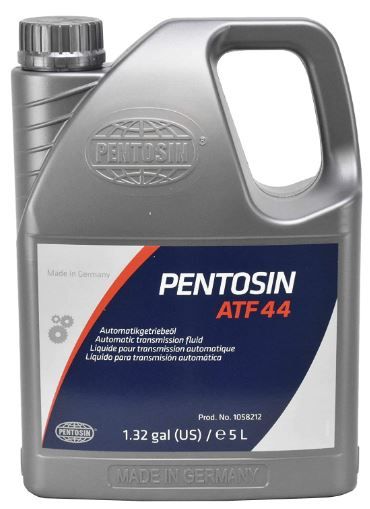
Product information
Pentosin ATF 44 sets the benchmark for superior performance and protection in automatic transmission fluids. Specifically designed for Aisin AW automatic transmissions, this product is a top choice for a wide range of Japanese passenger cars and light-duty vehicles. Its unique formulation caters to these specific transmission types, ensuring optimal compatibility and performance. However, its versatility doesn't stop there. The ATF 44 also finds utility in select American and European vehicles, demonstrating its broad applicability.
The strength of Pentosin ATF 44 lies in its premium formulation. It comprises the finest commercially available synthetic oil base stocks and additive components. This potent combination provides the ultimate protection and performance, making it an excellent choice for both Asian vehicles and Dexron III applications. With its high-grade synthetic base and advanced additives, ATF 44 stands out for its ability to deliver consistent, reliable performance across a wide range of vehicle types and transmission systems.
While Pentosin ATF 44 is compatible with conventional branded transmission fluids, it's recommended to perform a complete fluid change when converting to ATF 44. This ensures that you can fully benefit from its superior performance characteristics. As a testament to its quality, ATF 44 meets the stringent standards of Asian Vehicles: JASO M315 TYPE 1A-LV. When you choose Pentosin ATF 44, you're opting for a product that delivers unparalleled performance, protection, and compatibility, ensuring your vehicle's transmission system operates at its best.

Great transmission fluid, can be used for various transmissions.
Customers appreciate the machine lubricant for its value, quality, performance, and prompt delivery. They often highlight its cost-effectiveness, comparing it favorably to the original equipment manufacturer (OEM) fluid. Not only does it provide a good deal, but its high performance is frequently praised.

Not cheap for this transmission fluid, and there is a reason for that; it's good.
Our Thoughts - This is a great transmission fluid at a price. But if you want one of the best, this is it.

Good Value
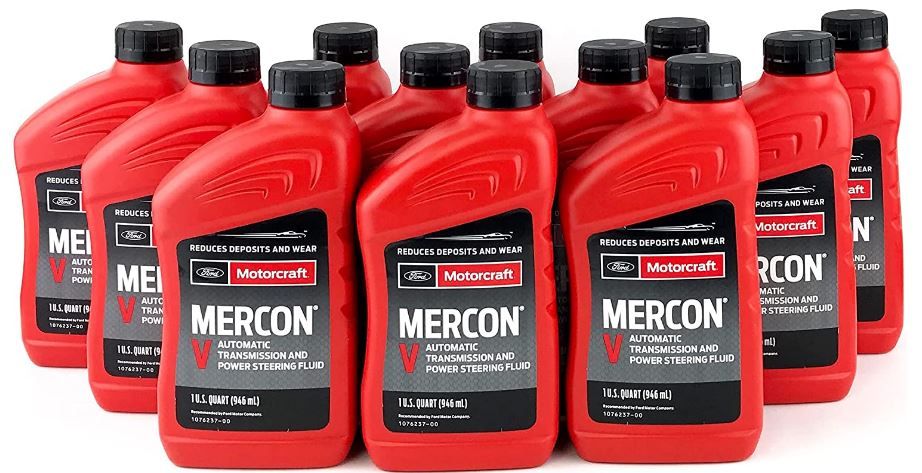
Product information
The product in focus is Transmission Fluids, a crucial component for your vehicle's optimal performance. The package of this essential item weighs a manageable 2 pounds, making it easy to handle and transport. In terms of dimensions, the package measures 13 inches in length, 11 inches in width, and 10 inches in height. These compact dimensions further enhance the ease of storage and usage.

A great supply of good transmission fluid for a great price.

Packaging and handling need to improve. Customers reported bottles containing old transmission fluid and engine oil. Others had half a bottle missing.
Our Thoughts - This is a very good transmission fluid, but bad inspection, packaging, and handling make people not buy again.

Good
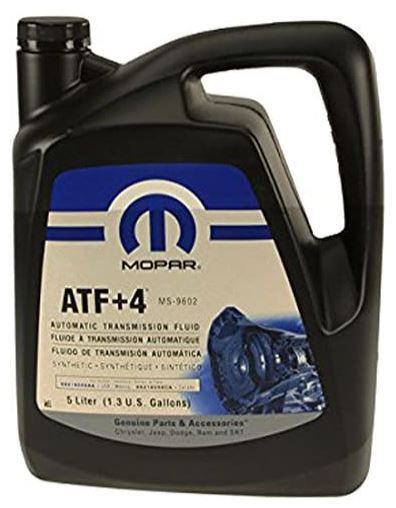
Product information
MOPAR ATF Plus 4 is a top-tier transmission fluid, packaged conveniently in a 1.3-gallon bottle. Known for its superior performance and reliability, this product is a go-to choice for vehicle owners looking to maintain or enhance their vehicle's transmission system. The part number for this product is 68218058AC, making it easy for customers to identify and order the correct product.
The package weight for the MOPAR ATF Plus 4 transmission fluid comes in at 4.241 kilograms, making it easy to handle and transport. This manageable weight ensures a hassle-free application process. Included in the package is the component with the identifier 68218058AC. When you choose MOPAR ATF Plus 4, you're opting for a product that delivers high performance, ease of use, and convenience, all in one package.

The five-liter container is great for a full transmission fluid change, and some is left over. Great value.

Packaging and handling need to improve. Customers reported an open bottle and missing transmission fluid.
Our Thoughts - This is a good-quality transmission fluid, but the packaging and handling are very bad.

Good
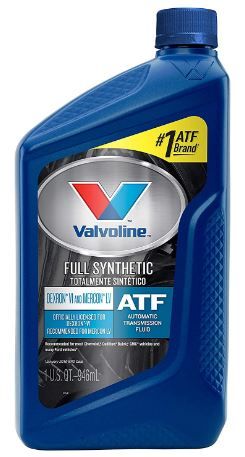
Product information
Our product is uniquely designed to provide consistent shift performance across all GM transmissions, whether they're brand new or have been on the road for years. This transmission fluid is engineered to ensure smooth shifting, resulting in an improved driving experience, no matter the age or model of your GM vehicle. Additionally, it extends the life of the transmission fluid, preventing breakdown even when operating at higher temperatures. This means your vehicle's transmission system remains well-lubricated and efficient, even under intense heat conditions.
This transmission fluid excels in providing excellent oxidative stability under harsh conditions, maintaining the functionality and longevity of your vehicle's transmission system. It works tirelessly to keep your system in top condition, even under severe stress. Moreover, it actively reduces the build-up of sludge and varnish, ensuring a cleaner and more efficient transmission system. This means less potential damage and fewer costly repairs down the line. By choosing our product, you're investing in superior performance and durability for your vehicle's transmission system.

This transmission fluid improves shifting performance and reduces foaming, oxidation, and can withstand high temperatures.

Can't buy this transmission fluid in bulk.
Our Thoughts - Valvoline is a good transmission fluid that is anti-varnishing and reduces friction. Not for manual transmissions.

FAQs: Automatic Transmission Fluid
How often should I change my automatic transmission fluid?
The change interval can vary, but it's typically recommended to consult your vehicle's owner's manual for the manufacturer's suggested service schedule. Be aware that demanding driving conditions may necessitate more frequent changes.
Can I use any brand of automatic transmission fluid in my vehicle?
No, it's important to use the brand and type of ATF that is specified by your vehicle's manufacturer. Using the wrong fluid can lead to transmission problems and void your warranty.
What are the signs that my transmission fluid needs to be changed?
Common signs include difficulties in shifting gears, unusual noises from the transmission, a burning smell, or the presence of a leak. Always check the fluid level and condition regularly and consult your service manual or a professional for guidance.
Is it OK to mix old and new transmission fluid?
Simple answer, no! Transmission fluid should be changed periodically according to the vehicle's OEM specifications.
When old and new fluids are mixed, the performance of the transmission will be reduced. The additives in the old fluid have deteriorated and no longer perform as they should.
Is it bad to use the wrong transmission fluid?
The simple answer, it's bad! Every ATF has been matched by the OEM to give the best performance to their transmission. It may cause overheating, poor lubrication, and transmission breakdown. For the record, never use engine oil in a transmission.
What's the best automatic transmission fluid for most cars?
For vehicles with standard torque-converter automatic transmissions, a full-synthetic multi-vehicle ATF like Valvoline MaxLife or Castrol Transmax covers most applications adequately. For vehicles with specific OEM requirements — Toyota WS, Honda DW-1, GM DEXRON-VI, Ford MERCON LV — use the manufacturer-specified fluid. Check your owner's manual before purchasing.
Can I use any ATF in my car?
No. ATF type is not universal. Using the wrong fluid — particularly in CVT, DCT, or vehicles with specific OEM specifications — can cause shift quality problems and internal damage. The owner's manual specifies exactly which fluid type your transmission requires. That specification is not a suggestion.
How do I know if my transmission fluid is bad?
Check the color and smell on the dipstick. Healthy ATF is transparent red with a mild, sweet odor. Dark brown or black fluid indicates oxidation and heat degradation. Milky or pink fluid indicates water contamination. The burned smell indicates overheating. Any of those conditions means a fluid change is overdue — and burned or milky fluid warrants a mechanic inspection beyond just the fluid change.
How often should I change automatic transmission fluid?
Most manufacturers recommend every 30,000–60,000 miles under normal driving conditions. Severe service — towing, hot climates, heavy stop-and-go driving — shortens that interval. Some manufacturers claim "lifetime" fluid, but most transmission specialists recommend proactive changes at 60,000 miles regardless of official intervals.
Is synthetic ATF worth the extra cost?
Yes, for most modern vehicles. Full-synthetic ATF provides better heat resistance, oxidation stability, and cold-weather flow than conventional fluid. The price premium over conventional ATF is modest — typically $2–$4 per quart — and the extended service life and improved protection justify it easily for most applications.
Can I mix different brands of ATF?
You can mix brands as long as both meet the same specification — two DEXRON-VI fluids from different brands can be mixed without issue. Do not mix different specification types (e.g., DEXRON-VI and MERCON V, or ATF with CVT fluid) regardless of brand. When topping off, always use a fluid that meets your vehicle's specified type.
Looking for additional automotive essentials?
Check out our other articles!
 Save With Reviews
 Save With Reviews
 Save With Reviews