

Quick Answer: The best car roof rack for surfboards and kayaks is a crossbar system with aerodynamic, rubber-coated bars, a load rating that meets your vehicle's roof limit, and a vehicle-specific fit kit. For most drivers, Thule's WingBar Edge or Yakima's JetStream system offers the best balance of security, noise reduction, and compatibility. Keep reading for a full breakdown by vehicle type, load, and budget.
If you've ever tried wedging a 9-foot longboard into a Honda Civic, you already know the particular kind of frustration I'm talking about. It's not just inconvenient — it's genuinely dangerous, for your board and for everyone else on the road. A good car roof rack changes everything. Honestly, it changed the entire rhythm of my weekends once I finally stopped procrastinating and bought one.
So here's the deal. Not all roof racks are built the same. The one that works brilliantly for a Thule-loving SUV owner hauling two kayaks to Lake Tahoe is completely different from what a compact car driver needs to strap down a single shortboard for a dawn session in Malibu. This guide breaks it all down — types, materials, compatibility, installation, and the stuff the product listings never quite tell you.
What Is a Car Roof Rack, Really?
A car roof rack is exactly what it sounds like — a mounting system that attaches to your vehicle's roof and extends its carrying capacity beyond what the interior allows. For surfers, kayakers, paddleboarders, or anyone toting skis, lumber (yes, some people do), or oversized camping gear, it's less of an accessory and more of a necessity.
The most common configuration is the crossbar system — two horizontal bars running width-wise across your roof, connected to feet or towers that grip your vehicle's existing rails, rain gutters, or fixed mounting points. Simple, right? Sort of. The catch is that compatibility varies wildly depending on your car's roof architecture, which we'll get into in a second.
The Different Types of Roof Rack Systems
Raised Rail Racks
These attach to the raised side rails that run lengthwise along the roof on many SUVs and crossovers. If you own a Subaru Outback, Toyota RAV4, or similar — look up. You've almost certainly got raised rails already. Crossbars clip onto these rails at adjustable positions, giving you flexibility in how you space them.
The spacing matters more than you'd think, by the way. Surfboards and kayaks generally want bars spread at least 24–30 inches apart to distribute weight evenly and reduce flex. Get them too close together, and you're essentially creating one very expensive fulcrum.
Flush Rail Systems
Sleeker vehicles — think sedans, some newer crossovers — often have flush rails that sit nearly flush with the roofline. These require a different kind of mounting foot designed to grip the low-profile rail. Brands like Thule and Yakima both offer excellent flush-rail compatible systems; their online fit guides are genuinely useful and worth the five minutes it takes to plug in your year, make, and model.
Fixed Point / Bare Roof Systems
Here's where it gets trickier. Some cars have neither raised nor flush rails — just a bare metal roof with factory-installed fixed mounting points hidden under plastic covers. Others have nothing at all. For those vehicles, you're looking at clamp-style or door-frame systems that anchor under the door edges. They work, but installation takes more attention, and you absolutely need to follow torque specifications from the manufacturer. Over-tighten, and you're damaging door seals; under-tighten, and — well. Don't under-tighten.
Why Material Choice Is More Complicated Than "Aluminum vs. Steel"
Most people simplify this down to: aluminum = light and expensive, steel = heavy and cheap. That's... mostly true. But the nuance matters.
Aluminum crossbars are corrosion-resistant, weigh meaningfully less (which matters for fuel economy and your roof's load rating), and tend to have cleaner aerodynamic profiles. They're the go-to for anyone doing long highway miles or carrying loads frequently. The trade-off? They dent more easily than steel if you're rough with gear. One dropped kayak corner, and you might have a permanent ding.
Steel crossbars are tougher in the impact-resistance sense — they bend rather than dent — and they're significantly cheaper upfront. The durability concern is rust, especially if you live somewhere with salty air (coastal surfers, I'm looking at you specifically). Powder-coating helps, but once that coating scratches and saltwater finds bare metal... It's a slow-motion problem.
There are also composite/polymer options on budget systems. Honestly? Skip them for heavy loads. They're fine for bikes or lightweight luggage, but if you're strapping down a 15kg fiberglass tandem surfboard at 75mph on I-5, you want metal.
Load Capacity — The Number Nobody Reads Until Something Goes Wrong
Every roof rack system has a stated maximum dynamic load — that's the maximum weight it's rated to carry while the vehicle is moving. This number is separate from your vehicle's own roof weight limit, which is listed in your owner's manual.
The rule is: your effective maximum load is whichever of these two numbers is lower.
A typical passenger car might have a manufacturer's roof rating of 75–100 lbs. A loaded kayak plus the rack itself can easily push that ceiling. Thule's entry-level WingBar Edge system is rated to 165 lbs standalone, but if your car's roof is only rated for 80 lbs, those extra pounds of rated capacity are irrelevant — you're governed by the weaker link.
For surfboards specifically, this is usually fine. A longboard might be 8–10 lbs. Two boards, plus soft racks or pads, plus straps? Still well under most limits. Kayaks are heavier — a polyethylene sit-on-top can weigh 60–70 lbs alone, and suddenly you're doing math.
Features That Actually Matter for Long Items
Okay. This is the part most product descriptions gloss over with phrases like "suitable for oversized cargo," which tells you absolutely nothing.
Padded or rubber-coated bars: Non-negotiable if you care about your surfboard's finish. Bare aluminum bars will scratch gel coat. Either buy crossbars with rubber coatings, or use foam bar pads — they're inexpensive, widely available, and they make a genuine difference. The sound alone (that horrible grinding scrape) is worth preventing.
Tie-down points: Look for crossbars with integrated T-slots or accessory channels. These let you attach cam buckle straps, J-cradles, or surf-specific tie-down hooks securely, rather than just looping straps around the bar and hoping for the best. Strap placement on a smooth round bar has a tendency to slide, especially in corners — this is the kind of thing you don't think about until your board is 20 feet behind you on the freeway.
Bar width and extension options: Standard crossbars typically span your roof width, which for most cars is 48–52 inches. For extremely wide loads, some systems allow extension bars or wider replacements. Less commonly needed, but relevant if you're hauling, say, a canoe wider than your car's roof.
Locking mechanisms: A lot of people overlook this, but a lockable mounting foot and lockable crossbars are worth the upgrade if you're leaving gear on the roof at trail parking lots, beaches, or overnight. The Thule One-Key System lets you key all your locks to the same key — legitimately one of those small conveniences that becomes a surprisingly big deal.
Reducing Wind Noise — Because 3 Hours of "WHOOOOSH" Will Break You
Wind noise is arguably the most underrated complaint about roof racks, and it's worse with bare crossbars than with anything else. Round bars create turbulence; that turbulence creates noise; that noise at highway speed is somewhere between "mildly irritating" and "actually makes you want to drive into a ditch."
Aerodynamic/wing-shaped crossbars — Thule's WingBar, Yakima's JetStream, for example — are flattened and shaped to cut through air rather than churn it. The difference at 70mph is dramatic. These bars also reduce drag, which translates to a marginal but real improvement in fuel consumption over long distances.
Wind deflectors mount at the leading edge of the front crossbar and divert airflow over your load. They're especially useful when carrying flat items (boards, skis) that otherwise act like sails. If you're already buying an aerodynamic bar profile, a deflector on top is somewhat redundant — but on round bars, it's a worthwhile $30–50 add-on.
One thing nobody tells you: the strap ends flapping in the wind create almost as much noise as the bars themselves. Fold or tuck the excess strap length after securing your load. This sounds almost embarrassingly simple, but it makes a noticeable difference.

Compatibility and Installation — Don't Skip This Part
I know, I know. Installation sections are boring. But getting this wrong ranges from "annoying rattle the whole drive" to "rack detaches on the highway at 65mph," so bear with me.
Most modern roof rack systems (Thule, Yakima, Rhino-Rack, and others) provide vehicle-specific fit kits that include pre-configured feet, T-bolts, and instructions for your exact car model. These fit kits are not optional extras — they're what make the rack safe on your specific vehicle. Buying a universal system and improvising is a shortcut that routinely ends in scratched roofs, misaligned mounting, and dynamic instability.
Installation checklist:
- Confirm fit kit compatibility using the manufacturer's guide (year/make/model specific)
- Clean roof rails before mounting — dirt and grit under mounting feet causes scratches and reduces grip
- Torque all bolts to manufacturer specifications; use a torque wrench if specified
- Check crossbar levelness side-to-side before final tightening
- After the first drive of ~50 miles, re-check all mounting points — new systems settle
Maintenance is straightforward but worth doing: inspect mounting bolts before any major trip, check for corrosion at the contact points, especially if you live near the coast, and lubricate lock cylinders with dry graphite lubricant annually (not WD-40 — it gums up eventually).
Which Roof Rack Is Right for You? A Quick Decision Guide
Choose a raised rail system if: Your car has factory raised side rails and you want the quickest, most hassle-free installation.
Choose a flush rail system if: You have low-profile factory rails and want a clean, aerodynamic look that doesn't add much height.
Choose a fixed-point or gutter system if: Your vehicle has factory mounting points but no rails, or a traditional rain gutter on an older truck or van.
Choose a bare-roof/clamp system if: No rails, no points, nothing — just a flat roof. Works, but takes more care to install correctly.
For surfboards specifically: Prioritize padded crossbars or buy foam pads, ensure at least 24 inches of bar spread, and use purpose-made surf strap kits — not generic tie-down straps that can cut into your board's rails under tension.
The Bottom Line
A car roof rack is — once you have one — one of those things you genuinely cannot believe you went without. The freedom to throw boards on the roof and go, to not worry about renting gear locally or cramming equipment into seats — it's worth the investment, full stop.
Buy from a reputable brand (Thule and Yakima dominate for good reason), get the correct fit kit for your exact vehicle, use padded bars or foam pads if you're carrying boards, and do the five-minute maintenance check before long trips. That's really it. The rest is just driving toward whatever coastline, lake, or mountain road has been waiting for you.
Need help? We've done the research for you and found the Best Car Roof Rack on Amazon. Every day, we read hundreds of reviews and try the highest-rated products we have on our list.
Best Car Roof Rack - Reviews
The Best
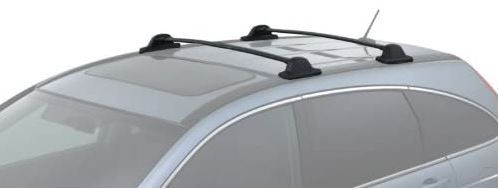
Product information
When it comes to finding the perfect roof rack for your vehicle, look no further. Our high-grade aluminum construction roof rack is not only lightweight but also incredibly durable, ensuring that it will withstand the test of time. With a total load capacity of 168 lbs when the load is evenly distributed, you can rely on this roof rack to carry your gear with ease. What's more, its aerodynamic design is specifically crafted to minimize wind noise, providing a smooth and quiet ride.
Installing our roof rack is a breeze, as it's bolted directly to the roof pre-set, allowing for a hassle-free setup in just minutes. The package includes a pair of crossbars, four mounting towers, and comprehensive instructions, making the installation process straightforward and stress-free. Whether you're heading out for a weekend adventure or simply need extra cargo space, our roof rack is designed to meet your needs efficiently and reliably. Experience the convenience and functionality of a top-quality roof rack that enhances your vehicle's capabilities while providing peace of mind on the road.

A good load capacity of 168 lbs. No problem carrying skis or a kayak.

The packaging and handling need to be improved. Some parts are missing from the kit.
Our Thoughts - Installation is semi-easy, but not with the instructions given. Some wind noise above 65 Mph. But that is expected.
Very Good
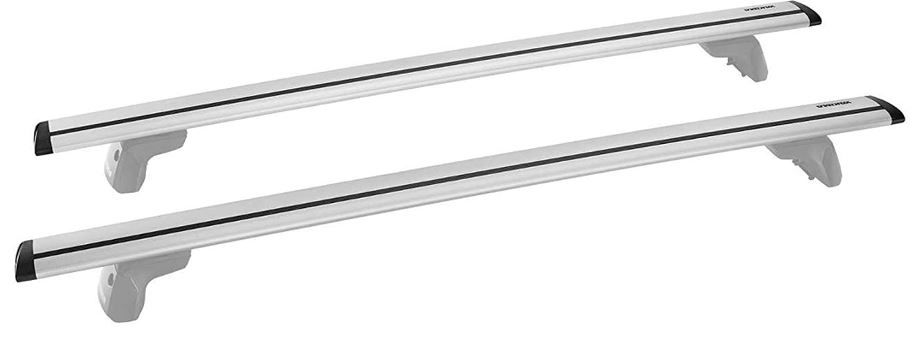
Product information
Introducing the ultimate solution for your cargo-carrying needs – our JetFlow teardrop-shaped roof rack. Crafted with high performance in mind, this roof rack boasts a strong, quiet design that minimizes drag for optimal efficiency, while the seamless aluminum construction ensures a lightweight and sleek aesthetic.
Not to be underestimated, the JetTruss internal support engineering adds serious strength while keeping weight to a minimum, offering a carrying capacity of 165 lbs (75 kg) across 2 bars. The T-slot rubber infill simplifies mounting and facilitates efficient airflow, complemented by 4 high-gloss polymer end caps that add a touch of sophistication to your vehicle. Compatible with Yakima StreamLine Towers, T-Slot attachments, and all Yakima gear mounts, this roof rack is available in three sizes: Small (50”), Medium (60”), and Large (70”). Elevate your cargo-carrying capabilities with a roof rack designed for unparalleled performance and versatility.

Two colors: black or silver. One customer drove at 80 Mph and had no issues with the rack system.

The packaging and handling need to be improved. Can be a bit noisy when traveling.
Our Thoughts - We think that the noise level may be reduced if the angle of the racks is adjusted better. The quality is very good, hence the price.
Very Good
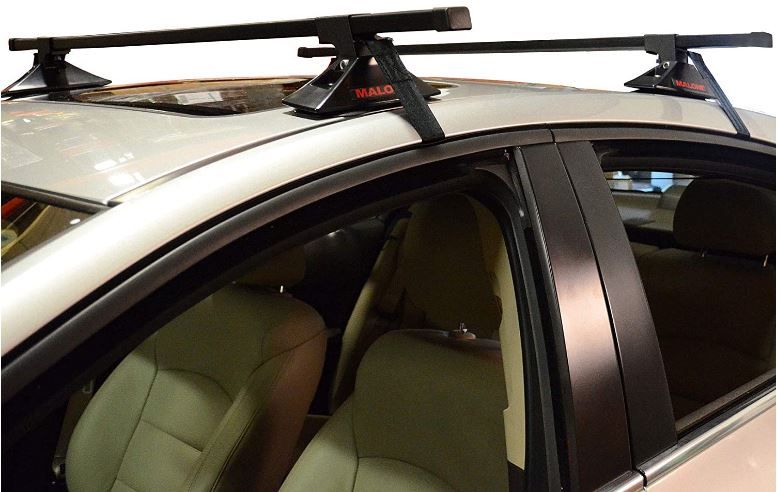
Product information
Effortlessly enhance your vehicle's cargo-carrying capabilities with our convenient and versatile roof rack. No additional tools are needed for installation, as we provide a wrench for your convenience, making the setup process seamless and stress-free. The corrosion-resistant load bar coating ensures durability and longevity, while the rectangular shape accommodates a wide range of rack accessories, adding to the rack's overall functionality and versatility.
Experience the convenience of a complete and ready-to-install roof rack with a substantial 135 lb. load capacity, offering ample space for your gear and equipment. The 75 lb. pull-strength vacuum tower bases, coupled with the 1.5" wide safety attachment straps, provide robust support and security, giving you peace of mind as you embark on your adventures. Elevate your vehicle's utility with a reliable and easy-to-use roof rack designed to meet your cargo-carrying needs with efficiency and durability.

Two sizes to choose from. A good product that is easy to install and use.

Quality and design are questionable. Water may leak into the vehicle when raining.
Our Thoughts - The hooks and/or blocks resting on the roof may leave marks. Can carry two kayaks on a medium to large-sized vehicle.
Good
Product information
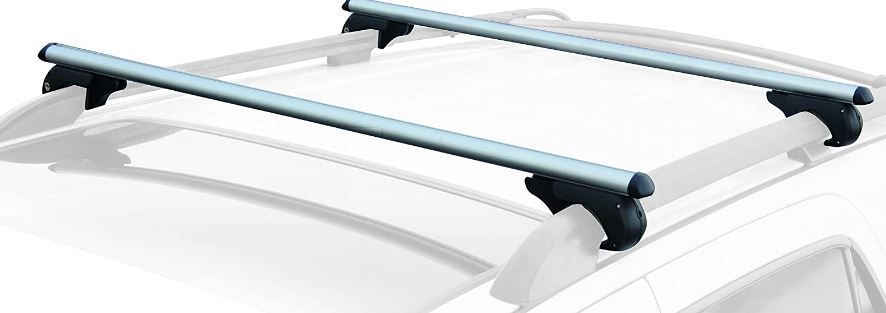
In the realm of cargo transportation, our aluminum rooftop cross bars stand out for their exceptional design. Featuring a rigid aluminum body, these cross bars effectively reduce weight without compromising on strength, ensuring reliability and durability for your cargo-carrying needs. Whether you're transporting a kayak, mountain bike, or skis, rest assured that these cross bars are up to the task of safely delivering your favorite recreational equipment to your desired destination.
With a heavy-duty clamping mechanism, these cross bars are firmly secured to the existing side rails, providing stability and peace of mind during transit. Additionally, the keyed locking mechanism further reinforces the security of your cargo, keeping it in place throughout your journey. Offering a maximum span of 46" between side rails, these cross bars provide ample space to accommodate your gear, making them an ideal choice for effortless and secure cargo transportation. Elevate your travel experience with these reliable and versatile cross bars designed to meet your cargo-carrying needs with efficiency and peace of mind.

Easy and quick to install. Good surfboard or almost anything (not too heavy) roof cross-bar set.

Packaging and shipping need improvement. Customers reported missing parts and used and damaged racks. The idea is good, but the design can be better.
Our Thoughts - For the price, the product is good. The whistling noise when driving can be annoying.
Good
Product information
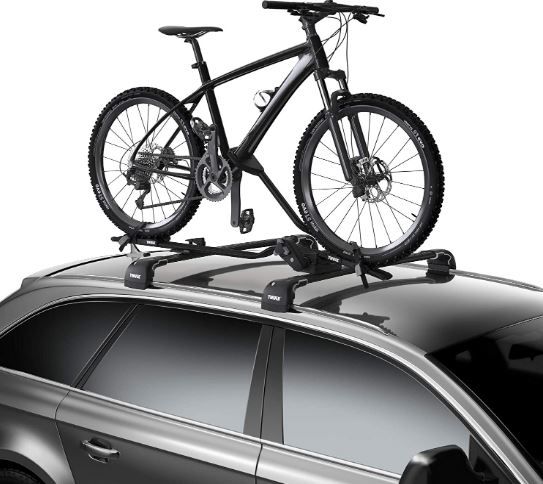
When it comes to transporting your beloved bike with ease and peace of mind, a universal upright bike rack for one bike is an indispensable solution. With a quick and secure mounting dial that controls the force applied to the bike frame, this bike rack ensures a reliable and efficient mounting process. The soft claw pads adapt to your bike's frame, minimizing the risk of damage and providing added protection during transportation. Furthermore, the frame holder and wheel tray automatically position your bike as you secure it, streamlining the process and enhancing convenience.
For added stability and security, the wheel holders are firmly stabilized by diagonal quick-release straps, ensuring that your bike remains in place throughout your journey. Additionally, the ability to easily switch carriers from one side of the vehicle to the other adds to the overall versatility and practicality of this bike rack. Take advantage of the option to lock your bike to the carrier and the carrier to the vehicle (locks sold separately), providing an extra layer of security and peace of mind. Elevate your biking adventures with a reliable and adaptable upright bike rack designed to meet your transportation needs with efficiency and care.

These are serious roof bike racks, solid and lightweight. Worth the money spent.

Packaging and shipping are questionable. Customers reported missing parts and received used products. Not at all theft-proof, but locks can be purchased, aftermarket.
Our Thoughts - Not so difficult to install, but the instruction manual is no help.
Good Value
Product information
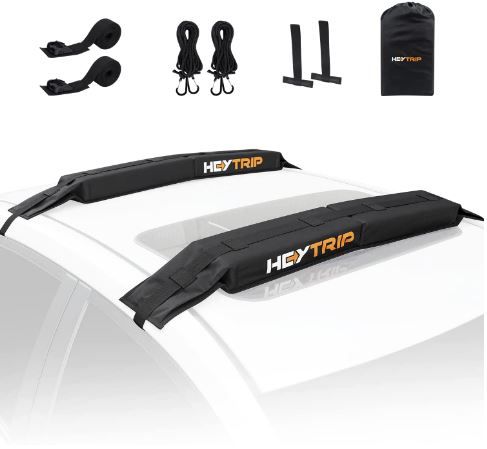
When it comes to convenient and versatile vehicle cargo solutions, MeeFar soft roof racks stand out as a top choice for transporting your outdoor gear with ease. These racks are compatible with vehicles equipped with or without gutters, making them an ideal option for securely carrying your kayak, surfboard, SUP, or canoe to your desired destination. The soft materials and built-in non-slip mat ensure that your gear is held tightly in place, minimizing scratching or scuffing and reducing wind noise during transit. Additionally, the top-grade EVA foam padding provides a cushioned landing for your loads and effectively dampens vibrations, enhancing the overall safety and security of your cargo during transportation.
MeeFar's soft roof racks boast a user-friendly design that requires no tools for installation. Each set includes 2 tie-down straps, 2 quick loop straps, and 2 tie-down ropes, allowing you to effortlessly attach the pads to your car's roof and secure your load in place. Moreover, the foldable design allows for easy storage when the racks are not in use, providing added convenience and flexibility for your transportation needs. With 2 x 15ft tie-down adjustable straps featuring padded cam locks and 2 x 15ft bow & stern tie-down ropes, these soft roof racks offer secure gripping and reliable safety measures for your cargo, accommodating up to 1-3 shortboards or 1-2 longboards or kayaks, depending on their size.

This roof rack is easy to use and set up; one person can load a kayak on their own.

Quality is questionable. Not for use on a rainy day, as it is installed through the door, which is likely to cause water to infiltrate into the car through the straps.
Our Thoughts - A good product and an alternative to a roof rack. The price is quite good for what it does.
Good
Product information
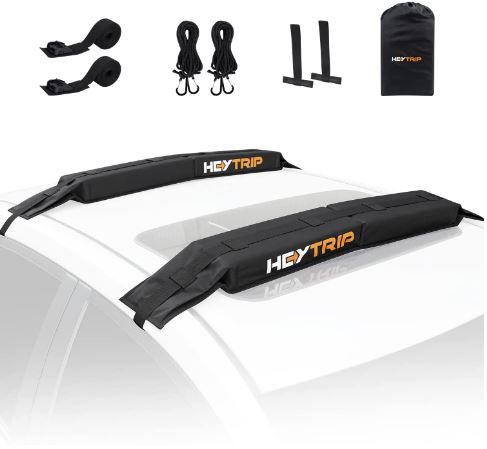
Introducing the innovative HEYTRIP soft roof racks, a cost-effective and versatile solution for transporting your kayak, surfboard, SUP, or canoe to your preferred paddling destination. With a maximum weight load of 80kg, these racks are designed to work seamlessly on a wide range of vehicles, whether your car is equipped with or without side rails or gutters. The 2 x 15ft tie-down adjustable straps, featuring padded cam locks, ensure a secure grip on your cargo, while the 2 x 15ft bow & stern tie-down ropes provide reliable safety measures for securing long loads to the front and back of your vehicle. This comprehensive system can accommodate up to 1-3 shortboards or 1-2 longboards or kayaks, depending on their size, thanks to the inclusion of 4 ultra-long straps.
Crafted with practicality in mind, the HEYTRIP soft roof racks feature a built-in non-slip mat that safeguards your car's roof surface from scratches and is expertly fixed to minimize wind noise during transit. Additionally, the top-grade EVA foam padding offers a cushioned landing for your gear and effectively reduces vibrations, ensuring a smooth and secure transportation experience. As an added tip, twisting the straps can help reduce wind noise, enhancing your overall driving experience.
Ease of use is a key highlight of the HEYTRIP soft roof rack system, as it requires no tools for installation. The set comes complete with all the necessary attachments and straps to effortlessly secure the pads to your car's roof and hold your load in place. Furthermore, annotated fitting instructions and loading advice are included for added convenience. The foldable design allows for simple storage when not in use, making it a practical and efficient choice for outdoor enthusiasts on the go.

Four models to select from. Universal fit and can take up to a maximum load of 176 lbs. (80 kg.)

Quality is questionable. Not for use on a rainy day, as it is installed through the door, which is likely to cause water to infiltrate into the car through the straps.
Our Thoughts - This is a good option for a roof rack when the vehicle doesn't have proper roof racks. The straps are short for tandem kayaks.
Comparison Table
| Rack | Type | Load Capacity | Mount System | Best For | Wind Noise | Key Pro | Key Con |
|---|---|---|---|---|---|---|---|
⭐ Aluminum Aerodynamic Crossbar Set | Hard — Crossbars | 168 lbs | Bolted to pre-set; 4 towers included | Kayaks, skis, long gear | Medium (above 65 mph) | Strongest capacity; full hardware kit | Poor instructions; missing parts reported |
🏆 Yakima JetFlow Crossbars | Hard — Crossbars | 165 lbs (75 kg) | Yakima StreamLine Towers; T-slot channel | Highway driving; multi-sport | Low (teardrop/JetTruss) | Stable at 80 mph; 3 sizes; full Yakima accessory compatible | Premium price; angle-sensitive noise |
🔧 Vacuum Tower Crossbar Rack | Hard — Vacuum Mount | 135 lbs | 75 lb vacuum towers; 1.5" safety straps | Cars with no rails or fixed points | Medium | No drilling; tool-free; 2 sizes | Suction marks on roof; rain leak risk |
💰 Locking Aluminum Clamp Crossbars | Hard — Clamp-to-Rail | Medium loads | Clamps onto side rails; 46" max span | Surfboards; budget buyers | High (whistling) | Keyed lock; affordable; quick install | Whistle noise; parts missing on arrival |
🚴 Universal Upright Roof Bike Carrier | Hard — Bike Carrier | 1 bike | Mounts to crossbars; quick-release wheel straps | Cyclists | Medium | Solid & lightweight; soft claw pads; switchable sides | No lock included; poor instructions |
🏄 MeeFar Soft Roof Rack Pads | Soft Rack | 1–3 shortboards / 1–2 longboards | Door-loop straps; no rails needed | Surfers; paddlers; budget buyers | Low (EVA foam) | No tools or rails; solo kayak loading; foldable | Water ingress through doors in rain |
🏄 HEYTRIP Soft Roof Rack System | Soft Rack | 176 lbs (80 kg) | Door-loop straps; 4 ultra-long straps | No-rail vehicles; surfers; kayakers | Low (twist straps to reduce further) | Highest soft rack load rating; 4 models; annotated guide | Too short for tandem kayaks; rain leak risk |
FAQs: Car Roof Racks
How do I know if a roof rack will fit my car?
Check the fit guide provided by the roof rack manufacturer, which usually lists compatible vehicles by make, model, and year. It's important to select a rack system that is specifically designed for your vehicle to ensure a secure fit.
Can I install a roof rack myself?
Many roof racks are designed for easy, DIY installation. However, it's crucial to follow the manufacturer's instructions carefully. If you're not confident in your ability to install it correctly, it's best to seek professional help.
How much weight can a car roof rack carry?
The weight capacity of a roof rack depends on the specific model and your vehicle's roof load limit. Always check the manufacturer's specifications and your vehicle's manual to ensure you do not exceed the recommended weight limit.
Can I leave my roof rack on permanently?
Yes, and most people do. Modern systems are designed for year-round use. The trade-offs are a small, ongoing fuel economy penalty and minor additional wind noise at highway speeds. Some people remove crossbars in winter or when not in use and re-attach when needed — it takes about five minutes once you've done it a couple of times.
How fast can I drive with a roof rack and surfboards?
Check your rack's rated speed limit first — it's in the manual. Most are rated to 80–100mph. Practically speaking, above 65–70mph with long boards, you'll feel significant wind resistance. It won't damage anything properly secured, but your fuel economy takes a noticeable hit above those speeds.
Do I need special straps for surfboards?
Cam buckle straps (1–1.5 inch width) are the standard. Ratchet straps are generally overkill and can crack or dent boards if over-tensioned. Soft foam pads between the strap and the board's deck are a good habit for protecting the finish on longer trips.
Will a roof rack fit any car?
Almost any car can accommodate some form of roof rack. Vehicles with unusual or steeply curved rooflines (certain sports cars, some older convertibles) may have limited options, but with a brand like Thule or Yakima, their fit guide will tell you definitively whether your vehicle is compatible and which kit you need.
Can one person install a roof rack?
Generally, yes, for most crossbar systems. Having a second person makes positioning easier, especially on taller vehicles like trucks or full-size SUVs, where reaching the center of the roof is awkward. Budget an hour for first-time installation.
Looking for additional camping essentials?
Check out our other articles!
 Save With Reviews
 Save With Reviews
 Save With Reviews