
,The best timing lights use a xenon strobe synchronized to your engine's ignition signal via an inductive clamp, displaying RPM, advance angle, and dwell readings on a digital screen — with top picks like the Innova 5568 Pro, MSD 8992 Timing Pro, and ESI - 130 Self-Powered ranging from $40 to $120 on Amazon.
Ignition timing is one of those things that sits in the background of every drive you take — invisible when it's right, impossible to ignore when it isn't. An engine with off timing doesn't announce itself dramatically. It just... underperforms. Slightly rough idle. A little less punch off the line. Fuel economy that's technically fine, but somehow never quite where it should be. The kind of problem that makes you feel like something's wrong without being able to point at anything specific.
A timing light removes the guesswork. Completely.
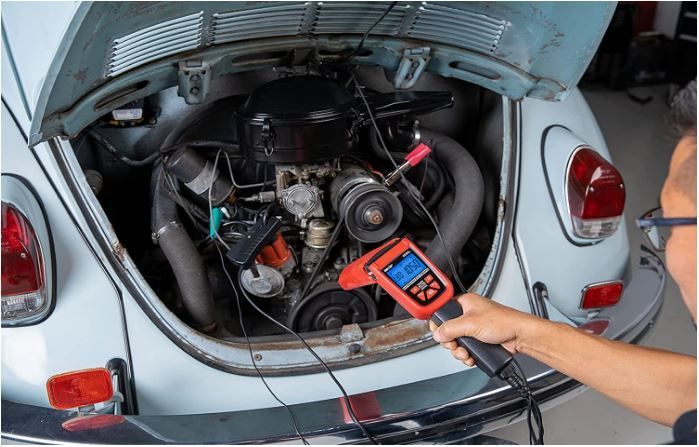
It's a stroboscopic tool that freezes a moving timing mark in place — making something spinning at thousands of RPM appear completely still, so you can read exactly where the engine is firing relative to where it should be. The physics of it are almost poetic. The strobe fires precisely when the spark fires, which means the timing mark appears frozen at the exact moment of ignition. Every time. You just read the mark, compare it to the spec, and adjust if needed.
I used a cheap dial-back timing light once on a rebuilt 350 small block. The kind with a corroded inductive clamp and a display that flickered in direct sunlight. Spent 45 minutes second-guessing every reading. Borrowed a quality Innova unit from a shop friend. Same job, accurate reading, done in under 10 minutes. The tool matters — not as much as the mechanic using it, but enough.
Key Takeaways
- Timing lights use a xenon strobe synchronized to spark plug firing — the brighter the strobe, the more readable the marks in daylight
- Inductive clamps attach to the spark plug wire without cutting or splicing — look for good clamp quality
- Dial-back / advance units let you check timing at multiple engine speeds without moving your head away from the mark
- Digital display showing RPM, advance angle, and dwell makes diagnosis significantly faster than analog-only units
- Quality timing lights on Amazon range from $40 (basic) to $120 (digital advance/pro)
What Is Ignition Timing — And Why Should You Check It?
Ignition timing refers to when the spark plug fires relative to the piston's position in the cylinder. Measured in degrees before top dead center (BTDC) — meaning how many degrees of crankshaft rotation before the piston reaches the top of its compression stroke.
Get it right, and the combustion pressure peaks perfectly as the piston starts its power stroke — maximum force, maximum efficiency. Get it wrong in either direction, and the consequences compound quickly.
Too advanced (fires too early):
- Combustion pressure fights the rising piston — causes knock, ping, engine damage over time
- Increased heat, potential detonation under load
- Can damage pistons and bearings in severe cases
Too retarded (fires too late):
- Combustion is still expanding as the exhaust valve opens — wasted energy, increased exhaust temperatures
- Power loss, poor fuel economy, rough running
- Catalytic converter damage from unburned fuel in the exhaust
The correct timing specification — usually found on the emissions sticker under the hood or in a factory service manual — is the narrow band where none of that happens. A timing light shows you exactly where you are on that spectrum.
How a Timing Light Actually Works (The Part Most Guides Skip)
Three wires. That's the whole connection.
- Red wire → positive battery terminal (power)
- Black wire → negative battery terminal (ground)
- Inductive clamp → clips around the #1 spark plug wire without cutting or splicing
When the spark plug fires, a small current pulse travels through the plug wire. The inductive clamp senses that pulse magnetically — no direct electrical connection required — and triggers the strobe at exactly that moment.
The strobe fires. Light hits the timing marks on the crankshaft harmonic balancer or flywheel. The mark appears frozen. You read the degree marking against the fixed pointer and compare it to the spec. Adjust the distributor if needed. Recheck. Done.
The elegance of it is that nothing about this process has fundamentally changed since timing lights were invented. The digital displays are newer. The dial-back advance feature is newer. The core physics — synchronized strobe, frozen mark, direct reading — is the same.
Types of Timing Lights (What the Terminology Actually Means)
Basic / Self-Powered Timing Lights
Connect to the battery for power, clamp to the #1 plug wire, and strobe. That's the complete feature set. No advance adjustment, no digital display, no RPM reading — just the strobe and whatever mark it illuminates.
Best for: Basic timing checks on older vehicles with distributor ignition, occasional use, and tight budgets.
Limitation: Can't check advance without manually revving the engine to different RPMs and reading the mark movement, which requires another person or awkward solo positioning.
Dial-Back / Advance Timing Lights
These units have a dial or digital control that electronically retards the strobe by a specified number of degrees. Set the dial to, say, 20 degrees — and the strobe fires 20 degrees after the actual spark — which means you can see what the timing mark looks like at 20 degrees of advance without the mark moving out of the viewing window.
This is genuinely valuable for checking centrifugal and vacuum advance curves at different engine speeds. Instead of chasing a moving mark across the balancer while revving the engine, you dial in the advance amount, and the mark stays put.
Anybody who's checked advance curves on a performance engine without this feature understands viscerally why it exists.
Digital Timing Lights with RPM and Dwell Display
The professional tier. Digital readout shows real-time RPM, advance angle (in degrees), and, on older point-style ignitions, dwell angle. Some units include a built-in diagnostic function that reads engine data beyond just timing.
More expensive. Genuinely worth it for anyone doing regular engine work — the time saved from having RPM and advance visible simultaneously (instead of requiring a separate tachometer) adds up fast.
Timing Light Comparison: Top Amazon Picks (2026)
| Product | Strobe Type | Display | Advance Feature | RPM Reading | Self-Powered | Price Range | |
|---|---|---|---|---|---|---|---|
Innova 5568A Pro (Updated 2024) | Xenon | Digital | Yes (dial-back) | Yes + Dwell | Yes | $95–$125 | |
MSD 8992 Timing Pro | Xenon | Digital | Yes (dial-back) | Yes | Yes | $195–$230 | |
ESI 130 Self - Powered Timing Light | Xenon | Digital | Yes | Yes | Yes | $80–$95 | |
Innova 3568 Pro Digital | Xenon | Digital | Yes (dial-back) | Yes | Yes | $90–$120 | |
Innova 3551 Basic Timing Light Xenon None No No Yes $40–$55 | |||||||
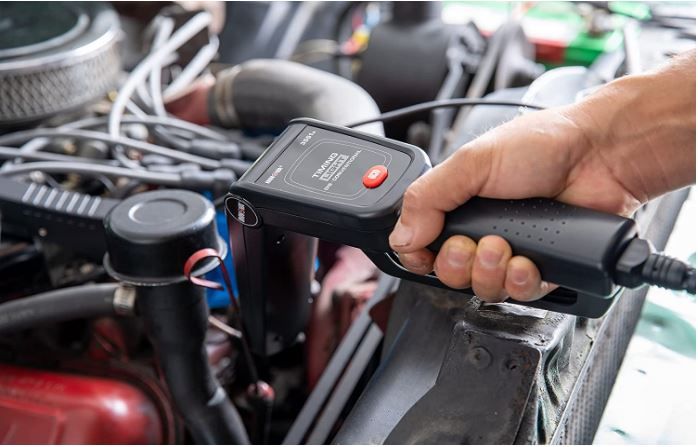 Key Features Explained (What Actually Matters When Buying)Xenon Strobe BrightnessAll quality timing lights use xenon strobe tubes — the same technology used in camera flashes — because xenon produces an extremely brief, extremely bright flash. The brevity matters as much as the brightness: a longer flash would blur the timing mark rather than freezing it. Cheap timing lights use lower-intensity xenon or LED alternatives that look fine indoors but wash out in bright sunlight. If you work outside or in a well-lit shop, brightness is the specification that matters most and gets discussed least in product listings. Inductive Clamp QualityThe inductive clamp is the component that does the actual sensing — and it's the part that fails first on cheap units. Signs of a poor clamp: inconsistent triggering (the strobe misses cycles), difficulty attaching to larger-diameter plug wires, and signal dropout at higher RPMs when firing events happen faster. Good clamps have a wide jaw opening, a strong spring-loaded grip, and consistent inductance across a range of wire types and sizes. On digital units, a clamp that drops the signal at high RPM will cause erratic RPM readings that make the display actively misleading. Dial-Back Advance: Do You Actually Need It?Honest answer: for basic maintenance timing checks on a stock daily driver — no. Set timing at idle, compare to spec, adjust if needed, done. For any performance application — checking whether centrifugal advance is functioning, verifying total advance at high RPM, mapping advance curves on a performance distributor — yes, absolutely. The dial-back feature changes a multi-person job (one person holding the timing light, one person revving the engine, one person watching the mark move across the balancer) into something manageable alone. Using a Timing Light Correctly (The Steps That Get Skipped)Quick answer: Warm the engine to operating temperature, connect red to positive battery, black to negative, clamp to #1 plug wire, point the strobe at the timing marks with the engine running at specified RPM, read the mark position against the pointer. Step-by-Step
A Note on Modern Vehicles and Timing LightsHere's something most timing light guides don't address directly: on modern vehicles with coil-on-plug (COP) ignition systems and no distributor, a traditional timing light is essentially useless for adjustment purposes. Modern engine management systems control ignition timing electronically through the ECU. There are no timing marks to adjust, no distributor to rotate, no physical timing procedure in the traditional sense. The ECU reads crank position sensors and calculates optimal timing continuously — and adjusting it requires a laptop and tuning software, not a strobe light. Traditional timing lights are relevant for:
If you're maintaining a modern fuel-injected vehicle with no distributor, you almost certainly don't need a timing light. If you're restoring a classic or building a performance engine on an older platform, it's an essential tool that's genuinely hard to work without. Final ThoughtsA timing light is one of those tools that sits unused for long stretches — then becomes indispensable at exactly the moment something isn't running right, and you need to know why. For classic car owners, performance enthusiasts, and anyone maintaining a vehicle with a distributor ignition system: it belongs in the toolbox. Not as a monthly-use item, necessarily. But as the tool you reach for when the idle is slightly rough, the engine is pinging under load, or you've just finished a rebuild and need to confirm the timing is where it should be. Buy the digital advance version if you can justify the cost. The RPM display and advanced dial earn their premium over the course of a single serious tuning session. Point the strobe. Read the mark. Trust the number. That's the whole job. Need help? We've done the research for you and found the Best Timing Light on Amazon. Best Timing Light - ReviewsThe Best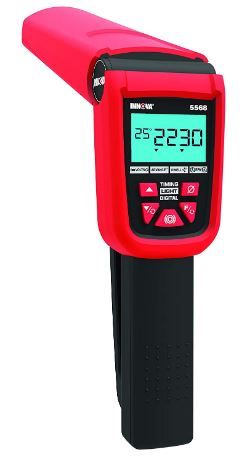 Product informationThe digital readout in question boasts four key functions that set it apart from its competitors. These include a Tachometer, Advance, Dwell, and Voltage. The Tachometer is critical for measuring the speed at which your vehicle's engine is running. The Advance function allows for optimal performance by advancing the ignition timing. The Dwell function measures the time the ignition points are closed, while the Voltage function ensures your vehicle's electrical system is operating correctly. One standout feature of this digital readout is its patented Skip Circuitry, which can test up to an impressive 9,990 RPM. This high testing range makes it a versatile tool for various vehicles and engines. Moreover, the device is housed in a heavy-duty shock-proof case, offering maximum durability. It also features a molded boot, providing extra protection against fan blades. This robust design ensures that the device can withstand tough conditions and still deliver accurate readings. Finally, the digital readout comes with detachable 6-foot leads and an inductive pickup, making it convenient and easy to use. The long leads allow for flexibility during use, while the inductive pickup ensures accurate readings. Also, the device is designed for one-handed operation, making it user-friendly and less cumbersome to handle. To top it all off, it comes with a molded plastic storage case, ensuring safe storage when not in use. This combination of functionality, durability, and ease of use makes this digital readout a must-have tool for any vehicle owner.  Great for older vehicles and motorcycles. The multifunction is very helpful and a good light to boot.  Customer service needs to improve. Some customers reported that they didn't receive the instruction manual. Others mentioned that they received a used timing light. Our Thoughts - A great timing light that will do more than just check the timing.  Very Good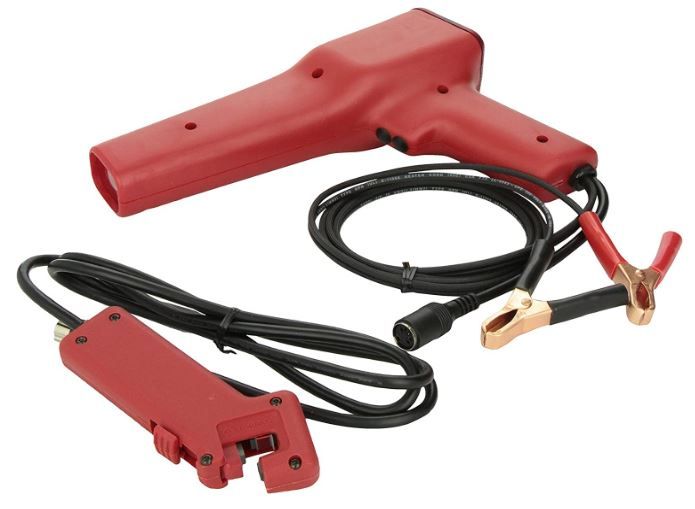 Product informationThe product in question prides itself on its toughness and user-friendliness. Designed to withstand challenging conditions, it offers durability without compromising on ease of use. Whether you're a professional or a novice, the straightforward operation of this tool ensures that you can utilize it without any hassle. Moreover, its extreme accuracy sets it apart, providing users with precise measurements and data. One of the unique features of this tool is its detachable inductive pickup. This not only enhances its portability but also makes for convenient storage. Additionally, the tool is equipped with an intense strobe that remains visible even in broad daylight, ensuring uninterrupted operation irrespective of the time of day. What's more, it provides stable timing signals, further cementing its position as a reliable and essential tool. The combination of these features makes this product a standout choice for those seeking toughness, accuracy, and convenience.  Good light and works with MSD (Multi Spark Ignition).  Overpriced for what it is and does. Our Thoughts - Consumers were happy with this tool, but most reported it to be pricey.  Good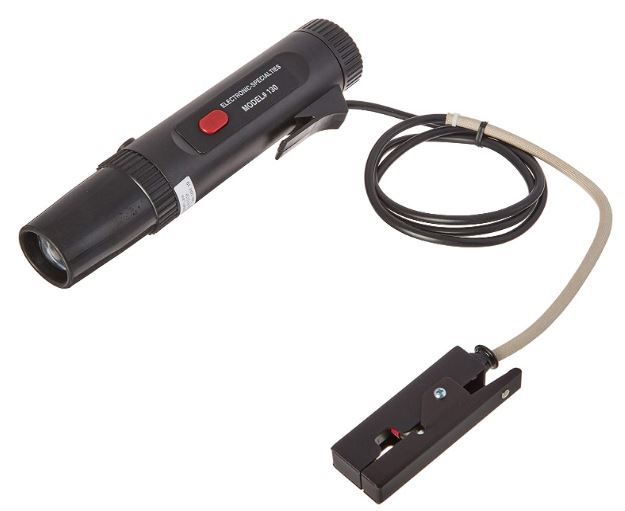 Product informationThe product in focus offers exceptional accuracy, performing reliably up to at least 14,000 RPM. This impressive range makes it a versatile tool that can cater to various engine types and requirements. Whether you're dealing with a 2-cycle engine or a 4-cycle one, this product is equipped to handle all ignition systems. Its wide compatibility and high accuracy make it a valuable addition to any toolbox. One of the standout features of this tool is its protective heat-sleeving. This special feature enables the tool to withstand high temperatures up to 1200F. This durability under extreme conditions ensures the longevity of the product and provides users with reliable performance even in demanding scenarios. The standard lead length of 4 feet further adds to the convenience, allowing for flexibility in use. Finally, the tool is designed to provide a bright flash at all speeds. This ensures clear visibility regardless of how fast the engine is running, making it a dependable tool for accurate measurements. The tool operates on 2-D cell batteries, ensuring easy and cost-effective power solutions. With its combination of accuracy, durability, and user-friendly design, this tool is a top choice for dealing with 2 or 4-cycle engines.  Handy and easy to use. Works great with 6-volt cars. Self-powered by its batteries is great.  Some customers report that the light was not bright enough. No RPM display. Our Thoughts - Self-powered is great as there is no need for other connections. We tried it in full sunlight, and the timing light was good enough.  Good Value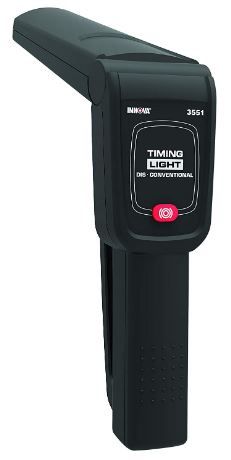 Product informationChecks timing, diagnoses a no-spark condition, checks for electronic advance/retard, and more. Works with most ignition systems: DIS, conventional, electronic, and computer-controlled systems - domestic and import. Patented Skip Circuitry Test up to 9,990 RPM. Slim, rotating barrel for better aim at the timing mark. Protective hand guard for one-hand operation.  A basic timing light that works well without any bells and whistles. The detachable cord is good for storing.  Packaging and handling need to improve. Some customers reported receiving a used timing light. Our Thoughts - Durability is questionable. Good tool and dollar value to check the timing on your engine.  Good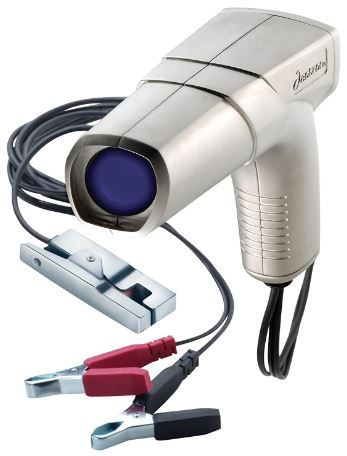 Product informationActron's CP7529 Digital Timing Light is a cutting-edge tool that stands out for its microprocessor-controlled circuitry. This feature, combined with its bright LED display, makes it an advanced piece of equipment that can significantly enhance your vehicle servicing and maintenance tasks. The mode indicator lights add to the user-friendliness of the tool, allowing you to easily navigate through its functions. Moreover, it comes equipped with a Xenon flashlight, adding to its versatility and practicality. This tool is designed with a broad range of functionalities in mind. It serves as an efficient device to measure engine RPM and advance, setting initial timing, checking, and measuring centrifugal advance, and measuring vacuum advance. These comprehensive features make it a one-stop solution for various engine-related assessments, ensuring optimal performance of your vehicle. The Actron CP7529 Digital Timing Light is compatible with gasoline-powered vehicles equipped with various ignition systems. Whether your vehicle has conventional, electronic, computer-controlled, DIS, or 2-cycle ignition systems, this tool can work seamlessly with them all. This wide range of compatibility makes it a versatile choice, suitable for a variety of vehicles and systems. The tool features a digital LED tach display that reads from 0 to 9999 RPM, providing a wide measurement range. The advanced display provides precise readings up to 1/10th, ensuring high accuracy. Furthermore, the tool includes 2/4 cycle and RPM/advance mode lights, an RPM advance selector button, and up/down buttons. These additional features ensure easy operation and accurate readings, making the Actron CP7529 Digital Timing Light an excellent addition to your toolset.  Great strong flash, no problem using it under other lights. Good for older vehicles.  Customer service needs improving. Doesn't have the LED readout that others have. Our Thoughts - Good for those who are less experienced in adjusting the engine timing. We think it's a bit pricey for what it does.  FAQs: Timing LightsWhy is ignition timing important for my engine?Proper ignition timing is essential for optimal engine performance, fuel efficiency, and reduced emissions. It ensures that the spark occurs at the precise moment for the air-fuel mixture to combust effectively. What features should I look for in a timing light?Look for a timing light with an inductive clamp, a bright xenon strobe, a digital display for advance and RPM, an adjustable advance feature, and durable housing. These features contribute to ease of use and accurate timing adjustments. Can I purchase a timing light online?Yes, timing lights are available for purchase online. Online shopping allows you to compare features, prices, and reviews. Check for delivery options, shipping costs, and return policies when ordering online. What does a timing light do exactly?A timing light emits a xenon strobe that flashes in sync with your engine's spark plug firing. When pointed at the timing marks on the crankshaft harmonic balancer, the marks appear frozen — allowing you to read the exact moment of ignition relative to piston position and compare it to your engine's specification. Do I need a timing light for a modern car?For most modern vehicles (post-mid-1990s) with electronic fuel injection and coil-on-plug ignition — no. Ignition timing is controlled by the ECU and cannot be adjusted with a timing light. Timing lights are primarily relevant for older vehicles with distributor ignition systems and classic or performance builds. What's the difference between a basic and a dial-back timing light?A basic timing light shows where the timing mark sits at a fixed engine speed. A dial-back (advance) timing light has a control that electronically retards the strobe by a set number of degrees, allowing you to check advance curves at different RPMs without the mark moving out of the visible area. Essential for performance tuning; optional for basic maintenance. How do I connect a timing light?Red wire to positive battery terminal, black wire to negative battery terminal, inductive clamp around the #1 spark plug wire (not the plug itself). The clamp senses firing pulses magnetically — no cutting or splicing required. Can a timing light damage my vehicle?No — when connected correctly. The inductive clamp makes no electrical contact with the plug wire; it senses inductively. The battery connection draws minimal current. The only risk is an incorrect connection (reversed polarity), which can damage the timing light itself, not the vehicle. What's the best timing light for a classic car restoration?For classic car work where advanced curve analysis matters, the Innova 3568A or Actron CP7529 are the strongest choices. Both offer digital advance with RPM display, bright xenon strobes, and reliable inductive clamps that handle older cloth-wrapped plug wires without signal loss. Looking for additional automotive essentials? |