
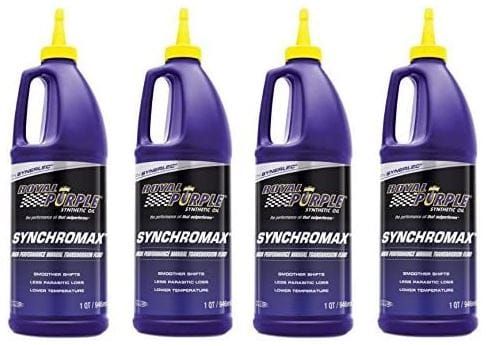
For most drivers, Royal Purple Synchromax is the go-to for older transmissions with finicky synchros. The "best" one, though? It's always the one that matches your vehicle manufacturer's spec — not the one with the prettiest label.
What Is Manual Transmission Fluid and Why Does It Matter?
Here's something that surprises a lot of newer car owners: manual transmissions need fluid too. Not the same fluid as an automatic — not even close — but a dedicated gear oil that handles a completely different set of mechanical demands. The gearbox in a manual car is essentially a beautifully brutal thing; spinning shafts, brass synchros, steel gears all crashing into each other thousands of times per drive. The fluid sitting between those components is the only thing keeping that controlled chaos from becoming expensive chaos.
Manual transmission fluid — sometimes called gear oil, sometimes MTF, sometimes just "that stuff in the other drain plug" — serves a few critical functions. It lubricates the gear teeth and bearings to minimize metal-on-metal contact, it cools components that generate friction heat during spirited shifting, and it protects the synchronizers (the rings that allow smooth engagement between gears) from premature wear. A degraded or wrong-spec fluid won't just make shifts feel notchy or stiff. Over time, it'll eat through your synchros and leave you grinding gears you can't afford to replace.
I remember the first time I drove a car with freshly changed transmission fluid after 80,000 miles of neglect — the difference was almost unsettling. Like the gearbox had been woken up, shifts that used to require a firm push just... fell into place.
Synthetic vs. Conventional Manual Transmission Fluid: Which Should You Use?
Short answer: synthetic, almost always.
Conventional gear oils were the standard for decades, and they're not bad — but they degrade faster, perform worse at temperature extremes, and offer less protection for modern tight-tolerance transmissions. Synthetic fluids, by contrast, are engineered molecules. They're designed to maintain viscosity across a wider temperature range, resist oxidation and thermal breakdown, and generally outlast their conventional counterparts by a significant margin.
The cost difference? Real, but not dramatic. A quality synthetic like Redline MT-90 runs maybe $12–$18 per quart, depending on where you buy it. Most manual transmissions take 2–3 quarts for a full change. So you're talking a $30–$50 job total — which, for the difference it makes in shift quality and long-term gearbox health, is honestly one of the better values in DIY maintenance.
That said — and this is important — some older transmissions actually perform better with a heavier conventional gear oil or even an automatic transmission fluid blend. Honda is the classic example; Honda's own MTF is basically a modified ATF, and running a thick 75W-90 gear oil in an older Honda gearbox can make shifts feel like dragging a stick through mud. Always check the owner's manual first. Always.
Understanding Viscosity: The Number That Actually Changes How Your Car Feels
Viscosity is one of those terms people nod at without really understanding, so let's actually talk about it. The number on a gear oil bottle (75W-90, 75W-140, 80W-90) tells you two things: how the oil flows when cold (the first number, the "W" stands for winter) and how it holds up at operating temperature (the second number).
75W-90 is the most commonly recommended spec for modern manual transmissions. It's light enough to flow quickly on cold starts — which matters enormously for that first gear engagement on a January morning — while still providing solid film strength at operating temperatures.
75W-140 is thicker at operating temp and is often used in performance or heavy-duty applications where gear loads are higher. Great for track use or towing. Not ideal if you live somewhere cold and your car sits outside overnight.
80W-90 is older-spec, more viscous overall, and you'll still see it recommended for some vintage or older European transmissions. It works. It's just not as versatile.
The "wrong" viscosity isn't just a theoretical problem. Too thick in cold weather? You'll feel genuine resistance in the shifter — like the gearbox doesn't want you to use it. Too thin at operating temp? The fluid film between gear teeth thins out, and that's when wear accelerates. It's a Goldilocks situation with real mechanical consequences.

How Often Should You Change Manual Transmission Fluid?
This one gets ignored more than almost any other maintenance item on a manual car — and it really shouldn't. The general guidance from most manufacturers is every 30,000 to 60,000 miles under normal conditions, though some specify longer intervals with synthetic fluid.
But "normal conditions" is doing a lot of work in that sentence. If you drive in stop-and-go traffic regularly, tow occasionally, track your car even once a year, or live somewhere with extreme temperatures — you're not operating in normal conditions. In those cases, 30,000 miles is a reasonable interval regardless of what the manual says.
The fluid itself will tell you when it's had enough. Fresh gear oil is typically amber or golden and has a faintly sulfurous smell (that's the EP additives — totally normal). Old, degraded fluid turns dark brown or black, smells burnt, and sometimes takes on a metallic quality if there's been wear debris accumulating in the sump. If you drain your transmission fluid and it looks like used motor oil, it was overdue.
Where to Buy Manual Transmission Fluid
Most quality gear oils are available at AutoZone, O'Reilly, Advance Auto Parts, and Amazon. For OEM-spec fluids (Honda MTF, Toyota transfer case fluid, etc.), your dealership parts counter or the dealer's online store will typically have the best price and guaranteed authenticity. Redline and Amsoil products are also available directly from their respective websites, sometimes at better prices than retail, with bulk ordering options.
One practical note — if you're buying from Amazon, stick to fulfilled-by-Amazon listings or direct brand storefronts. Counterfeit automotive fluids are a real (if uncommon) issue in third-party marketplace listings, particularly for premium brands.
Summary: What to Actually Do
Buy the fluid that matches your manufacturer's spec — that's the non-negotiable starting point. If your spec is 75W-90 GL-4 synthetic, Redline MT-90 is the easy choice. If you've got a Honda or an older car with sensitive synchros, Royal Purple Synchromax or your OEM fluid is the smarter call. And if you genuinely can't remember the last time your transmission fluid was changed — or you've never done it — do it now. The difference between a well-lubricated gearbox and a neglected one isn't just a performance thing. It's the difference between a transmission that lasts 200,000 miles and one that needs a rebuild at 120,000.
That click of a perfectly weighted gear engagement — that's what the right fluid feels like. Worth the $40.
Need help? We've done the research for you and found the Best Manual Transmission Fluid on Amazon. Every day, we read hundreds of reviews and try the highest-rated products we have on our list.
Best Manual Transmission Fluid - Reviews
The Best High-performance
Product information
This advanced formula is ingeniously crafted with a shear-resistant viscosity modifier, which plays a crucial role in maintaining consistent performance even under extreme conditions. The secret behind its remarkable performance lies in the incorporation of Synerlec additive technology. This proprietary blend goes beyond conventional lubrication by forming a robust, synthetic film on all metal surfaces, drastically reducing wear and extending the lifespan of critical components.
In addition to its impressive wear-reducing capabilities, this lubricant offers unparalleled corrosion protection, safeguarding your vehicle's parts from the harmful effects of rust and corrosion. Its ability to reduce friction not only unlocks more power from your engine but also contributes to lower operating temperatures, promoting a cooler, more efficient running system. The superb oxidation stability of this product further ensures longer oil life and cleaner gearboxes, making it an ideal choice for those seeking to enhance their vehicle's performance while also prioritizing longevity and reliability.

A very smooth gear oil that delivers the great gear shifting that you would expect. Great for most temperature ranges.

Nothing negative about this oil to report. Some customers had delivery issues.
Our Thoughts - A great performer for most vehicles and good value for what it does with superb ratings. Not to be used on automatic transmissions.

Very Good
Product information
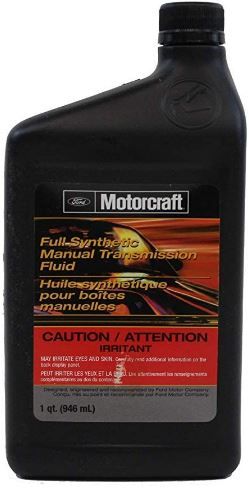
A lubricant crafted from synthetic base oils and fortified with high-performance additives. This innovative blend is engineered to facilitate smoother gear shifting across a wide range of ambient temperatures. Its inclusion of a shear-resistant viscosity modifier underscores its adaptability, ensuring consistent performance and protection under varying driving conditions.
Its outstanding thermal and oxidative stability, coupled with superior shear resistance, aligns with Ford’s rigorous fill-for-life criteria, indicating a product designed for enduring use. The formulation's focus on wear protection is particularly beneficial for the preservation of synchronizers and bearings, critical elements in any transmission system. Moreover, by reducing friction and optimizing lubrication, the lubricant contributes to lower operating temperatures. This not only prolongs the life of various components but also enhances the vehicle's efficiency, making it a smart choice for drivers seeking to maintain their vehicles at peak performance levels.

Gives strong performance at all temperature ranges. Great wear protection.

A bit pricey for what it is. Some customers reported that they didn't notice any difference compared to other cheaper oils.
Our Thoughts - This synthetic oil meets all the requirements for Ford vehicles but can also be used for other makes of manual transmissions.

Very Good
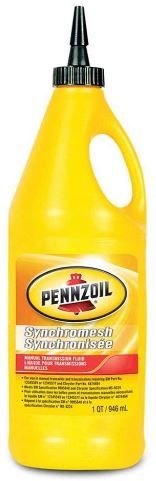
Product information
Discover the ultimate solution for your vehicle's transmission system with the Auto & Truck Maintenance Manual Gearbox Fluid, acclaimed for its exceptional wear protection. Proudly manufactured in the United States, this premium gearbox fluid is designed to safeguard and enhance the performance of your manual transmission, ensuring smooth operation and longevity. Ideal for both auto and truck maintenance, it stands out in the market for its superior quality and reliability, making it a top choice for vehicle owners seeking optimal performance and protection for their gear systems.

It seems to work better than some other OEM fluids.

Some customers mentioned that it is a bit pricey.
Our Thoughts - A bit pricey, but very good quality oil. It works well with most vehicles on the market.

Good Value
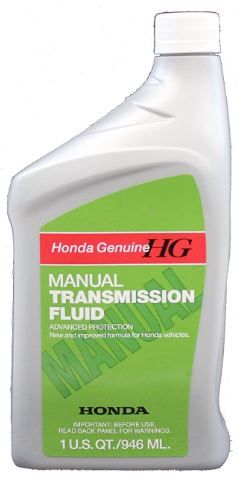
Product information
Elevate your vehicle's performance with the newly enhanced formula that not only meets but exceeds quality standards, ensuring an unparalleled driving experience. This advanced lubricant is engineered to significantly improve shift quality, providing a smoother and more responsive gear transition. Additionally, its innovative composition is designed to lower fluid friction, optimizing efficiency and prolonging the lifespan of your transmission system. Ideal for drivers seeking to upgrade their vehicle's functionality, this cutting-edge formula stands out in the automotive market as a top-tier choice for enhancing both performance and reliability.

Very good transmission fluid that meets all the requirements

It may not perform as well with non-Honda manual transmissions.
Our Thoughts - A reasonably priced manual gearbox fluid that gives very good results for Honda and other makes.

Good
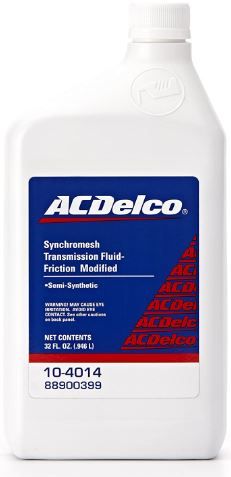
Product information
Today, the demand for high-performance transmission fluids that cater specifically to synchromesh transmissions has never been higher. Such fluids are engineered with precision to enhance synchronizer performance, ensuring smooth and reliable gear shifts that drivers can depend on. This specialized formulation plays a critical role in minimizing sludge and varnish deposits within the transmission system. The result is a cleaner and more efficient transmission operation, which is essential for maintaining the vehicle's performance over time.
This advanced transmission fluid stands out for its exceptional protective qualities against various forms of surface distress, including spalling, pitting, rust, corrosion, and wear. Its comprehensive protection extends the life of transmission components, safeguarding them against premature failure. Designed to perform in all climates, the fluid remains effective in extreme temperatures ranging from as low as -40 degrees Fahrenheit (-40 degrees Celsius) to as high as 300 degrees Fahrenheit (149 degrees Celsius).
Its highly friction-modified composition further reduces wear on transmission components, emphasizing its role in prolonging the lifespan of the vehicle's transmission system. For vehicle owners seeking optimal performance and protection for their synchromesh transmissions, this fluid represents the pinnacle of innovation and reliability in manual transmission care.

Good fluid for GM vehicles, but also other makes as well. Will deliver a smoother shifting process at higher gears.

Customers reported not receiving all the bottles ordered, ordered three and received two.
Our Thoughts - Meets all the requirements for use on GM vehicles' manual transmissions. Not for use in an automatic transmission.

Good
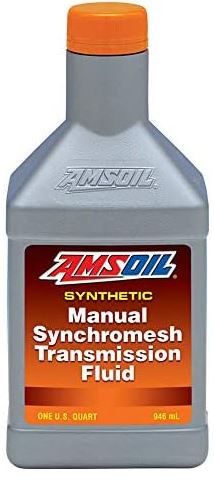
Product information
The superior formulation of AMSOIL Manual Synchromesh Transmission Fluid 5W-30 sets a new benchmark in the industry. Designed for environments where non-extreme-pressure fluids are utilized, this cutting-edge product ensures that gears and bearings are protected across a vast temperature range, from the cold of -40°F (-40ºC) to the scorching highs of 300°F (149ºC). This exceptional temperature resilience, coupled with its ability to maximize fuel economy, positions this fluid as an indispensable ally against the detrimental effects of heat, oxidation, and varnish deposits, ensuring your transmission system remains in optimal condition.
The AMSOIL Manual Synchromesh Transmission Fluid 5W-30 goes above and beyond in preserving the integrity of your vehicle's transmission system. Its innovative formula is engineered to prevent the thinning effects of mechanical shear, maintaining stable viscosity and providing superior film strength for unmatched anti-wear performance. This fluid takes protection to the next level by safeguarding against corrosion, conditioning seals, and protecting brass components, which are crucial for smooth synchromesh shift quality.

Amsoil manual transmission fluid works well for Honda vehicles. Smoother than other oils when shifting gears.

Customers reported that packaging and handling need to be improved. A bit pricey.
Our Thoughts - It improves cold-weather gear shifting. Good performance in a high-temperature range. Not for use in an automatic transmission.

FAQs: Manual Transmission Fluid
How often should I change my manual transmission fluid?
The frequency can vary depending on the vehicle and the type of fluid used. It's always best to consult your owner's manual for the manufacturer's recommended interval. Typically, it ranges from 30,000 to 60,000 miles.
Can I use automatic transmission fluid in my manual transmission?
No, automatic transmission fluids are formulated differently and may not provide the necessary protection for manual transmissions. Always use the fluid type specified by your vehicle's manufacturer.
How do I know which viscosity of manual transmission fluid is right for my vehicle?
The correct viscosity should be listed in your vehicle's owner's manual. If you're unsure, you can also ask for a recommendation at an automotive parts store or consult with a professional mechanic.
What are the symptoms of low or degraded manual transmission fluid?
The most common signs are difficulty shifting (especially into specific gears), a grinding sensation during gear changes, unusual whining or humming noises from the gearbox under load, and, in severe cases, a burning smell. Any of those warrant an immediate check of fluid level and condition.
How do I know what fluid my manual transmission needs?
Your owner's manual is the primary source — it will list the OEM spec, usually expressed as a viscosity grade and sometimes a manufacturer-specific approval (like GL-4 or GL-5). Important note: GL-4 and GL-5 are not interchangeable for all transmissions. GL-5 contains higher concentrations of extreme-pressure additives that can actually corrode the yellow metals (brass, bronze) used in many manual transmission synchros. Most passenger car manual transmissions spec GL-4.
Is changing manual transmission fluid a DIY job?
For most vehicles, yes — it's straightforward, similar to an oil change. You'll need a drain plug wrench, a fill plug wrench (sometimes the same size), a fluid pump or suction gun to get fluid in through the fill hole, and the correct spec fluid. The fill hole doubles as the level indicator on most transmissions; fluid is at the right level when it just reaches the bottom edge of the fill hole. Some vehicles have no drain plug and require suction removal — worth checking before you start.
Does better transmission fluid actually make a noticeable difference?
Yes. This is one of those maintenance items where the improvement is tangible and immediate — not a gradual thing you notice over months. If your transmission has been running on old or wrong-spec fluid, a proper change with a quality synthetic can make the gearbox feel like a different car. Smoother engagement, less notchiness between gears, easier cold-morning shifts. It's one of the highest satisfaction-per-dollar maintenance tasks you can do on a manual car.
Looking for additional automotive essentials?
Check out our other articles!
 Save With Reviews
 Save With Reviews
 Save With Reviews