
The best car antifreeze in 2026 is a full-strength or pre-diluted ethylene glycol formula matched to your vehicle's cooling system specification — with top-rated options including Prestone All Vehicles Antifreeze, Zerex G-05, and ACDelco DEX-COOL available on Amazon for $12 to $30 per gallon, depending on concentration and OEM compatibility.
Cold weather has a specific way of making you feel completely betrayed by your own car. Not a gradual failure — a sudden, complete, non-negotiable stop. You turn the key on a 14-degree morning, something gurgles or doesn't, and the next thing you know, you're standing in a parking lot watching your breath fog while you wait for a tow truck that's also dealing with everyone else whose coolant froze overnight.
I watched a friend's 2019 Civic develop a cracked block in February. He'd been running straight water in the cooling system all summer — "it was fine all year" — and then Minnesota disagreed with that assessment at minus-eleven degrees. The repair bill was north of $2,400. The correct antifreeze would have cost him $18.
That math is what this guide is about.
Antifreeze is deceptively simple from the outside and genuinely complicated once you get into the chemistry of it. The wrong type — not just the wrong brand, but the wrong chemistry — can accelerate corrosion in aluminum components, degrade rubber hoses, and create a sludge inside the cooling system that reduces heat transfer and blocks passages. Getting it right requires about 10 minutes of research. This article is the research.
Key Takeaways
- Ethylene glycol (EG) is the most common antifreeze base — effective, widely available, and toxic to animals and humans if ingested
- Propylene glycol (PG) is the less-toxic alternative — lower freeze protection at equivalent concentrations, used in applications where animal/human contact risk is higher
- OAT, HOAT, and IAT are inhibitor chemistries — not interchangeable, and mixing them creates sludge that clogs cooling systems
- 50/50 pre-diluted formulas are ready to use; full-strength concentrate requires mixing with distilled (not tap) water before adding
- Color is not a universal guide to chemistry — different manufacturers use different color coding; always read the specification, not the color
- Top-rated antifreeze on Amazon ranges from $12–$18 per gallon (standard) to $25–$30 per gallon (OEM-spec or extended-life formulas)
What Antifreeze Actually Does (Three Jobs, One Liquid)
Most people think of antifreeze as the thing that stops coolant from freezing. That's true. It's also — and this part matters as much or more in most climates — the thing that stops coolant from boiling.
Plain water boils at 212°F at sea level. Engine coolant passages regularly see temperatures above that during hard driving, towing, or idling in traffic on a hot day. A 50/50 mix of ethylene glycol and water raises the boiling point to approximately 265°F and lowers the freezing point to around -34°F. That's the dual protection that gives antifreeze its other name: coolant.
But there's a third function that gets almost no attention in buying guides. Corrosion inhibition.
The metals inside your cooling system — aluminum heads and blocks in modern engines, copper and brass in older radiators, steel water pump housings, iron cylinder liners in some applications — all sit in contact with the same liquid, all electrochemically active relative to each other. Without inhibitor chemistry in the coolant, galvanic corrosion eats through aluminum components with surprising speed. The inhibitor package in the antifreeze is what keeps that from happening.
That inhibitor package is also what degrades over time. The freeze/boil protection lasts essentially indefinitely — glycol doesn't wear out. The corrosion inhibitors deplete. That's why coolant gets changed on a schedule even when the engine is running fine.
Types of Antifreeze: What IAT, OAT, and HOAT Actually Mean
This is where buying guides usually either skip the explanation entirely or bury it in chemistry jargon that doesn't help anyone make a decision. Here's the practical version.
IAT — Inorganic Additive Technology
The original formula. Green, typically. Uses inorganic corrosion inhibitors — silicates and phosphates primarily — that provide fast-acting protection but deplete relatively quickly. Service life of approximately 2 years or 30,000 miles.
Designed for older vehicles with copper, brass, and cast-iron cooling system components. The silicate content that works well in those systems can be abrasive to modern aluminum water pump seals over time.
Still correct for: Pre-1990s vehicles, older trucks with cast iron blocks, classic cars. Not recommended for modern aluminum-heavy engines.
OAT — Organic Acid Technology
The modern standard for most Asian and European manufacturers, and increasingly for American brands. Uses organic acid inhibitors — carboxylates — that form a protective molecular layer on metal surfaces rather than depleting into solution. Extended service life of 5 years or 150,000 miles.
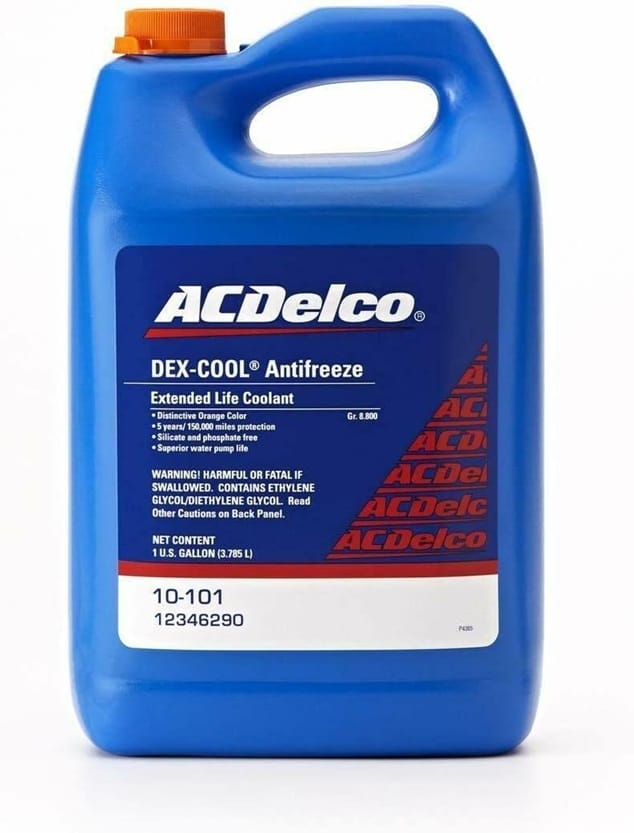
GM's DEX-COOL is an OAT formula. Toyota's Long Life Coolant is OAT-based. Most Honda, Subaru, and Volkswagen factory coolants are OAT chemistry.
Do not mix OAT with IAT. The inhibitor chemistries interact and produce a gel-like sludge that — and this is not an exaggeration — can block small cooling passages and coat the inside of the radiator with a layer of insulating gunk that reduces heat transfer. I've seen it. It looks like orange-brown clay. It is not easy to clean out.
HOAT — Hybrid OAT
A blend of organic and inorganic inhibitors — combining some of the fast-acting protection of IAT with the extended service life of OAT. Common in Ford, Chrysler, and many European applications. Zerex G-05 is the most recognized HOAT product on the U.S. market.
Service life of approximately 5 years or 150,000 miles. Compatible with a wider range of metals than pure OAT, but still should not be mixed with IAT chemistry.
P-HOAT — Phosphated HOAT
Used by most Japanese manufacturers — Toyota, Honda, Nissan, Subaru — in recent years. Adds phosphate inhibitors to the OAT base, which provides enhanced aluminum protection relevant to modern all-aluminum engine construction. Toyota's pink/red coolant and Honda's blue coolant are P-HOAT formulas.
If your vehicle specifies a manufacturer-specific coolant — Toyota Super Long Life, Honda Type 2, Nissan L248SP — a P-HOAT formula is the correct chemistry category.
Why Color Is NOT a Reliable Guide to Antifreeze Type
This is the mistake that causes more cooling system problems than almost anything else — buying antifreeze based on the color rather than the chemistry.
Green traditionally meant IAT. Orange traditionally meant OAT (DEX-COOL specifically). Yellow, gold, or red — these have been used by different manufacturers for different chemistries in different years, with no universal standardization.
Prestone uses yellow for their "All Vehicles" formula. Zerex uses yellow for G-05 (HOAT) and orange for their OAT product. Toyota's factory OAT coolant is pink. Honda's is blue. Mopar's HOAT coolant is gold. Peak has used multiple colors for multiple chemistries simultaneously.
Read the bottle. Specifically: read the specification compatibility list on the label, or check the manufacturer's technical data sheet. The color is decorative. The chemistry is functional.

How to Check and Add Antifreeze Correctly
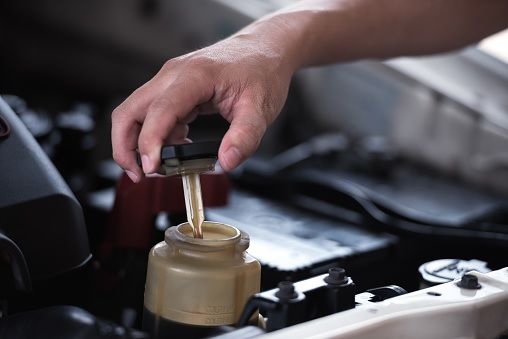
Quick answer: Check the coolant reservoir (translucent plastic tank, usually near the radiator) when the engine is cold — the level should fall between the MIN and MAX marks. Check the concentration with an inexpensive refractometer or float-type tester. Add premixed 50/50 fluid or mix full-strength concentrate with distilled water before adding.
The Details That Actually Matter
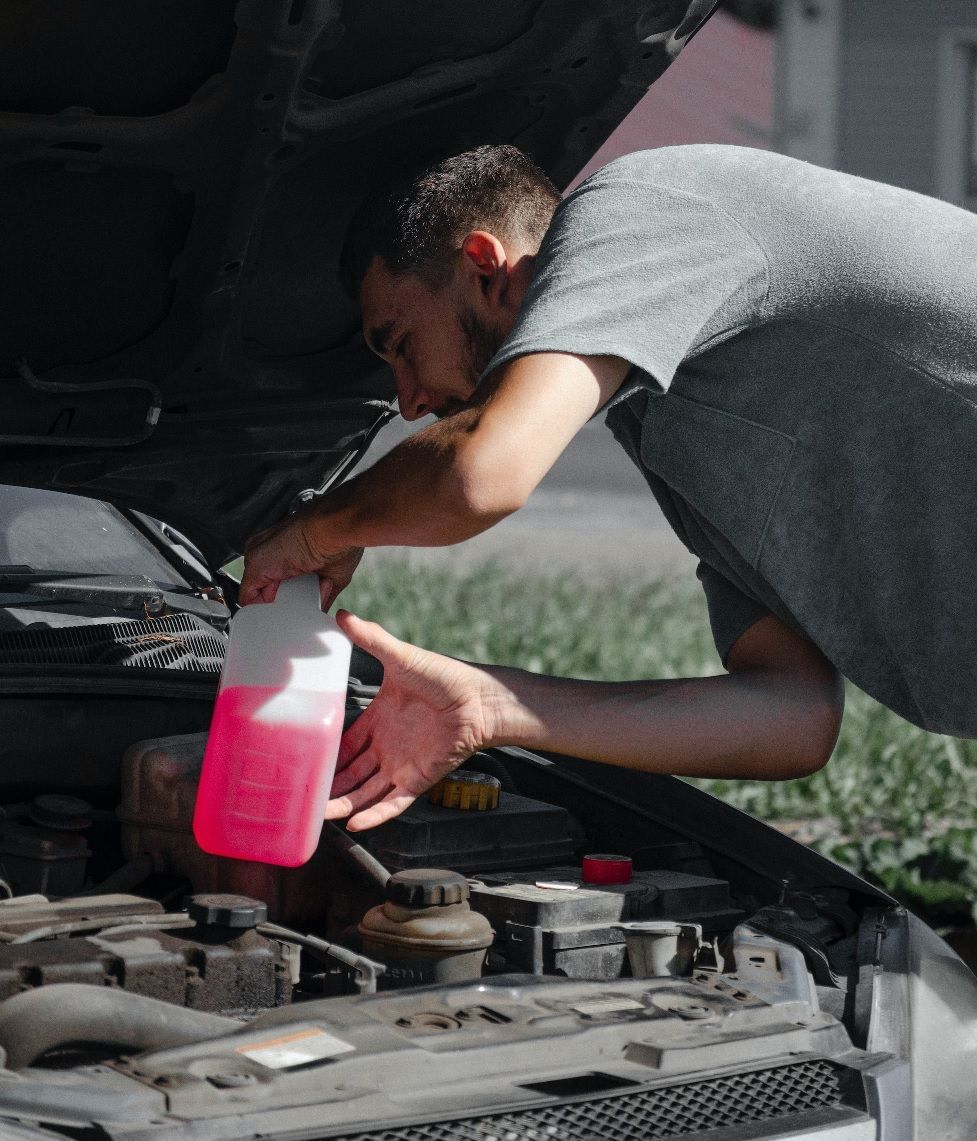
Never open the radiator cap on a hot engine. The cooling system is pressurized — typically 13–18 PSI — and boiling coolant under pressure will cause severe burns if released suddenly. Check the reservoir for cold, or wait at least an hour after driving before touching the radiator cap.
Use distilled water for mixing, not tap water. Tap water contains minerals — calcium, magnesium, and chlorides — that accelerate corrosion and deposit scale on cooling passages over time. The cost difference between distilled and tap water is negligible. The long-term effect on cooling system cleanliness is not.
Test the concentration before winter. An inexpensive refractometer ($15–$20 on Amazon) gives an accurate freeze point reading from a single drop of coolant. Float-type testers are less accurate but better than guessing. If the freeze point is higher than the lowest temperature your climate reaches, add full-strength concentrate to bring the mixture closer to 50/50 or up to a 70/30 antifreeze-to-water ratio maximum. Beyond 70% antifreeze, freeze protection actually decreases because pure ethylene glycol freezes at a higher temperature than the mixture.
That last point surprises people. More antifreeze is not always better protection.
When to Change Your Antifreeze
The degradation timeline for antifreeze inhibitors depends on the chemistry type and driving conditions. A simplified guide:
IAT (green, older formula): 2 years or 30,000 miles. No exceptions for extended service — the inorganic inhibitors deplete on schedule regardless of mileage.
OAT and HOAT (most modern vehicles): 5 years or 150,000 miles under normal conditions. Towing, overheating incidents, and coolant contamination (oil in coolant, water intrusion) shorten this interval.
Signs that it's time, regardless of interval:
- Coolant is brown, rusty, or has visible particulates
- Foam is visible in the reservoir or on the radiator cap
- White crusty deposits around the hose connections or the reservoir cap
- Sweet smell from the engine bay (can also indicate a leak — which is a separate urgent problem)
- Coolant pH below 7 on a test strip (acidic coolant is actively corroding your cooling system)
The actual flush-and-fill procedure is straightforward for most vehicles — drain the system, flush with distilled water, refill with fresh coolant at the correct concentration. On vehicles with complex cooling systems (multiple circuits, rear heat, integrated transmission coolers), the procedure gets more involved, and a service manual or professional is worth consulting.
A Note on Antifreeze and Pet Safety
Ethylene glycol antifreeze has a sweet taste that is attractive to dogs and cats. It is acutely toxic — a small amount is lethal to animals, and symptoms (stumbling, apparent drunkenness) can appear similar to simple illness before rapid organ failure. If you spill antifreeze, clean it up completely. Store it in sealed containers out of reach. Dispose of used coolant at a recycling facility rather than dumping it where animals might encounter it.
Propylene glycol antifreeze is marketed as a lower-toxicity alternative — it's used in RV water systems and other applications where pet or human contact is a real concern. The freeze protection is slightly lower at equivalent concentrations, but for households with pets or in situations where spillage risk is high, it's worth considering.
Final Thoughts
Antifreeze is one of those purchases where the stakes are completely disproportionate to the cost of getting it right. Eighteen dollars and ten minutes of research protect an engine worth thousands. The catastrophic failure mode — cracked block, warped head, blown head gasket — isn't gradual. It happens fast, it's expensive, and it's entirely preventable.
The core rules are simple enough to fit on an index card: match the chemistry to your vehicle's specification, don't mix incompatible types, use distilled water for mixing, check the concentration before winter, and change the fluid on the inhibitor schedule rather than waiting for symptoms.
Buy the right bottle. Check the reservoir. Test the freeze point before the temperature drops.
The engine that's been running on clean, correctly-specified coolant at the right concentration handles whatever winter produces without drama. The one that hasn't — tells you about it at the worst possible time, in the least convenient location, in weather cold enough that waiting for a tow truck is genuinely miserable.
Don't be the second story. Buy the antifreeze.
Need help? We've done the research for you and found the Best Car Antifreeze on Amazon. Every day, we read hundreds of reviews and try the highest-rated products we have on our list.
Best Car Antifreeze - Reviews
The Best
Product information
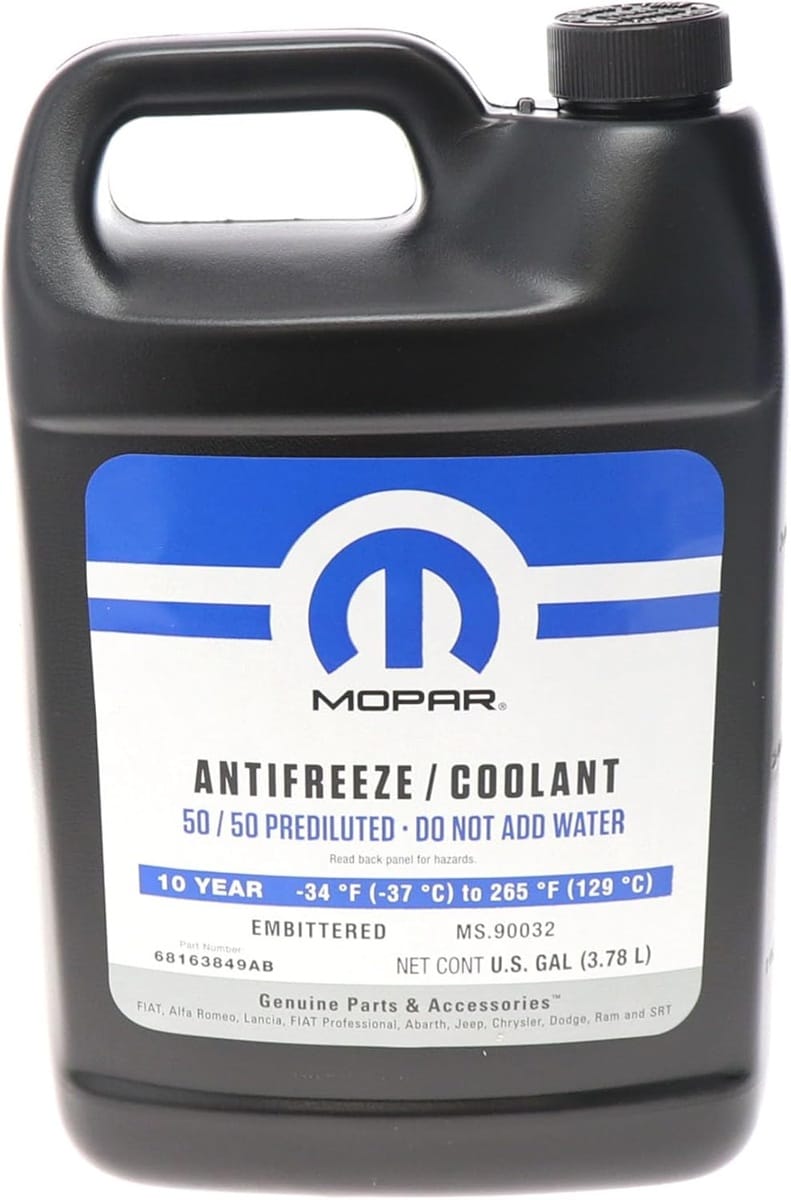
MOPAR Antifreeze/Coolant 50/50 Prediluted (MS.90032) — OEM Coolant for Chrysler, Dodge, Jeep, RAM, Alfa Romeo, and Fiat Vehicles
MOPAR Antifreeze/Coolant 50/50 Prediluted (Part #68163849AB, Spec MS.90032) is the factory-specified OEM coolant for a wide range of FCA/Stellantis vehicles — pre-mixed and ready to pour, rated for 10-year service life, freeze protection to -34°F (-37°C), and boil-over protection up to 265°F (129°C), available on Amazon for approximately $18–$28 per jug.
If you own a Jeep, a RAM, a Dodge, or one of the Alfa Romeo models that started showing up in dealership lots in the late 2010s and quietly won over people who expected to be skeptical, you've probably already had the experience of standing in an auto parts store staring at a wall of antifreeze jugs and wondering which one is actually correct for your vehicle. The colors don't match. The "compatible with" claims on the labels contradict each other. And somewhere in the back of your mind is the creeping anxiety that using the wrong coolant chemistry is the kind of mistake that doesn't announce itself immediately — it announces itself three years later, in the form of a cooling system that's been slowly corroding from the inside.
MOPAR's pre-diluted coolant removes that particular anxiety completely. Not because it's the best coolant on earth — it's not a magic formula that transcends chemistry — but because it is exactly what the engineers who designed your specific transmission and cooling system specified. That's worth something. Quite a lot, actually.

Already mixed is great and saves time and money on buying distilled water. Keeps the engine running at normal temperatures. If this antifreeze boils, it's probably something that is not right in the cooling system.

Some customers reported that they received the wrong product, or it was damaged and leaking. Again, where are the packaging, shipment, and quality control?
Our Thoughts - A great product that can be used on a large variety of gasoline and diesel engines.
Very Good
Product information
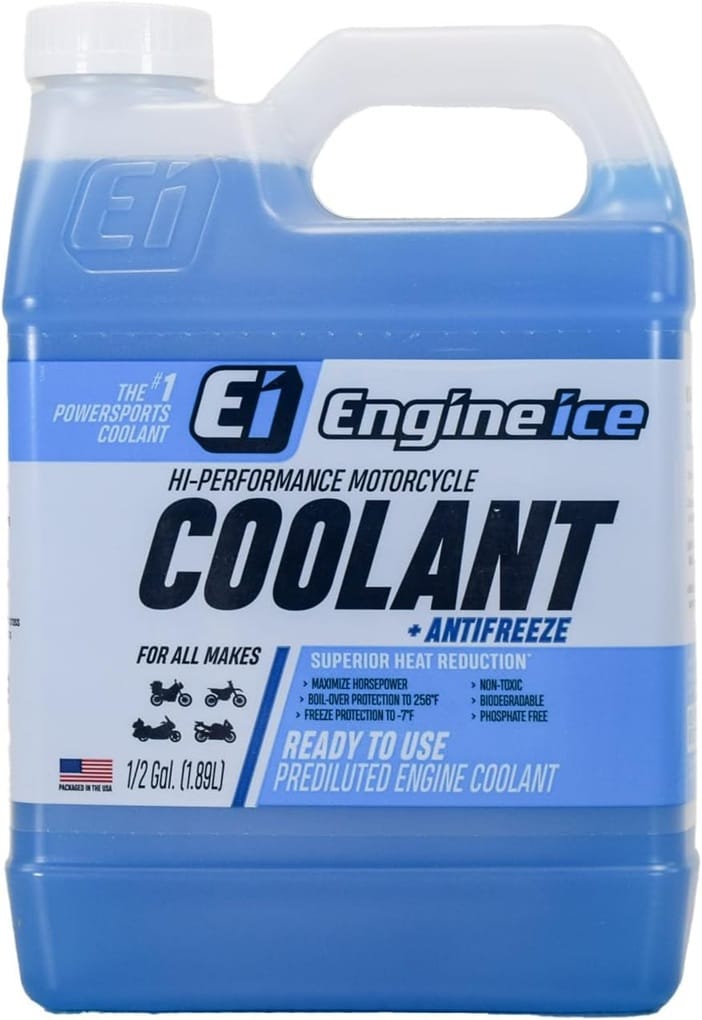
Engine Ice Hi-Performance Motorcycle Coolant + Antifreeze — Propylene Glycol RTU Formula for Powersports Engines That Run Hot
Engine Ice Hi-Performance Coolant is a phosphate-free, propylene glycol-based, ready-to-use motorcycle and powersports coolant premixed with deionized water — delivering boil-over protection up to 256°F, freeze protection down to -7°F, and average operating temperature reductions of 10°F to 20°F versus conventional coolants, available on Amazon for approximately $16–$22 per gallon.
Anyone who's ever sat on a motocross bike at idle in staging — engine ticking, heat radiating up through the frame, that particular shimmer coming off the cylinder head — knows the specific anxiety of watching the temperature gauge creep toward territory that feels wrong. Not dangerous, maybe. Not yet. But wrong. The kind of wrong that makes you blip the throttle a few times just to move some air, even though you know it doesn't really help.
Heat management on powersports engines is a different problem than heat management in your car. Different scale, different stakes, different physics. A car's engine sits in a large bay with dedicated airflow, a substantial coolant volume, and typically some margin for thermal error built into the system design. A motorcycle or ATV engine is small, dense, and often expected to produce significant power relative to its displacement, which means the heat generated per cubic inch is, genuinely, substantial. And when you're stuck in slow traffic on a summer afternoon, or climbing a long technical section on a trail with no airflow over the engine, that heat has nowhere to go unless the coolant is pulling it away efficiently.
Engine Ice exists specifically for that problem. Not as a generalist automotive coolant that somebody decided to market toward motorcycles. As a formula engineered from the chemistry up for powersports thermal demands.

A more natural antifreeze/coolant than others. Uses propylene glycol rather than ethylene glycol.

Again, customers reported that the packaging and quality control need improvement. Containers leaked, and the packaging was ripped. A bit pricy.
Our Thoughts - A great product that can be used on multiple types of engines. No phosphates means fewer toxins.
Very Good
Product information
Engine Ice Hi-Performance Motorcycle Coolant + Antifreeze — Propylene Glycol RTU Formula for Powersports Engines That Run Hot
Engine Ice Hi-Performance Coolant is a phosphate-free, propylene glycol-based, ready-to-use motorcycle and powersports coolant premixed with deionized water — delivering boil-over protection up to 256°F, freeze protection down to -7°F, and average operating temperature reductions of 10°F to 20°F versus conventional coolants, available on Amazon for approximately $16–$22 per gallon.
Anyone who's ever sat on a motocross bike at idle in staging — engine ticking, heat radiating up through the frame, that particular shimmer coming off the cylinder head — knows the specific anxiety of watching the temperature gauge creep toward territory that feels wrong. Not dangerous, maybe. Not yet. But wrong. The kind of wrong that makes you blip the throttle a few times just to move some air, even though you know it doesn't really help.
Heat management on powersports engines is a different problem than heat management in your car. Different scale, different stakes, different physics. A car's engine sits in a large bay with dedicated airflow, a substantial coolant volume, and typically some margin for thermal error built into the system design. A motorcycle or ATV engine is small, dense, and often expected to produce significant power relative to its displacement, which means the heat generated per cubic inch is, genuinely, substantial. And when you're stuck in slow traffic on a summer afternoon, or climbing a long technical section on a trail with no airflow over the engine, that heat has nowhere to go unless the coolant is pulling it away efficiently.
Engine Ice exists specifically for that problem. Not as a generalist automotive coolant that somebody decided to market toward motorcycles. As a formula engineered from the chemistry up for powersports thermal demands.

Works with the majority of vehicles, whether it's gasoline or diesel.

Again, customers reported that the quality control needs improvement.
Our Thoughts - A great antifreeze/coolant for a reasonable price. It will last for years without replacing it with a new coolant. Always check the owner's manual to make sure you purchase the correct coolant.
Good
Product information
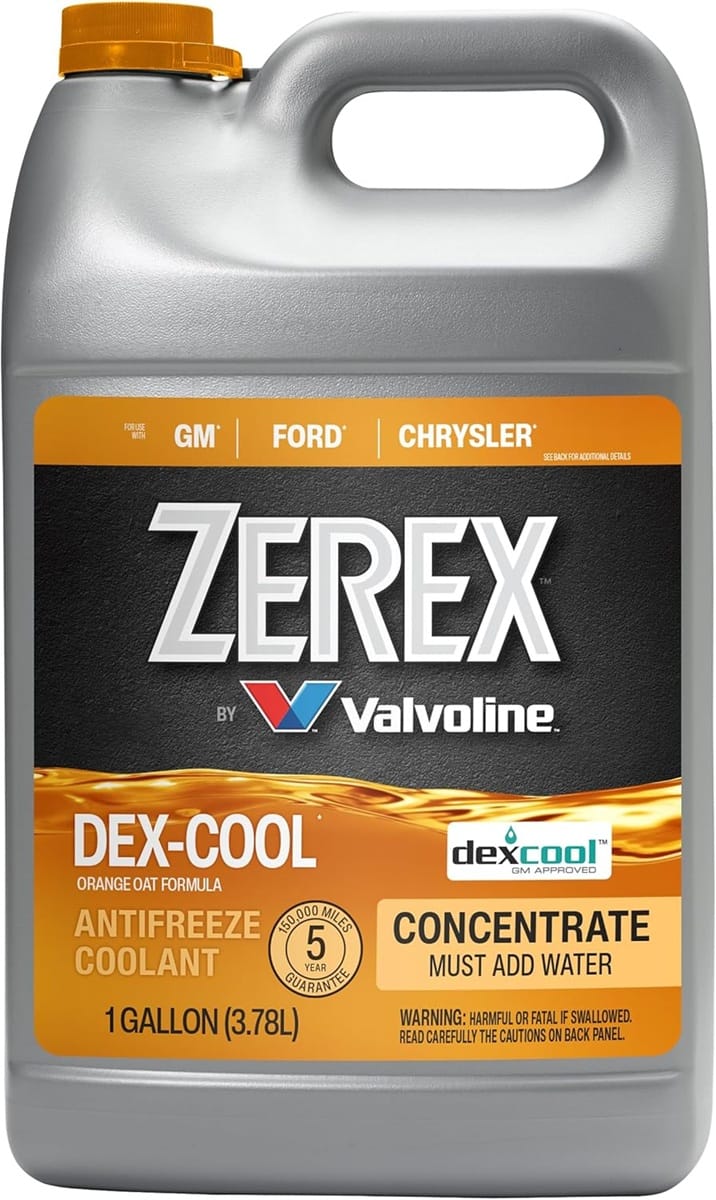
Zerex G-05 Antifreeze/Coolant Concentrate — Orange OAT Formula With 5-Year Protection and Real-World Fleet Testing Behind It
Zerex G-05 is a phosphate-free, silicate-free organic acid technology (OAT) antifreeze concentrate in an orange formula — offering freeze protection down to -84°F at a 70/30 mix, boil-over protection up to 270°F at a 60/40 mix, a 5-year/150,000-mile guarantee against freeze and boil-related engine failure, and a denatonium benzoate bittering agent for safety, available on Amazon for approximately $16–$24 per gallon.
There's a peculiar confidence that comes with knowing you've done something right — completely, thoroughly, without shortcuts. Not the loud confidence. The quiet kind. The kind where you've flushed the cooling system properly, mixed the coolant at exactly the right ratio with clean water, and you just... know. The temperature gauge sits exactly where it should sit. Has for years. Probably will for years more. That feeling doesn't come from using whatever was cheapest on the shelf. It comes from using something that's been tested — actually tested, in labs and in fleets, not just described in marketing copy — and choosing the right ratio for your climate before you pour a single drop.
This is a concentrate. That word carries more weight than it gets credit for.
Pre-diluted coolants are convenient. There's nothing wrong with them for top-offs and routine maintenance in moderate climates. But concentrate gives you control — over the mixture ratio, over the freeze point ceiling, over how much protection you're actually building into the system. And with a product like this one, where the mixing ratios have been clearly defined across three distinct protection levels, that control is precise rather than approximate.

Some customers prefer to mix the antifreeze/coolant themselves. It will prevent corrosion from moisture buildup in your cooling system.

Customers reported that the quality control needs improvement. The container was full of water, not antifreeze. The container had the cap seal open.
Our Thoughts - A good quality antifreeze/coolant that will keep your vehicle's coolant from freezing when parked outdoors.
Good Value
Product information
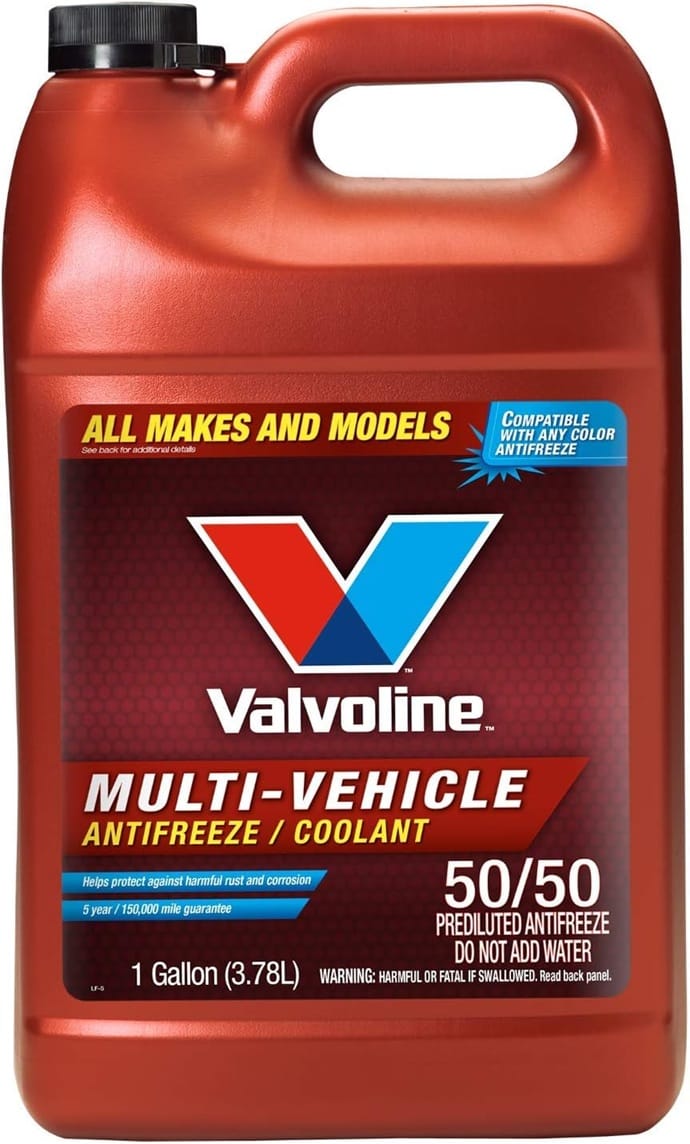
Zerex All Makes All Models Antifreeze/Coolant — Yellow Pre-Mixed Formula With Alugard Plus for Universal Ethylene Glycol Compatibility
Zerex All Makes All Models is a yellow, 50/50 pre-mixed antifreeze/coolant formulated with Alugard Plus technology for compatibility with all ethylene glycol-based cooling systems — delivering freeze protection to -34°F, boil-over protection to 265°F, corrosion and scale resistance across all cooling system metals including aluminum, and 30–50 ppm of denatonium benzoate as a safety bittering agent, available on Amazon for approximately $15–$22 per gallon.
Walk into any auto parts store and count the coolant options on the shelf. Go ahead. I'll wait. Somewhere between six and twelve bottles, usually — different colors, different chemistry labels, different claims about compatibility and protection levels, all arranged in a way that suggests organization while actually producing paralysis. Green, orange, yellow, pink, blue. IAT, OAT, HOAT, P-HOAT. "For Asian vehicles." "For European vehicles." "For GM applications." "For all vehicles." Each one subtly implies that the others are wrong for your situation.
The yellow formula with Alugard Plus exists for exactly that moment of paralysis.
It's not the answer for every vehicle and every situation — no honest product claim should be — but it's the answer for a surprisingly wide range of real-world scenarios where the priority is universal ethylene glycol compatibility, immediate readiness without measuring or mixing, and protection across the full spectrum of metals found in modern and older cooling systems simultaneously. That's a specific and genuinely useful thing to be good at.

It comes already mixed, it saves time, and no need to buy distilled water.

Packaging and shipment need improvement. Customers reported that the packaging was damaged and the container was leaking.
Our Thoughts - This is a good antifreeze/coolant, with only a few niggly packaging issues that annoy people.
FAQs: Car Antifreeze
What's the best antifreeze for most cars?
For most domestic vehicles and older imports, Prestone All Vehicles or a comparable HOAT multi-vehicle formula provides adequate protection and broad compatibility. For vehicles specifying OEM-specific chemistry — GM DEX-COOL, Toyota Long Life, Honda Type 2 — use the manufacturer-specified formula or a matched-chemistry alternative like Zerex's vehicle-specific line.
Can I mix different brands of antifreeze?
You can mix brands safely as long as the chemistry type is compatible — two OAT formulas from different brands can be mixed, as can two HOAT formulas. Do not mix IAT (older green) with OAT or HOAT. The incompatible inhibitors react and form deposits. When in doubt, flush the system and start fresh rather than mixing unknown chemistries.
What's the difference between antifreeze and coolant?
Technically, antifreeze refers to the concentrated glycol base, while coolant refers to the diluted, ready-to-use mixture. In common usage, the terms are used interchangeably. "Antifreeze/coolant" on a product label typically indicates a product that functions as both, which is every modern formulation.
How do I know what antifreeze my car needs?
Check the owner's manual — it will specify the coolant type by chemistry (OAT, HOAT, etc.) or OEM designation (DEX-COOL, Toyota Long Life, Honda Type 2). The cooling system cap or nearby sticker often also specifies the required coolant type. If you're topping off an existing system, the color of the existing coolant is a starting point, but verify the chemistry rather than relying on color alone.
Is pre-diluted or concentrated antifreeze better?
Pre-diluted 50/50 is convenient and eliminates mixing errors — particularly useful for top-offs. Full-strength concentrate is more economical per gallon of finished coolant and lets you adjust the concentration for extreme cold climates (up to 70/30 antifreeze-to-water maximum). For most people in most climates, pre-diluted 50/50 is the practical choice.
Can antifreeze go bad if stored unopened?
Unopened antifreeze has a shelf life of several years — the glycol base itself is stable indefinitely, but some inhibitor additives can precipitate out of solution over very long storage periods. Check the manufacturer's recommended shelf life, typically 4–5 years for an unopened container. Once opened and used, follow the service interval for the specific chemistry type.
Looking for additional automotive essentials?
Check out our other articles!
 Save With Reviews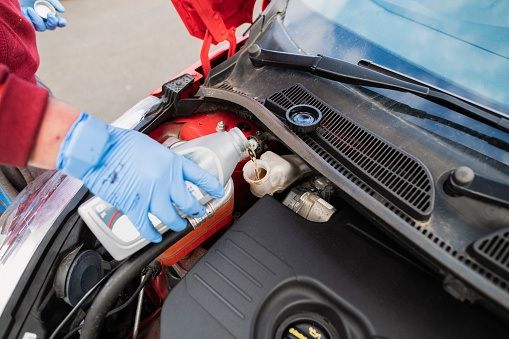
 Save With Reviews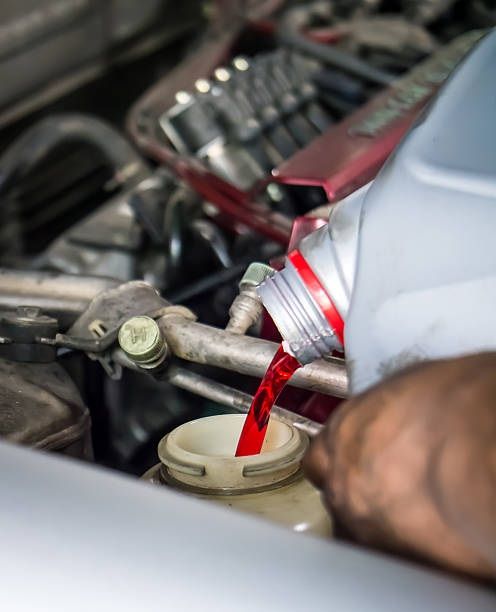
 Save With Reviews