
,The best brake fluid for most modern vehicles is a DOT 4 or DOT 5.1 glycol-based formula — with top-rated options including Motul RBF 600, Castrol React SRF, ATE Typ 200, and Prestone DOT 4 available on Amazon for $8 to $45 per bottle depending on grade and performance level, with the correct choice determined entirely by your vehicle's specification and how hard you drive.
Brakes are the one system in your vehicle where the margin for error is exactly zero. Not close to zero. Not low. Zero. And yet brake fluid — the hydraulic medium that physically transfers your foot's force through 15 feet of steel lines to four wheel cylinders simultaneously — is the maintenance item that gets ignored longer than almost anything else under the hood. Oil gets changed. Filters get replaced. Brake fluid sits in its reservoir, quietly absorbing moisture, slowly losing its boiling point, gradually becoming something meaningfully different from what went in two years ago. Until one day, on a long mountain descent, or a sudden panic stop on the highway, or a track day that seemed like a good idea, the pedal goes soft in a way that rewires your nervous system instantly.
I watched a friend discover his brake fluid had degraded during a spirited drive through Mulholland. Not a failure — a warning. The pedal felt different. Slightly spongy on repeated hard stops. We pulled over. Checked later. The fluid had absorbed enough moisture to drop the boiling point below what sustained downhill braking produces. That's vapor lock territory. That's the thing you never want to find out about at speed.
Fifteen minutes of research and a $12 bottle of DOT 4 could have prevented the entire experience. This guide is those fifteen minutes.
Key Takeaways
- DOT 3, DOT 4, and DOT 5.1 are glycol-based and hygroscopic — they absorb moisture over time, which lowers the boiling point; a higher DOT number means a higher boiling point and better high-temperature performance
- DOT 5 is silicone-based, non-hygroscopic, and incompatible with ABS systems and vehicles designed for glycol fluid — not a universal upgrade
- Dry boiling point (fresh fluid) and wet boiling point (fluid after moisture absorption) are both critical specs — wet boiling point tells you how the fluid performs after it's been in service
- Brake fluid should be replaced every 1–2 years under normal driving, or annually for track use, towing, or mountain driving where thermal stress is elevated
- Never mix DOT 5 silicone with glycol-based fluids — they are chemically incompatible, and the result damages seals and causes brake failure
- Top-rated brake fluids on Amazon range from $8–$12 (standard DOT 3/4) to $35–$45 (high-performance racing-grade DOT 4 and DOT 5.1)
How Brake Fluid Actually Works (The Part That Makes the Boiling Point Matter)
The physics here are elegant and slightly terrifying once you understand them fully.
Your brake pedal connects to a master cylinder — a hydraulic pump, essentially — that pressurizes brake fluid through steel and rubber lines to calipers at each wheel. The caliper pistons extend under that pressure, pressing brake pads against rotors. The friction stops the vehicle. Every time you brake, especially hard, that friction generates substantial heat. Some of that heat transfers into the brake fluid through the caliper.
Brake fluid needs to remain liquid to transmit hydraulic pressure. If it boils — converts to vapor — the vapor is compressible in a way that liquid isn't. Compress a liquid: pressure transmits. Compress a vapor: it just... compresses. The pedal goes to the floor. Nothing happens at the wheels. That's vapor lock, and it's as dangerous as it sounds.
The boiling point of your brake fluid is the thermal safety margin between normal braking and that outcome. It's not a theoretical concern for track drivers and mountain descenders — it's an engineering specification with direct consequences.
DOT Ratings Explained: What the Numbers Mean and Don't Mean
The Department of Transportation (DOT) rating system establishes minimum boiling point and viscosity standards for brake fluid. Higher numbers — mostly — mean higher boiling points. Here's what each rating actually specifies:
DOT 3
Dry boiling point: 401°F (205°C) minimum Wet boiling point: 284°F (140°C) minimum
The baseline glycol formula. Adequate for older vehicles with drum brakes and less aggressive braking demands. Still found in older domestic cars and light-duty trucks where manufacturers specify it. The wet boiling point — which represents performance after moisture absorption — is the lowest of the glycol grades, which is why it's increasingly replaced by DOT 4 as the minimum recommendation for modern vehicles.
Hygroscopic. Will absorb moisture from the atmosphere over time, even in a sealed system, through permeable rubber brake hoses.
DOT 4
Dry boiling point: 446°F (230°C) minimum Wet boiling point: 311°F (155°C) minimum
The current standard for most modern passenger cars, crossovers, and light trucks globally. Higher boron ester content than DOT 3 raises both the dry and wet boiling points substantially. European manufacturers — BMW, Mercedes, Volkswagen, Audi — have specified DOT 4 as the minimum grade for decades, partly because European driving conditions (sustained high-speed motorway driving, mountain passes) expose brake systems to higher thermal stress than typical American driving.
Compatible with DOT 3 systems — you can use DOT 4 where DOT 3 is specified. The reverse is also technically true in an emergency, though it lowers the boiling point performance of a DOT 4 system.
Also hygroscopic. Absorbs moisture. Needs regular replacement.
DOT 5.1
Dry boiling point: 500°F (260°C) minimum Wet boiling point: 356°F (180°C) minimum
The highest-performing glycol formula. Same base chemistry as DOT 3 and DOT 4 — fully compatible with both — but engineered to higher boiling point specifications. Favored for high-performance vehicles, track use, and applications where sustained heavy braking is expected. The wet boiling point, especially — 356°F versus DOT 4's 311°F minimum — provides significantly more thermal headroom in real-world degraded conditions.
Still hygroscopic. The higher initial boiling point gives you more margin as moisture accumulates, but it doesn't stop the absorption process.
DOT 5 (Silicone — Completely Different Category)
Dry boiling point: 500°F (260°C) minimum Wet boiling point: 356°F (180°C) minimum
Same boiling point specs as DOT 5.1 on paper. Completely different chemistry in practice.
DOT 5 is silicone-based. It does not absorb moisture. That sounds like an advantage — and it is, in the specific applications where DOT 5 is appropriate, primarily military vehicles and restored classics that sit for long periods without driving. Because silicone doesn't absorb moisture, any water that enters the system stays as discrete droplets rather than mixing uniformly with the fluid. Those droplets can freeze, can cause localized boiling at specific hot spots, and can corrode metal components they contact directly.
More critically, DOT 5 silicone fluid is not compatible with ABS systems, traction control systems, or stability control systems, which describes virtually every vehicle manufactured in the last 15 years. The fluid can entrain air bubbles during the rapid pressure cycling these systems perform, causing a spongy brake feel and inconsistent pedal response.
Do not use DOT 5 in a vehicle designed for glycol fluid. Do not mix DOT 5 with any glycol-based fluid. The incompatibility is chemical, and the consequences are seal damage and brake system failure.
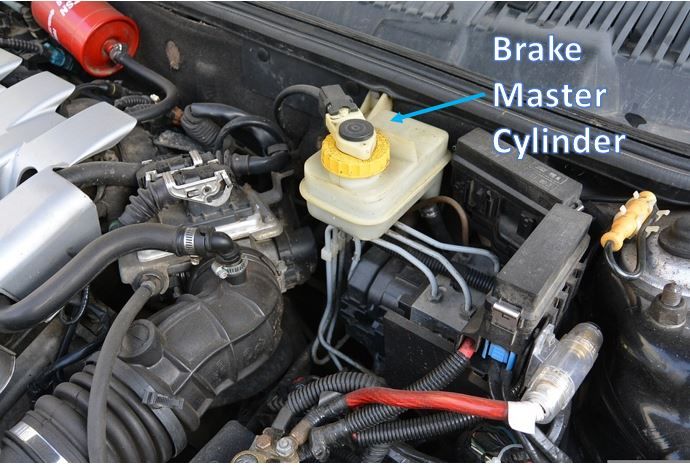
How to Check Your Brake Fluid (And What You're Actually Looking At)
Quick answer: With the vehicle parked on level ground and the engine off, locate the brake fluid reservoir — typically a translucent plastic reservoir on the driver's side near the firewall — and read the level against the MIN and MAX markers on the outside. Check the color. Test the boiling point with an inexpensive test strip or electronic tester.
The Color Tells You Something
Fresh glycol brake fluid ranges from clear to light yellow. As it absorbs moisture and oxidizes in service, it darkens — progressing through light amber toward dark brown. The color gradient is a rough proxy for contamination level, though not a precise measurement.
Dark brown or black brake fluid is unambiguously overdue for replacement. It's also been converting your brake system's internal metal surfaces into its own corrosion experiment for longer than anyone should be comfortable with.
The Boiling Point Test
Inexpensive electronic brake fluid testers — $15–$25 on Amazon — measure moisture content in the fluid and display an estimated boiling point. Not laboratory precision, but close enough for practical maintenance decisions. Some auto parts stores will do this test for free.
If the tester shows the boiling point is within 50°F of the temperature your brake system produces during hard use, replace the fluid. Don't wait.
When to Replace Brake Fluid (And Why the Interval Is Shorter Than You Think)
Standard driving: Every 2 years, regardless of mileage. The degradation mechanism is moisture absorption, which happens continuously through permeable brake hoses and isn't meaningfully stopped by low mileage. A car driven 5,000 miles per year in two years has absorbed nearly as much atmospheric moisture as one driven 20,000 miles. Time matters more than distance here.
Performance and track driving: Annually, or before and after track events. Sustained high-temperature brake use accelerates fluid degradation significantly. Track day instructors and experienced enthusiasts typically run fresh fluid at the beginning of every season.
Towing and mountain driving: Consider annual replacement. Extended downhill braking — particularly towing a trailer down a sustained grade — creates thermal stress that approaches track conditions for duration if not intensity.
After any brake system repair: Any time the system is opened — caliper replacement, master cylinder replacement, line repair — bleed the system completely with fresh fluid rather than just topping off.
ABS, Stability Control, and Modern Safety Systems: What Brake Fluid Compatibility Means
Anti-lock braking systems work by rapidly cycling brake pressure — releasing and reapplying hydraulic pressure at individual wheels dozens of times per second during an ABS event. Traction control and electronic stability control use the same hydraulic infrastructure to selectively apply brakes at specific wheels.
This rapid cycling places unusual demands on brake fluid viscosity — specifically, low-temperature viscosity. A fluid that becomes too viscous in cold weather responds sluggishly to rapid pressure cycling, which can cause ABS to behave erratically or not perform to design specifications.
All DOT 3, DOT 4, and DOT 5.1 glycol fluids meet the viscosity specification required for ABS compatibility. DOT 5 silicone fluid does not — and can cause air entrainment during rapid cycling that produces a spongy pedal feel and inconsistent ABS performance.
If your vehicle has ABS — which includes essentially every vehicle manufactured after the late 1990s — use a glycol-based fluid at the correct DOT rating. The silicone option is not a category of upgrade. It's a compatibility choice for specific legacy applications.
Final Thoughts
Brake fluid is the most consequential fluid in your vehicle — and the most neglected. Oil gets changed religiously because the maintenance culture around it is decades old and deeply embedded. Brake fluid gets remembered when the pedal feels wrong, which is precisely when remembering it becomes urgent rather than precautionary.
The correct answer for most people is straightforward: verify your manufacturer's DOT specification, buy a quality fluid that meets or exceeds that rating, and replace it every two years without waiting for symptoms. For performance driving, tow heavy loads regularly, or push hard in the mountains — move up to a high-performance DOT 4 like the Motul RBF 600 or ATE Typ 200 and replace it annually.
The boiling point numbers on the bottle are not abstract. They're the thermal distance between normal braking and the pedal going to the floor at the worst possible moment. More margin is always better. Fresh fluid is always better. Correct specification is always better.
Check the reservoir. Test the boiling point if you don't know the service history. Replace it on schedule.
The stop that doesn't happen is the one that matters most.
Need help? We've done the research for you and found the Best Brake Fluid on Amazon. Every day, we read hundreds of reviews and try the highest-rated products we have on our list.
Best Brake Fluid - Reviews
The Best
Product information
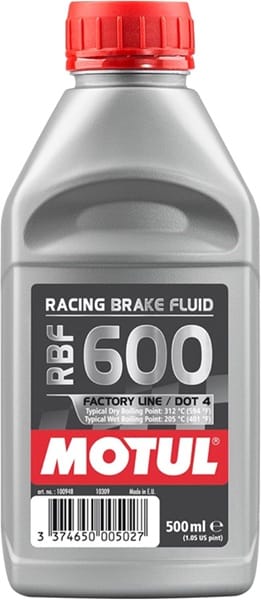
Discover the exceptional performance of Motul 600 brake fluid, boasting a dry boiling point of 594 degrees F and 100% synthetic composition. Its high boiling point effectively prevents vapor lock and brake fade, surpassing DOT 3 and DOT 4 specifications for reliable performance under intense usage.
Experience superior stability with this brake fluid, engineered to excel under hard conditions and provide unparalleled safety for hydraulic actuated brake and clutch systems.

Can also be used for the hydraulic clutch. Has a high WET boiling point and corrosion inhibitors.

Some customers received the wrong product. Others received the old 2-year-old stock.
Our Thoughts - Like all the other top brake fluids, this one will do it just as well. It may boil at extreme brake temperatures when racing.
Very Good
Product information
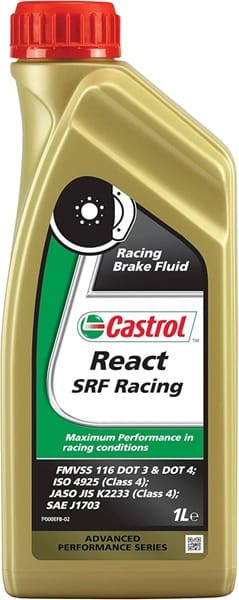
Uncover the performance of Castrol SRF Racing Brake Fluid, featuring an exclusive European formula renowned for its exceptionally high boiling point and superior anti-vapor lock properties. This brake fluid delivers superior braking, specifically designed to excel under arduous conditions such as racing and rallying, providing unmatched safety and reliability for high-performance vehicles.
Experience peace of mind with a wet boiling point of 270°C and a dry boiling point of 310°C, exceeding both DOT3 and DOT4 specifications for brake fluids, ensuring optimal performance even in the most demanding driving scenarios.

Durable and has a great performance. Effortlessly, protects and lubricates the brake assembly.

Again, some customers reported that the packaging and shipping need to improve. Some of the containers were also leaking. Very good but a bit pricey.
Our Thoughts - Heavy-duty and reliable heavy-duty racing formula. It will last longer than many other brake fluids.
Very Good
Product information
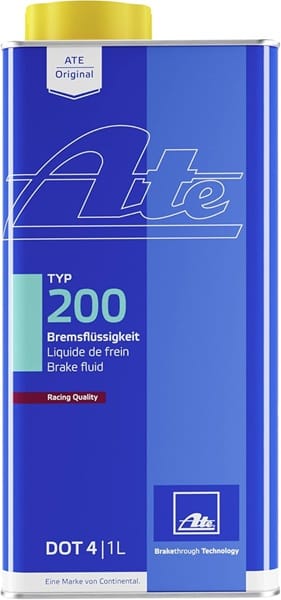
Explore the cutting-edge features of ATE Original TYP 200 Racing Quality DOT 4 Brake Fluid, including a minimal decrease in boiling point attributed to its exceptional water-locking properties. This brake fluid is non-foaming during the filling and bleeding of the brake assembly, ensuring optimal performance and safety tolerance against steam bubbles under various driving conditions.
Benefit from the excellent corrosion protection provided by selected additives, enabling longer brake fluid change intervals of up to 3 years, making it a reliable choice for maintaining peak braking performance in your vehicle.

It ticks all the requirements. Change intervals are normally every two years, with ATE being every 3 years.

Again, some customers reported that the packaging and shipping need to improve. The containers were dented, and some were leaking.
Our Thoughts - At this level, it will do everything the competition is doing. You may not get the blue color that ATE advertises.
Good
Product information
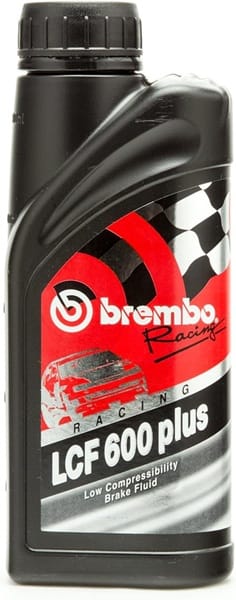
Brembo LCF 600 Plus brake fluid stands as a specially formulated solution engineered to deliver peak performance across diverse racing conditions. With an independently proven low compressibility at high temperatures, this racing brake fluid ensures consistent and reliable performance, meeting the demands of competitive racing environments.
Experience the exceptional capabilities of Brembo LCF 600+, boasting a typical dry boiling point of 316°C (601°F) and a typical wet boiling point of 204°C (399°F), surpassing the requirements of the US FMVSS 116, DOT 4 specification for unparalleled braking confidence on the track.

Great brake fluid that will get the best out of your brake system. If you have Brembo brakes in your vehicle, this is a must-have.

A bit pricey for what one gets, but one pays for quality and the name.
Our Thoughts - A well-known name for high-performance brakes. The brake fluid is no different when it comes to performance. It will perform just as well as the bakes themselves.
Good Value
Product information
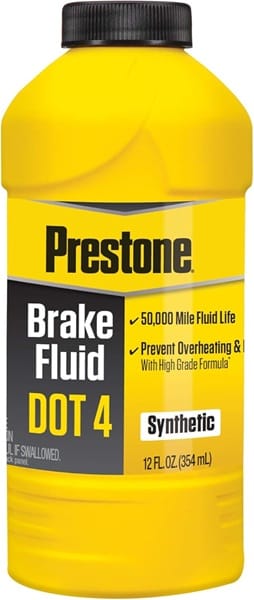
Discover the versatility of Prestone DOT 3 & DOT 4 Synthetic Brake Fluid, recommended for use in an array of braking systems, including ABS, disc, and drum brakes, as well as hydraulic clutches requiring DOT 3 and DOT 4 fluids. This advanced brake fluid not only provides corrosion protection for all metals within the braking assembly but is also compatible with all conventional brake fluids, ensuring seamless integration into your vehicle's braking system.
With its exceptional resistance to fluid vaporization, Prestone Synthetic Brake Fluid substantially reduces the risk of brake failure, offering peace of mind and reliability for your driving experience. Count on this fluid to deliver excellent performance even under high-temperature braking conditions, making it a dependable choice for maintaining optimal braking efficiency.

A good, affordable option gives a good braking performance and experience.

Some customers reported that the packaging and shipping need to improve. Also, some received a mixture of DOT 3 and DOT 4 bottles.
Our Thoughts - It works with most brake systems. It protects the internal areas of the brake assembly from corrosion. Always check the owner's manual to confirm if this fluid can be used in your vehicle.
Good Value
Product information
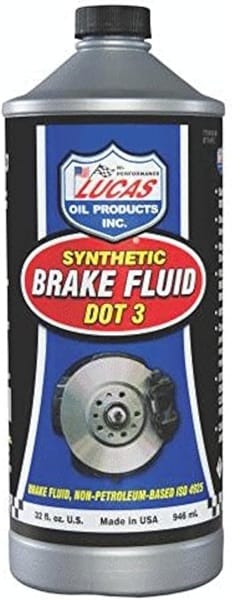
Experience the exceptional performance of Lucas Synthetic Brake Fluid DOT 4, a top-tier blend of polyethylene glycol ethers and additives designed to meet or surpass the industry's minimum dry boiling point standards. This high-quality brake fluid is fully compatible with all brake system rubber components and other brake fluids, delivering comprehensive protection against seal hardening or softening and effectively stopping the absorption of moisture, safeguarding against rust and corrosion.
Count on Lucas Synthetic Brake Fluid DOT 4 to provide outstanding lubricity, ensuring smooth and efficient operation within your vehicle's braking system. With its superior formulation, this brake fluid stands as a reliable choice for maintaining peak braking performance while prioritizing the longevity and resilience of essential brake system components.

Can handle the boiling point better and lasts longer than other brake fluids.

Good product, but not for all vehicles. Some customers reported that the packaging needs to be improved.
Our Thoughts - Not all brake fluids are the same. They all have slightly different additives and specs. Works on most brake assemblies. Check your vehicle. Always check the owner's manual to confirm.
FAQs: Brake Fluid
How often should I check my brake fluid level?
It's recommended to open the brake fluid reservoir cap and check your brake fluid level at least once every few months or as specified in your vehicle's owner's manual.
What are the signs that my brake fluid needs to be replaced?
Always check the manufacturer's recommendations, and as stated previously, typically every 1-2 years. Indicators that your brake fluid needs replacement include a change in the fluid's color to a dark, murky appearance.
What's the difference between DOT 3, DOT 4, and DOT 5 brake fluid?
DOT 3, DOT 4, and DOT 5.1 are glycol-based fluids with progressively higher boiling points — higher numbers mean higher performance and greater thermal safety margin. DOT 5 is a completely different silicone-based chemistry that's not compatible with ABS systems or vehicles designed for glycol fluid. DOT 3 and DOT 4 are the most common specifications for modern vehicles; check your owner's manual for the correct grade.
Can I use DOT 4 brake fluid in a car that specifies DOT 3?
Yes — DOT 4 exceeds DOT 3 performance specifications and is fully compatible in systems designed for DOT 3. It's a common and acceptable upgrade. The reverse — using DOT 3 in a system specifying DOT 4 — is technically possible in an emergency, but reduces the boiling point performance below the manufacturer's intended specification.
How often should brake fluid be replaced?
Every 1–2 years under normal driving conditions — regardless of mileage, because the primary degradation mechanism is moisture absorption over time rather than use. For track driving, towing, or mountain driving, annual replacement is appropriate. Some manufacturers specify their own interval; always verify against your owner's manual.
Can I mix different brands of brake fluid?
You can mix brands within the same DOT rating — all DOT 4 glycol fluids are chemically compatible with each other. Never mix DOT 5 silicone fluid with any glycol-based fluid; the incompatibility damages seals and compromises brake performance.
What does hygroscopic mean, and why does it matter for brake fluid?
Hygroscopic means the fluid absorbs moisture from the atmosphere over time — even in a closed system, through permeable rubber brake hoses. As the moisture content increases, the boiling point decreases. This is why brake fluid degrades on a schedule rather than a mileage schedule, and why the wet boiling point (boiling point of fluid with some moisture content) is the specification that reflects real-world performance more accurately than the dry boiling point.
Is expensive racing brake fluid worth it for street driving?
For standard street driving — commuting, highway, normal use — no. Standard DOT 4 fluid provides adequate performance for the thermal demands of normal braking, and the wet boiling point won't be reached under typical conditions. For spirited driving, mountain roads, towing, or any track use — yes. The additional wet boiling point margin of fluids like Motul RBF 600 or ATE Typ 200 provides genuine safety headroom that matters under sustained hard braking.
Looking for additional automotive essentials?
Check out our other articles!
 Save With Reviews
 Save With Reviews
 Save With Reviews