
The best fuel injector cleaner for most drivers is a PEA-based (polyetheramine) cleaner — PEA is the only chemistry that's been proven to actually remove hardened carbon deposits from injectors, intake valves, and combustion chambers. For most gasoline vehicles, running a bottle every 3,000 to 5,000 miles (or every other oil change) is enough to keep things clean. Expect to pay $8 to $20 per bottle, and yeah, the cheap stuff that's mostly kerosene or mineral spirits really won't do much beyond giving you that "I did something" feeling. Which, honestly, isn't nothing. But it's close to nothing.
Quick Picks:
- Best Overall (Gasoline) → PEA-based cleaner, full fuel system formula
- Best for Direct Injection Engines → PEA concentrate designed for intake valve deposits (GDI-specific)
- Best for Diesel → Cetane-boosting diesel cleaner with injector lubricity additives
- Best Budget → Mid-tier PEA blend — skip the $3 bottles entirely
- Best for High-Mileage Engines → Extended-use cleaner with upper cylinder lubricants
- Best Preventive Maintenance → Light-concentration PEA, safe for every tank
Wait — Do Fuel Injector Cleaners Actually Work?
Okay, let's just get this out of the way up top, because there's a lot of debate.
Short answer: yes, but only the ones with the right chemistry. The rest are, at best, mild fuel system conditioners. At worst, they're colored kerosene in a fancy bottle.
The magic ingredient is PEA — polyetheramine. It's the detergent chemistry that Chevron patented decades ago (it's the active ingredient in Techron, but also in several other quality products now that various formulations have proliferated). PEA is the only commonly available detergent that can remove hardened carbon deposits from metal surfaces at fuel-system temperatures. Polyisobutylene (PIB) and polyisobutylene amine (PIBA) — two other common cleaner ingredients — work on softer varnish deposits but struggle with baked-on carbon.
If the back of the bottle doesn't mention PEA or polyetheramine somewhere, the cleaner is probably relying on weaker chemistry. Not useless necessarily, but not what you want if your injectors actually need help.
I'll say this too — I was skeptical for years. Did the whole "just put good gas in it" thing. Then in 2022, I ran a PEA-based cleaner through a high-mileage Tacoma I was helping a friend sort out, and the rough idle that had been bugging him for months just… went away. Not immediately. Took about 200 miles. But it went away. So.
Why Injectors Get Dirty (And Why It Matters)
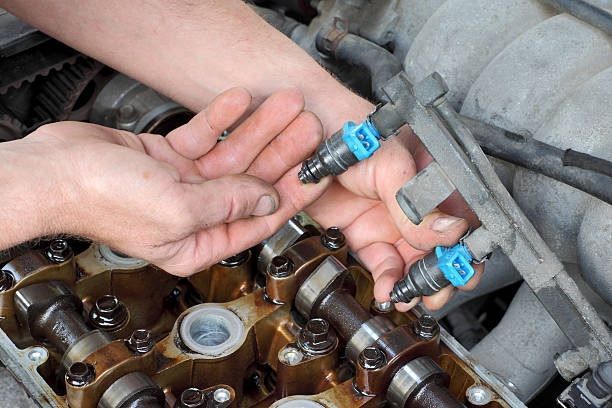
Fuel injectors are essentially precision spray nozzles. They atomize fuel into a specific cone pattern so it mixes properly with incoming air before combustion. We're talking tolerances measured in microns here.
When deposits build up — and they do, over time, no matter what you do — a few things happen:
- Spray pattern degrades. Instead of a fine cone, you get uneven streams or dribbles
- Fuel metering goes off. The computer compensates, but not perfectly
- Combustion becomes less efficient → fuel economy drops, power drops
- Emissions increase (you'll see this on an emissions test eventually)
- Rough idle, hesitation, and pinging under load start creeping in
The deposits come from:
- Normal fuel combustion byproducts (some varnish always forms)
- Low-quality gasoline (Top Tier certified gas has better detergent packages than bottom-shelf fuel — more on that in a sec)
- Ethanol residue (E10 leaves behind more deposits than pure gas)
- Heat cycling, baking the deposits into a hardness that regular fuel can't remove
- Short-trip driving that doesn't let the engine get fully hot
Direct injection engines (GDI) — which are basically every modern gasoline engine made after about 2012 — are especially prone to carbon buildup on the intake valves because fuel never washes over them the way it does in older port-injection setups. This is a whole separate conversation and honestly one of the most common issues I see on 2015+ vehicles.
PEA vs. PIB vs. Everything Else: The Chemistry That Matters
| Ingredient Type | Effective On | Typical Use | Strength |
|---|---|---|---|
PEA (Polyetheramine) | Hardened carbon, varnish, port deposits, intake valve deposits | Deep cleaning, restoration | Strongest |
PIB / PIBA | Light varnish, fresh deposits | Preventive maintenance | Moderate |
Naphtha / Kerosene blends | Water/moisture, very light gumming | "Fuel system cleaners" (not really injector cleaners) | Weak |
Alcohols (isopropyl, etc.) | Water in fuel | Fuel dryers (winter use mainly) | Situational |
The takeaway — if your injectors are actually clogged (misfires, rough idle, real symptoms), you need PEA. Lots of it, concentrated. If you're doing preventive maintenance on a healthy engine, a milder PIB blend every few tanks works fine.
Don't mix the two purposes up. I see people pour a mild "every tank" treatment into a tank and expect it to cure a misfire. That's like putting Chapstick on a sunburn.
Gasoline vs. Diesel: Different Problems, Different Cleaners
Gasoline Engine Cleaners
For gas engines, the priorities are:
- Removing port and combustion chamber deposits
- Cleaning the tips of injector nozzles
- On GDI engines — addressing intake valve carbon (harder problem, partial solution at best)
PEA does all three, to varying degrees. The combustion chamber cleaning is the slowest — takes multiple tanks for significant results — but it does happen.
Diesel Engine Cleaners
Diesel is a different animal. Low-sulfur and ultra-low-sulfur diesel fuel (ULSD) — required in the US since 2010, and in most of Europe longer than that — removed a lot of the natural lubricity from diesel fuel. Modern diesel cleaners need to:
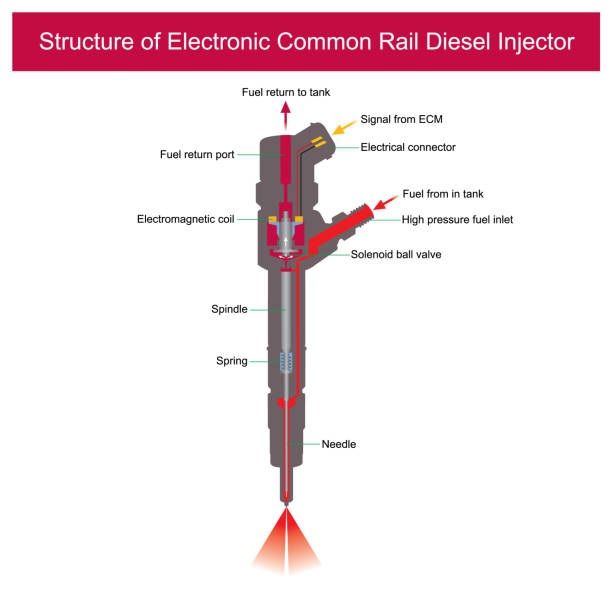
- Clean injector tips (high-pressure common rail injectors are incredibly sensitive to deposits)
- Boost cetane (combustion quality)
- Add lubricity back to the fuel
- Prevent water contamination
So a diesel cleaner isn't just a "clean the injectors" product — it's almost a fuel conditioner. Products in this space typically include upper cylinder lubricants, anti-gel components (winter formulations), and cetane improvers. Different beast entirely.
Don't use gasoline fuel injector cleaners in a diesel and vice versa. Different chemistry, different job.
Comparison Table: Fuel Injector Cleaners at a Glance
| Type | Price Range | Frequency | Best For | Expected Results |
|---|---|---|---|---|
PEA Heavy Concentrate | $10–$20/bottle | Every 3,000–5,000 mi | Cleanup, restoration | Noticeable within 1–2 tanks |
PEA Maintenance Blend | $6–$12/bottle | Every other fill-up | Preventive care | Subtle, cumulative |
PIB/PIBA Cleaners | $5–$10/bottle | Every 5,000 mi | Healthy engines | Mild, preventive |
Diesel Cleaner (Cetane + Lubricity) | $12–$25/bottle | Every 3,000 mi | Modern diesels | Smoother idle, better MPG |
"Complete Fuel System" Products | $15–$30/bottle | Every 5,000–10,000 mi | Full-system cleanup | Multi-tank improvement |
How to Actually Use These Cleaners (Because Timing Matters)
The instructions on most bottles say something like "pour into a nearly empty tank before filling up." This is… mostly right. But there's a little nuance.
For concentrated PEA cleaners (the heavy-duty kind):
- Wait until your tank is about 1/4 full — you want the cleaner to hit the fuel at a higher concentration first
- Pour the entire bottle into the tank
- Fill up with fresh gas (ideally Top Tier gas, which in 2026 includes most major station brands in the US — Chevron, Shell, Costco, Exxon, Mobil, BP, 76, Texaco, and others)
- Run that tank all the way down — don't top off. The cleaner needs time to circulate through the entire system.
- Drive normally. Highway driving helps (hotter combustion = better, cleaner activity). A tank that gets driven exclusively on 8-minute trips to the grocery store? Not as effective.
For maintenance blends: Just dump them in whenever. They're forgiving.
Here's something most people don't think about, though — the cleaner doesn't do its work at the pump. It does its work in the combustion chamber. You have to actually drive the vehicle for the chemistry to happen. Pouring a bottle in and then letting the car sit for two weeks? You just made expensive gas.
How Often Should You Use Fuel Injector Cleaner?
There's no universal answer, but here's a reasonable framework:
- Newer vehicles (under 50,000 miles) running Top Tier gas: Honestly, maybe once a year. Top Tier gas already has a detergent package that keeps most deposits at bay.
- Average daily drivers: Every 3,000 to 5,000 miles (aligns with oil changes, which is easy to remember)
- Older vehicles / high-mileage engines: Every 3,000 miles, with occasional heavier treatment if symptoms appear
- Vehicles that predominantly run non-Top Tier gas: More frequent, maybe every 2,000–3,000 miles
- GDI engines with noticeable symptoms: PEA every 3,000 miles — but understand that PEA doesn't fully solve GDI intake valve carbon. That may need a walnut blast eventually.
A tangent that's worth including: in late 2024, the EPA updated its guidance around gasoline detergent requirements, and several states (including California, where I'm writing this from) have tightened fuel standards further. This means gasoline in 2026 is generally cleaner than it was in, say, 2015. Injector cleaner is less essential now than it was a decade ago. Still useful. Just less urgently useful. For most new vehicles.
Symptoms That Suggest You Actually Need a Cleaner
Not every engine hiccup is a dirty injector. But these are the classic signs:
- Rough idle (vibration at stoplights, inconsistent RPM)
- Hesitation on acceleration (that little delay or stumble when you hit the gas)
- Drop in fuel economy (you're getting 23 MPG when you used to get 27, with no other explanation)
- Hard starts, especially when warm
- Pinging or knocking under light acceleration
- Check engine light with codes like P0171 (system too lean), P0300 (random misfire), P0171/P0174 (lean on bank 1 or 2)
If you're seeing one of these — especially on a vehicle with 80,000+ miles that's never had a fuel system cleaning — a good PEA concentrate is worth trying before you spend $500 at a shop.
But if you're seeing multiple symptoms, or the check engine light is persistent, a fuel cleaner isn't going to be the whole solution. Could be failing injectors (mechanical failure, not just deposits), a fuel pressure issue, ignition problems, vacuum leaks, or any number of other things. Cleaner is step 1, not step 5.
Things Fuel Injector Cleaner Won't Fix
Let's set realistic expectations, because this is where people get disappointed.
- Mechanically failed injectors — if the solenoid is dead or the pintle is physically damaged, no chemistry will help. You need a replacement.
- Heavy carbon on GDI intake valves — a cleaner helps somewhat, but only because a little bit makes it upstream as vapor. For serious deposits, walnut shell blasting is the real fix.
- Fuel pump problems — injector cleaner isn't a fuel pump cleaner
- Ignition issues (bad coils, fouled plugs, worn wires) — wrong system
- Vacuum leaks — you're chasing the wrong ghost
- Compression problems — bottom-end mechanical issues need mechanical fixes
Use cleaner for what it actually does: detergent for fuel-side carbon and varnish deposits. That's its job. That's its only job.
GDI Engines and the Intake Valve Carbon Problem
Since this is easily the most common fuel system question I've seen in 2025 and 2026, worth addressing directly.
Direct injection engines inject fuel directly into the combustion chamber rather than into the intake port. Benefits: better efficiency, more power, better emissions. Drawback: fuel never touches the back of the intake valves, where oil vapor from the PCV system (and EGR gases, on some setups) settles and bakes into carbon.
Over time — usually by 60,000 to 100,000 miles on most GDI engines — the valves get coated with enough crusty black carbon to affect airflow. Rough idle, misfires, drop in performance.
Fuel injector cleaner helps, but only partially. Some PEA does vaporize upstream through the PCV system and contacts the valves. But you're not getting enough contact time or concentration to fully clean heavy deposits.
The real solution for bad GDI carbon is walnut shell blasting — a shop procedure where they remove the intake manifold and physically blast the valves with crushed walnut shells. Costs $400–$800, depending on the vehicle. Unpleasant but effective.
The best prevention is:
- Use Top Tier gas exclusively
- Run a PEA cleaner every 3,000–5,000 miles, starting from low mileage
- Don't do exclusively short trips
- Consider a catch can if you're into modifications (controversial but effective for reducing oil vapor)
This is an aside, I realize. But it comes up enough that I think it's worth including.
Final Thoughts
Fuel injector cleaner is one of those maintenance items that sits in a weird middle ground — it's not magic, but it's not snake oil either. The chemistry that matters is PEA, and if you run a quality PEA-based cleaner every 3,000 to 5,000 miles, you'll keep your fuel system in solid shape for the long haul.
For most drivers in 2026, the truth is this: if you're already running Top Tier gas (which is widely available and usually the same price or within a few cents of non-Top Tier), you may barely need a separate cleaner. Top Tier fuel's detergent package is doing a lot of the work already. The old "every oil change" advice made more sense in the 1990s when fuel quality was wildly inconsistent.
But for older vehicles, vehicles with symptoms, GDI engines showing carbon issues, or drivers who use bottom-shelf gas — yes. A PEA cleaner every few thousand miles is cheap insurance. A $12 bottle that might prevent a $600 shop visit is the kind of preventive maintenance that pays for itself many times over.
Just skip the $3 "miracle" bottles at the gas station checkout. Pour that money into a decent PEA product instead. Your injectors will thank you. Probably. Quietly. In the form of a smoother idle, you don't really notice until one day you realize — huh, the car feels right again.
Can we help? We've done the research for you and found the Best Fuel Injector Cleaner on Amazon. Every day, we read hundreds of reviews and try the highest-rated products we have on our list.
Best Fuel Injector Cleaner - Reviews
The Best
Product information
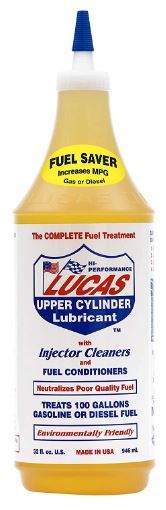
Regarded as the world's #1 fuel additive, our fuel injector cleaner is a versatile solution for both gasoline and diesel engines. It's like a tune-up in a bottle, treating both types of fuel and enhancing miles per gallon (MPG). This industry-leading status is a testament to its consistent performance and reliability in maintaining engine health and efficiency.
Our fuel additive excels in cleaning and lubricating the entire fuel system. It meticulously cleanses fuel injectors, the carburetor, and the engine's combustion chamber. This thorough cleaning process not only restores but also optimizes the performance of your vehicle's engine.
The benefits of using our fuel injector cleaner extend beyond just cleaning and lubricating. It significantly improves fuel economy by efficiently burning excess exhaust emissions. This leads to high mileage and less fuel wastage, saving you money on fuel costs and contributing to a greener environment.
Additionally, our fuel additives enhance power and acceleration by improving fuel flow and reducing deposit buildup. It neutralizes sulfur and other harmful contaminants present in the fuel system. This increased efficiency and contaminant neutralization lead to an extended life for pumps and injectors, ensuring your engine performs at its best for longer.
The fuel additives also prevent rust and corrosion, further prolonging the life of the engine and fuel system components. It complies with federal low sulfur content requirements for diesel motor vehicles and non-road, locomotive, and marine diesel equipment engines. For older engines, it safely replaces the need for lead without causing harmful effects. In a nutshell, our fuel additive is a comprehensive solution for maintaining and enhancing the performance and longevity of your engine and fuel lines.

If your car is running a bit rough and you're worried about not passing the smog test, Lucas may fix it without expensive repairs.

Packaging and handling need improvement. Once the cap does not seal properly, the contents will lose efficiency.
Our Thoughts - With a good blend of fuel additives and detergents, it will lubricate all fuel systems, making engines burn the fuel more efficiently.

Very Good
Product information
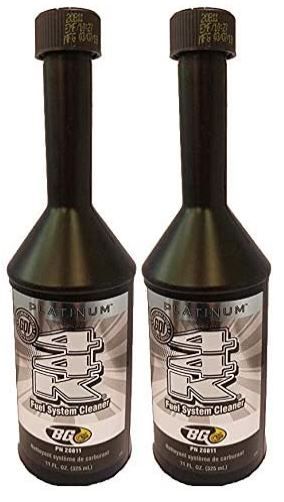
One of the key benefits of using our fuel injector cleaner is its ability to prevent corrosion effectively. Forming a protective layer on engine components, it mitigates the damaging effects of rust and wear. This preventative measure not only ensures the smooth operation of your vehicle’s engine but also significantly extends its lifespan. Furthermore, the product is designed to enhance power output, providing an immediate boost to your vehicle's performance.
In addition to these benefits, our fuel injector cleaner also works wonders in restoring engine performance and improving drivability. Optimizing fuel combustion and enhancing throttle response, it brings back the engine's peak performance, making your driving experience more enjoyable. It also reduces engine knock or run-on tendencies, ensuring smoother operation and reducing wear on engine components. In essence, our product offers a comprehensive solution to maintain your vehicle's engine at its best.

Used by professional mechanics. It can be used on all types of engines. One bottle can do up to 20 gallons per tank of fuel. However, this fuel injector cleaner will be more aggressive with less fuel in the tank.

More expensive than other fuel injection cleaners.
Our Thoughts - This goes for all fuel injector cleaners; they don't last long, and once the top is open, they should be used within two weeks. Therefore, if the top of the injector cleaner is loose or not screwed on properly, the content will be much less effective.

Best Value
Product information
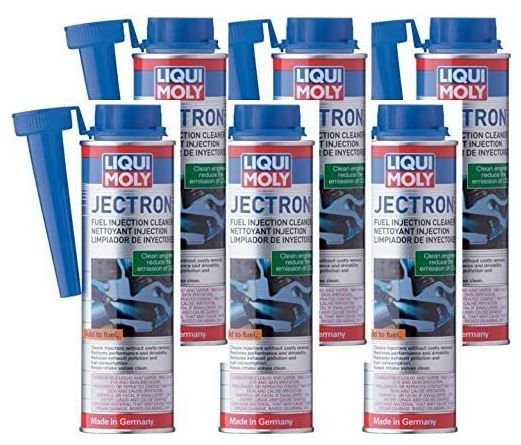
Our fuel injector cleaner is designed to effectively tackle common engine issues such as starting problems, hesitation, and stalling. Improving fuel ignition and optimizing engine timing ensures that your vehicle starts smoothly every time. Additionally, it reduces hesitation during acceleration and prevents stalling, providing you with a more seamless driving experience.
The benefits extend to enhanced idling and better throttle response. A smoother idle means less vibration and noise, adding to the comfort of your ride. Improved throttle response gives you better control over your vehicle, particularly during acceleration. The product also promotes cleaner combustion, reducing harmful emissions and contributing to a healthier environment. In essence, our fuel injector cleaner offers a comprehensive approach to improving your vehicle's performance and efficiency.

This fuel injection cleaner will help your engine to maintain its original specifications from the OEM.

If you drive a new car or any other vehicle with less than 40,00 miles, you may not see or feel any changes in performance.
Our Thoughts - Better combustion due to the cleaning of the whole fuel system, and not just the injectors.

Very Good
Product information
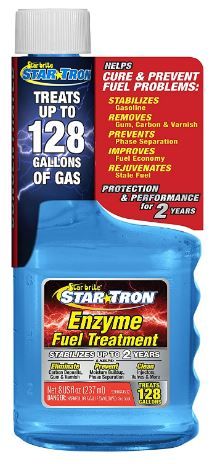
Our fuel injector cleaner is a comprehensive engine solution designed to work in all engines and with all types of fuel. This versatility makes it an ideal fuel treatment and stabilizer for any vehicle or gas-powered tool. Whether you have a modern sports car or a vintage motorcycle, our product ensures optimal engine performance and longevity.
One of the key features of our product is its ability to solve ethanol-related issues. Ethanol can often lead to poor engine performance and decreased fuel economy. Our product prevents and cures these issues, ensuring your engine runs smoothly and efficiently, no matter the type of fuel used.
In addition to being a solution for ethanol-related problems, our product also revitalizes old fuel. It stabilizes fuel for up to two years and can rejuvenate old, sub-spec fuel, even after months of inactivity. This means you don't have to worry about your vehicle's performance dipping due to stale fuel.
The benefits of this fuel injector cleaner extend beyond just enhancing engine performance and reviving old fuel. It also improves fuel economy by removing and preventing gum, carbon deposits, and varnish build-up. It disperses water throughout the fuel as submicron-sized droplets that are safely eliminated while the engine operates. This reduces smoke and emissions, symptoms of poor combustion, which not only waste gas but are harmful to our health and the planet. Unlike other stabilizers, our solution can be mixed with any other fuel additive without the worry of overdosing - there's no need for an exact fuel amount or expensive measuring bottles. In essence, our product is a user-friendly, all-encompassing solution for all your engine and fuel needs.

This fuel injector cleaner is good for smaller engines like lawnmowers, trimmers, etc.

Packaging and handling need improvement. It may be difficult to pour into some vehicles' gas tanks.
Our Thoughts - This goes for all fuel injector cleaners; they don't last long. Once the top is open, it should be used within two weeks. Therefore, if the top is loose or not screwed on properly, the content is much less effective.

Good
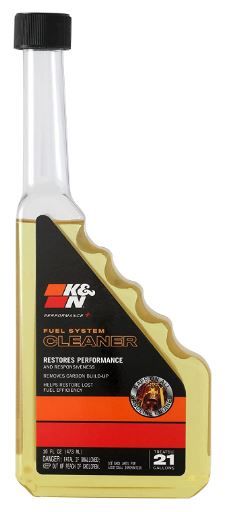
Product information
Fuel injector cleaners are a vital tool in maintaining your vehicle's engine performance. They work by cleaning the entire fuel system, which in turn helps restore any lost engine power. This comprehensive cleaning process contributes significantly to the overall functioning and longevity of your vehicle's engine. The importance of maintaining peak engine performance cannot be overstated, as it directly impacts the vehicle's efficiency and lifespan.
The benefits of using a concentrated fuel injector cleaner extend beyond just restoring engine power. It also enhances the responsiveness of your vehicle, helping to regain any lost acceleration and throttle body response. Furthermore, the more concentrated fuel injector cleaner aids in reducing harmful carbon deposits within the engine. The removal of these buildups leads to increased power and acceleration, further improving the vehicle's performance.
The fuel injector cleaner is safe to use on all engines, whether they are directly injected or traditionally fuel-injected. It is specially formulated to treat up to 21 gallons of gasoline, making it compatible with a full tank. Additionally, it is made in the USA, ensuring quality and performance you can trust. With its numerous benefits and widespread compatibility, a fuel injector cleaner is an essential addition to your engine maintenance routine.

If you have not used a fuel injector cleaner in the last 50,000 miles, try K&N. It will rejuvenate your vehicle's fuel system.

Customer service is difficult to communicate with. Again, packaging and handling need improvement.
Our Thoughts - This goes for all fuel injector cleaners; they don't last long. Once the top is open, it should be used within two weeks. Therefore, if the top is loose or not screwed on properly, the content is much less effective.

Good
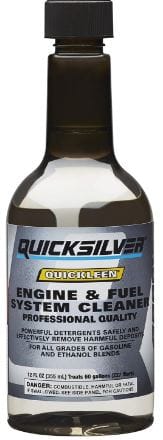
Product information
Our product is a versatile gas treatment and fuel injector cleaner, designed to be compatible with all grades of gasoline, as well as ethanol-blend fuel. This adaptability makes it an ideal solution for various types of vehicles and engines. It works by targeting the key components of your engine, ensuring a clean and efficient fuel system, regardless of the type of fuel you use.
Exceptionally effective, our product quickly and thoroughly removes carbon deposits from various engine parts. These include carburetors, injectors, intake valves, spark plugs, piston crowns, and cylinder heads. By doing so, it optimizes engine performance and ensures smooth operation. More than just a cleaner, it also possesses preventive properties, including the prevention of engine knocking. This extends the life of your engine and contributes to a more enjoyable driving experience.

This fuel injector cleaner cleans the whole fuel system, not only the injectors.

Shipping and handling need to improve. Some customers mentioned that their purchase was damaged when received.
Our Thoughts - We found that there was a slight improvement in the engine's smooth running. Also good for marine motors.

FAQs: Fuel Injector Cleaners
How often should I use a fuel injector cleaner?
Every 3,000 to 5,000 miles for most vehicles, or every other oil change. Newer vehicles running Top Tier gas can go longer between treatments. Older or high-mileage vehicles benefit from more frequent use.
Can fuel injector cleaners be used on any type of vehicle?
Most fuel injector cleaners are designed to be compatible with both gasoline engines and diesel engines. However, always check the product's specifications to ensure it's suitable for your vehicle.
Do fuel injector cleaners actually work?
Yes — specifically, PEA-based cleaners work. They remove hardened carbon and varnish deposits from injectors, ports, and combustion chambers. Cheaper cleaners using weaker chemistries (naphtha, mineral spirits, light PIB blends) provide limited benefits but won't clean badly fouled injectors.
Can fuel injector cleaner damage my engine?
When used as directed, no. PEA and PIB chemistries are safe for all fuel system components, including oxygen sensors, catalytic converters, and fuel pumps. Problems arise only from using way more than recommended, or using diesel cleaners in gas engines (or vice versa).
Will fuel injector cleaner improve my gas mileage?
If your injectors have measurable deposits affecting the spray pattern, yes, you may see 1 to 3 MPG improvement after treatment. On a clean engine, you won't see meaningful change because there's nothing to clean.
What's the difference between fuel injector cleaner and fuel system cleaner?
Often, marketing-speak more than chemistry. "Fuel system cleaner" products typically claim to clean the entire fuel system (tank, lines, rails, injectors, valves, combustion chamber). Quality PEA cleaners do this already. Read the active ingredients, not the product name.
Can I use fuel injector cleaner in a flex fuel or E85 vehicle?
Yes. PEA and PIB chemistries work fine with ethanol blends up to E85. Some ethanol-specific formulas exist, but aren't strictly necessary for flex fuel vehicles.
Should I use fuel injector cleaner in a brand new car?
Generally not needed in the first 20,000–30,000 miles if you run Top Tier gas. The factory fill and early miles don't generate enough deposits to matter. After that, preventive use makes sense.
What is Top Tier gasoline?
Top Tier is a fuel certification standard that requires higher detergent concentrations than the EPA minimum. As of 2026, Top Tier gas is sold by most major US brands, including Chevron, Shell, Exxon, Mobil, BP, Costco, 76, Texaco, Phillips 66, and several others. Using Top Tier gas reduces the need for separate injector cleaners.
Can I use fuel injector cleaner with a full tank of gas?
Yes, but the concentration is lower, so the cleaning action is milder. For best results, add it when the tank is around 1/4 full, then fill up before the tank is empty.
How long does it take to see results after using fuel injector cleaner?
With a quality PEA cleaner, expect subtle improvements within the first tank and more noticeable changes after the full bottle has cycled through (usually 200–400 miles). Combustion chamber cleaning takes longer — often 2 to 3 treatments over several months.
Is fuel injector cleaner a substitute for a professional injector cleaning service?
For moderate deposits, yes. For severely clogged or malfunctioning injectors, no. Professional ultrasonic cleaning removes injectors from the vehicle and cleans them in a controlled bath — more effective for heavy contamination, but $200–$500 at a shop.
Can I overuse fuel injector cleaner?
Not in any practical sense. Using it too often wastes money but won't harm the engine. Just don't exceed the recommended dose per tank (more isn't better — the detergent can't "clean harder" at higher concentrations beyond a certain point).
Does fuel injector cleaner clean catalytic converters?
Indirectly. By improving combustion and reducing unburned fuel reaching the cat, cleaner fuel injectors can help extend catalytic converter life. But cleaner isn't a direct cat cleaner — products marketed for that use (sodium-based formulas) are different chemistry.
Looking for additional automotive essentials? Check out our other articles.
 Save With Reviews
 Save With Reviews
 Save With Reviews