
The best fuel transfer pump for most users is a 12V DC electric pump with cast iron construction, a flow rate of 15–20 GPM, and a UL-listed nozzle with automatic shutoff — this combination handles daily diesel or gasoline transfers safely, connects directly to a truck battery or auxiliary tank wiring, and lasts 10+ years with basic maintenance. Expect to spend $250 to $500 for a solid 12V DC pump, $400 to $900 for a 115V AC shop-grade setup, or $30 to $80 for a manual/rotary hand pump for occasional use. Match the pump to the fluid — do not use a pump rated for diesel on gasoline unless it's specifically approved for both. This matters. More than people realize.
Quick Picks:
- Best Overall (Farm/Fleet) → 12V DC cast iron pump, 15 GPM, with auto-shutoff nozzle
- Best for Shop / Stationary Setups → 115V AC pump, 20 GPM, meter included
- Best Portable → Battery-powered rechargeable pump (12–15 GPM)
- Best Budget (Manual) → Rotary hand pump for 5-gallon cans and barrels
- Best for Gasoline Specifically → UL-listed gasoline pump with anti-static grounding
- Best High-Capacity Diesel → Heavy-duty 20+ GPM pump for transfer tanks and large storage
Why You Need a Real Fuel Transfer Pump (Not a Siphon and a Prayer)
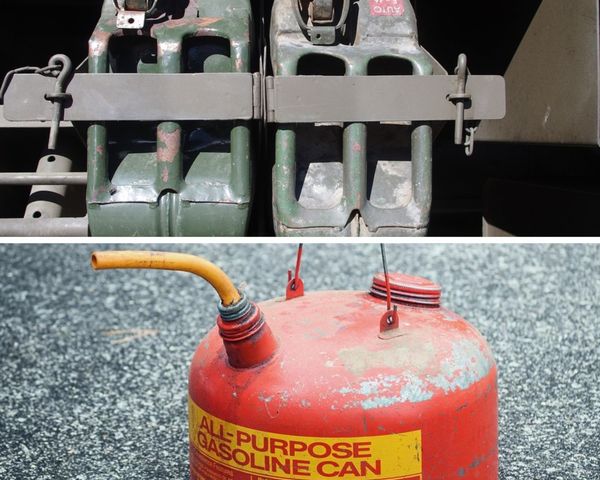
Let me just get this out of the way: if you've ever tried to fill a tractor or a truck-mounted auxiliary tank using a 5-gallon jerry can and a funnel, you already know why transfer pumps exist. It's… not fun. You spill. You strain your back lifting 40-pound cans over a tailgate. Fuel gets on your hands and your jeans and somehow your shoes, even though you were being careful. Why does that always happen?
A transfer pump fixes all of that. Plug it in (or hand-crank it, if you've gone retro), stick the pickup tube in the source tank, put the nozzle in the target tank, and go. Most modern electric pumps move 15 to 20 gallons per minute, which means a 50-gallon auxiliary tank fills in about three minutes flat. Much nicer.
But there's also a safety angle people underestimate. Static electricity during fuel transfer is a real ignition risk, especially with gasoline. Proper transfer pumps include bonding/grounding provisions and UL-listed components designed for flammable liquids. A garden-hose-and-gravity setup does not. You don't want to learn this lesson the hard way. Truly.
The Big Decision: Power Source
This is the first real fork in the road when you're shopping.
12V DC (Battery-Powered or Hardwired to Vehicle)
The most common choices for mobile applications are farms, ranches, construction sites, and pickup trucks with transfer tanks.
- Pros: Portable, works anywhere you have a 12V battery, fast enough for most jobs (12–20 GPM typical)
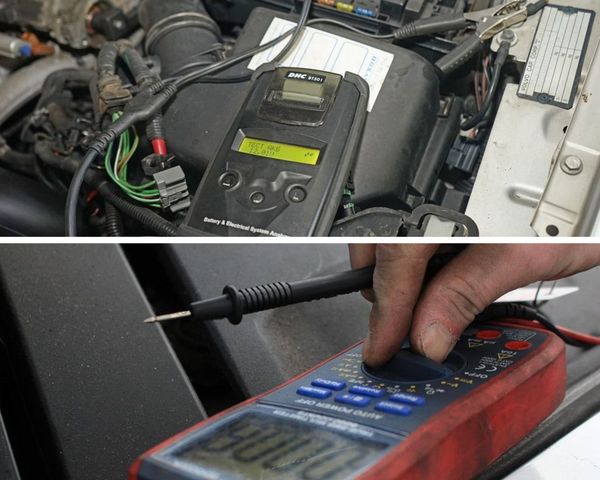
- Cons: Draws serious amps (30–40A at peak) — you need proper wiring, a battery in decent shape, and ideally the engine running during long transfers
- Price range: $250–$500 for quality units
115V AC (Household Current / Shop Use)
For stationary installations — a shop, a storage tank behind the barn, a fixed fueling setup.
- Pros: Continuous duty, faster than 12V options (up to 25+ GPM), more powerful motors
- Cons: Not portable, needs a dedicated outlet near the source tank
- Price range: $400–$900
24V DC
Niche but real — heavy equipment and some commercial trucks run 24V systems. If that's you, get a 24V pump. Don't try to run a 12V pump off a 24V system. You will destroy it quickly and probably dramatically.
Manual / Hand Pump
For occasional use — small tanks, emergencies, that generator you fire up twice a year when the power goes out.
- Pros: Cheap, no power required, no moving parts to fail electrically
- Cons: Slow (1–2 GPM at best), tiring on large transfers
- Price range: $30–$80
A friend of mine in Yolo County keeps one of the cheap rotary hand pumps in his shop specifically for moving gas out of his riding mower before winter storage. Works great for that. Would he want to fill a 100-gallon tank with it? Absolutely not. Right tool, right job.
Air-Operated (Pneumatic)
Less common for consumer use, more for commercial/industrial settings. Requires a compressor to run. Safe for flammable fluids because there's no electric motor. If you're asking, "Do I need this?" you probably don't.
Flow Rate: How Much Is Enough?
Measured in GPM (gallons per minute), flow rate determines how long you stand there holding the nozzle.
| Flow Rate | Time to Transfer 50 Gallons | Typical Use |
|---|---|---|
1–3 GPM | 17–50 minutes | Hand pumps, small applications |
8–12 GPM | 4–6 minutes | Light-duty electric pumps |
15–20 GPM | 2.5–3.5 minutes | Standard 12V DC pumps |
20–25 GPM | 2–2.5 minutes | Heavy-duty / AC pumps |
25+ GPM | Under 2 minutes | Commercial / high-volume setups |
For most people — farmers, contractors, ranchers, truck owners with auxiliary tanks — 15 GPM is the sweet spot. Faster than that and you're into bigger, more expensive territory, and honestly? The nozzle hose can only fill so fast before splashback and back-pressure become issues anyway.
One thing that's worth calling out: rated GPM vs. actual GPM are not the same thing. A pump rated at 20 GPM might deliver 16–18 in real-world conditions, depending on hose length, nozzle type, filter restriction, fuel viscosity (diesel is thicker than gas, especially when cold), and lift height. The rating is a ceiling, not a guarantee.
Material and Construction: The Cast Iron Question
Cast iron pump bodies are the gold standard for durability. Period. They handle years of continuous duty, resist corrosion from fuel vapors, and can take the bumps and knocks of mobile use without cracking.
But cast iron is heavy. Seriously heavy. A quality 15 GPM cast iron pump weighs 30–40 pounds. Mounting it to a small auxiliary tank or lugging it between job sites gets old fast.
Alternatives:
| Material | Pros | Cons | Best For |
|---|---|---|---|
Cast iron | Extremely durable, industry standard | Heavy, more expensive | Daily/commercial use |
Aluminum | Lighter, still durable | Pricier than plastic, less robust than iron | Portable commercial use |
Polypropylene/Plastic | Very light, inexpensive, chemical-resistant | Shorter lifespan, can crack in UV | Occasional use, chemical transfer |
Stainless Steel | Corrosion-proof, good for chemicals | Expensive, overkill for most fuel | Specialty applications |
For a home/farm setup that you'll use weekly for years, cast iron is worth the weight. For a weekend boat or occasional lawn equipment refueling, a plastic rotary pump is genuinely fine.
Comparison Table: Fuel Transfer Pumps at a Glance
| Type | Price Range | Flow Rate | Duty Cycle | Best For |
|---|---|---|---|---|
12V DC Electric | $250–$500 | 12–20 GPM | 30 min on / 30 off | Farms, trucks, mobile use |
115V AC Electric | $400–$900 | 15–25 GPM | Continuous | Shops, stationary tanks |
Battery-Powered Portable | $150–$350 | 10–15 GPM | Limited by battery | Boats, remote locations |
Manual Rotary | $30–$80 | 1–3 GPM | Until you get tired | Drums, occasional use |
Manual Lever/Piston | $20–$60 | 0.5–1 GPM | Slow | Emergency, small transfers |
Pneumatic/Air | $400–$1,200 | 15–30 GPM | Continuous | Commercial, explosion-proof needs |
Fuel Compatibility: This Isn't Optional
Different fuels have different properties. A pump designed for diesel may not be rated for gasoline, and using it with gas anyway is genuinely dangerous.
Diesel
Most mid-range transfer pumps are rated primarily for diesel. Diesel is less volatile (lower flash point concerns), less prone to static ignition, and more forgiving of pump seal materials. A diesel-rated pump is the most common residential/agricultural option.
Gasoline
Requires a pump with UL listing for gasoline (UL 79 specifically). This means explosion-proof motor, spark-resistant components, proper grounding/bonding, and appropriate seal materials that won't swell from gasoline exposure. Do not use a diesel-only pump on gasoline. The motor isn't sealed properly, and gasoline vapors near electrical contacts is exactly the scenario that causes fires. I cannot stress this enough.
Kerosene / Heating Oil
Most diesel-rated pumps handle kerosene fine since the fuels are chemically similar. Check the manufacturer's fluid compatibility list.
DEF (Diesel Exhaust Fluid)
Completely separate category. DEF corrodes standard pump materials — you need a dedicated DEF pump with stainless steel or specific polymer components. Never use a fuel pump for DEF or vice versa.
Oil / Hydraulic Fluid
Some gear pumps handle heavier viscosity fluids, but the flow rate drops significantly. Dedicated oil transfer pumps exist and are better suited.
Used Motor Oil / Waste Oil
Specialty pumps only. Regular fuel pumps will clog or fail quickly on waste oil due to particulates.
Nozzles Matter More Than You Think
The pump does the work. But the nozzle is where you, the human, interact with the system — and a bad nozzle turns a quick job into a frustrating mess.
Features worth paying for:
- Automatic shutoff — detects back-pressure when the target tank is full and cuts off flow. Prevents overflow and spillage. Non-negotiable for serious use.
- Spout length and shape — match to your target tank's fill neck. A short spout works for open tanks; long/curved spouts reach into vehicle filler pipes.
- Swivel connection — lets you position the hose without kinking
- Built-in meter (on some setups) — tracks gallons dispensed. Useful for record-keeping, fuel cost accounting, or resale tracking
Some newer 2025/2026 model pumps come with digital meters that log transfers to a phone app via Bluetooth. Overkill for most people. Genuinely useful if you're managing fuel across multiple trucks or a small fleet and need records for tax or accounting purposes.
Filters and Accessories
A filter between the pump and the nozzle catches water and particulates before they reach the tank you're filling. This is especially important for:
- Modern diesel engines — common rail injectors have tolerances measured in microns, and water or debris destroys them
- Long-term storage tanks — condensation builds up over time, and water accumulates at the bottom
- Field refueling — dirt and dust find their way into everything
Typical filter options:
- 10-micron particulate — standard baseline
- Water-separating filter — catches water droplets before they cause problems
- Combination (10-micron + water) — best of both, recommended for any diesel application
Filter elements need replacement periodically — usually every 1,000–5,000 gallons or annually, whichever comes first.
Other useful accessories:
- Suction tube/pickup with foot valve (keeps prime in the pump)
- Anti-static grounding cable (mandatory for gasoline, good practice for diesel)
- Hose whip / kink-resistant hose (better than cheap stiff hoses)
- Mounting hardware for fixed installations
Installation: DIY or Call Someone?
For a basic 12V DC pump mounted on a truck auxiliary tank — totally DIY-able for anyone comfortable with basic wiring. You need:
- Heavy-gauge wire (6 AWG minimum for a 15 GPM pump — those amp draws are real)
- Inline fuse (40–50A)
- Good ground connection
- On/off switch near the pump
- Proper strain relief where wires enter the pump housing
For a 115V AC setup on a stationary tank — you can DIY if you're comfortable with household electrical, but:
- Use GFCI protection
- Install per local code (sometimes requires a dedicated circuit)
- Consider an explosion-proof switch if the pump is near the tank vent
- Some jurisdictions require a permit for bulk fuel storage setups
For commercial installations (large above-ground tanks, gas stations, etc.) — get a licensed installer. Fire code, spill containment, and venting requirements all come into play.
Maintenance That Actually Matters
A good transfer pump needs surprisingly little care, but neglecting what little there is kills pumps early.
Every use:
- Close the nozzle properly to avoid vapor leaks
- Wipe down any fuel drips (corrodes paint, damages electrical connections)
Monthly or every 500 gallons:
- Check for leaks at fittings
- Inspect the hose for cracks, abrasion, and stiffening
- Test the auto-shutoff nozzle function
Annually:
- Replace the fuel filter element
- Check pump internals for wear (if manufacturer specifies)
- Verify electrical connections are clean and tight (corrosion is the enemy)
- Lubricate swivel fittings
Long-term storage (winter):
- Run the pump dry briefly to clear fuel from internals if storing in freezing conditions (especially for pumps with water-separator filters — frozen water cracks housings)
- Cover exposed electrical connections
- If the pump won't be used for months, disconnect from the battery to prevent parasitic drain
Common Mistakes That Wreck Transfer Pumps
- Running the pump dry for extended periods. Positive displacement pumps (most transfer pumps) rely on the fuel itself for internal lubrication and cooling. Running dry for more than a few seconds damages vanes, gears, or diaphragms.
- Undersized wiring on 12V installations. A pump spec'd for 40A max draw connected with 14 AWG wire is asking for voltage drop, slow operation, and melted connections. Use 6 or 8 AWG, minimum.
- Ignoring the duty cycle. Most 12V DC pumps have a 30-minute-on / 30-minute-off rating. Continuous duty pumps are different. Ignoring the duty cycle overheats the motor and shortens its life significantly.
- Using the wrong fuel type. Repeating this because it's that important. Diesel pump on gasoline = fire risk. Full stop.
- Forgetting to bond/ground for gasoline transfers. Static discharge during fuel transfer has caused many fires. A grounding cable from the source container to the target container costs $15 and eliminates the risk.
- Leaving fuel in the pump during long storage. Old fuel gums up internals, especially with ethanol-blended gasoline (the ethanol attracts water, which corrodes metal components).
- Skipping the filter. You'll introduce contaminants that damage whatever you're filling. Common rail diesel injectors are especially unforgiving.
When a Manual Pump Is Actually Fine
Not every use case needs a $400 electric pump. A basic rotary hand pump works perfectly well when:
- You're transferring 5–15 gallons occasionally (seasonal equipment, generators, small boats)
- You don't have reliable 12V or AC power nearby
- You want a backup for emergencies
- You're on a tight budget
A decent rotary pump for 55-gallon drums costs $40–$70 and lasts for years. Cranking it isn't fun, but neither is spending hundreds on a pump you use twice a year.
The honest tradeoff: you'll spend about 20 minutes pumping 20 gallons by hand. For once-a-month use? Fine. For daily farm work? Electric all the way.
2026 Update: What's Changed
A few developments worth noting if you haven't shopped for a transfer pump in a while:
- Battery-powered portable pumps have gotten legitimately good. Lithium-ion packs now deliver 15+ minutes of continuous operation at 12–15 GPM, and recharging is fast. Five years ago, these were gimmicks. Now they're a real option for remote work.
- Bluetooth/app-enabled meter systems are becoming more common, especially for fleet management. Logs every transfer with timestamps and gallon counts. Useful for tax deductions on agricultural fuel use or business expense tracking.
- DEF-specific transfer equipment has proliferated as more diesel vehicles require urea injection. If you've added a diesel truck to your fleet recently, you probably also need a DEF transfer solution.
- Tighter EPA and local fire code enforcement on bulk fuel storage in several states, including California. If you're setting up a new storage tank over 500 gallons, check current CARB and local fire marshal requirements. As of 2026, some above-ground tank setups require secondary containment and enhanced venting that weren't required a decade ago.
Final Thoughts
Fuel transfer pumps are one of those unsexy pieces of equipment that quietly transform your life once you own one. Before I had a proper pump on my truck, I thought lifting 40-pound gas cans was just part of being responsible. Afterward, I realized — no, that was just unnecessary suffering.
For most farm, fleet, and personal use in 2026, a 12V DC cast iron pump at 15 GPM with a UL-listed auto-shutoff nozzle is the right answer. It'll handle daily fuel transfers for a decade or more, installs in an afternoon, and pays for itself the first time you don't spill diesel on your boots.
Match the pump to the fuel (seriously — gasoline needs a UL-listed gasoline pump). Size the wiring properly. Add a filter. Keep a grounding cable handy for gasoline transfers. And don't run it dry.
Do those things, and a $300 pump will still be running strong in 2036. Skip them, and you'll be back shopping for another pump by next summer. Not exaggerating.
Transfer pumps aren't glamorous. But the ten minutes they save every time you fuel up — times every time, for years — adds up to a serious quality-of-life upgrade. One of the better unsexy purchases you can make.
Can we help? We've done the research for you and found the Best Fuel Transfer Pump on Amazon. Every day, we read hundreds of reviews and try the highest-rated products we have on our list.
Best Fuel Transfer Pumps - Reviews
The Best
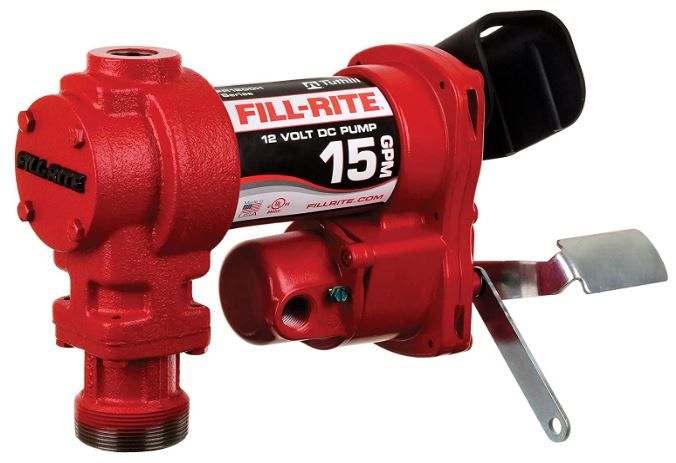
Product information
Our product features a robust cast-iron pump housing, designed to endure the rigors of challenging operating environments. This durability ensures that the pump maintains optimal performance, even in harsh conditions. The solid construction not only enhances the longevity of the pump but also guarantees consistent efficiency, making it a reliable choice for all your pumping needs.
Ease of installation is another key characteristic of our product. It comes with a removable junction box, which simplifies the installation process. This user-friendly feature reduces setup time, allowing you to get your system up and running without unnecessary delays or complications.
The pump also incorporates thermal overload protection to prevent overheating during abnormal usage. This protective feature enhances the safety of the unit, ensuring it operates within safe temperature ranges, even under heavy loads. Impressively, the pump is capable of pumping fluid out of an 8-foot-deep storage tank at sea level. This powerful performance makes it an ideal solution for various fluid transfer applications, offering both safety and superior operational capability.

Robust and well-made pump. Should last a long time.

A few customers complained that parts were missing. Customer support is not that great. Not for fueling aircraft.
Our Thoughts - No product is perfect, and this one isn't either, but it's the best of all the other pumps we checked.

Very Good
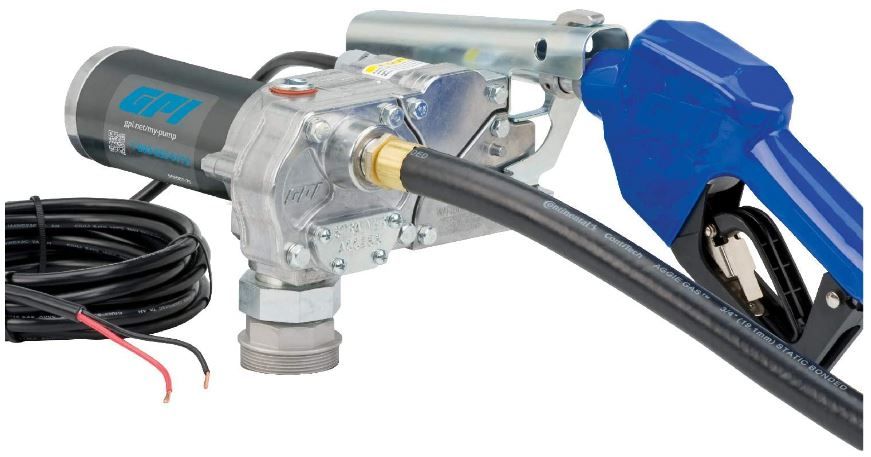
Product information
Our M-150S fuel transfer pumps have been recognized for their exceptional performance. They've undergone independent laboratory testing and were granted the prestigious Gold Medal Performance Award. This award was given in recognition of the fact that our pumps deliver three times more operating hours than comparable pumps from leading competitors. This superior performance underscores our commitment to quality and reliability.
The M-150S fuel transfer pumps are housed in high-quality diecast aluminum, ensuring durability and lightweight construction. The automatic shut-off nozzle adds to the dependability of the pump, reducing stress on your tank bung. The use of aluminum for the housing not only keeps the pump light but also makes it rugged and corrosion-resistant. This durability means our pump can withstand years of work in any application, delivering reliable service throughout its lifespan.
An integral part of the M-150S design is the rotary gear pump. Equipped with fewer moving parts, this design minimizes friction and wear on the pump's components. Consequently, the rotary gear pump requires fewer repairs and enjoys a longer life than a rotary vane pump. At GPI, our gear pumps are over-engineered to provide consistent, reliable performance when you need it most.
Our fuel transfer pumps are not only high-performing and durable but also user-friendly. The 12-VDC motor efficiently delivers gasoline, diesel fuel, ethanol blends, and kerosene at flow rates up to 15GPM. Furthermore, the innovative spin collar design of our fuel transfer pump simplifies the installation process, making it quick and easy. With our M-150S fuel transfer pumps, you get a combination of performance, durability, and convenience that is hard to beat.

Seems lighter and more durable than other pumps. A good pump to move hazardous liquids, with an automatic shut-off nozzle.

Some customers mentioned that the pump is not built strongly enough for agricultural use. A bit expensive for what it is.
Our Thoughts - Overall, it's a good pump to move volatile liquids fast and efficiently. It has a lockable nozzle holder.

Very Good
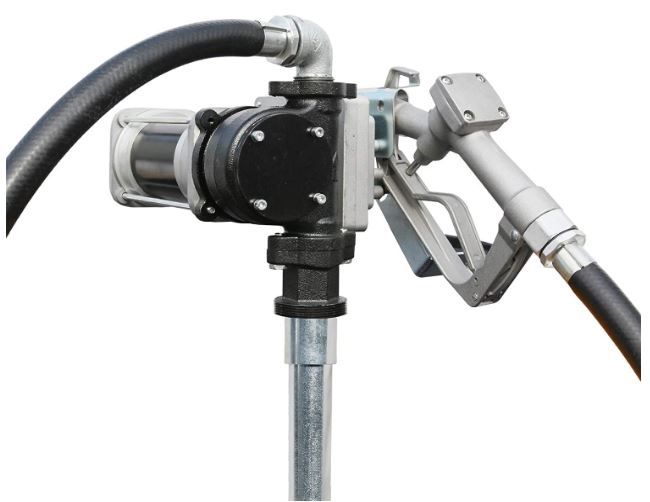
Product information
Our product is a self-priming, volumetric transfer pump equipped with a rotary vane and a bypass valve. This design allows for efficient fuel transfer, making it a reliable solution for your fuel management needs. The rotary vane design ensures smooth, continuous operation, while the bypass valve provides an added layer of safety, preventing overpressure and facilitating optimal flow control.
The transfer pump operates on a power voltage of 1/4HP/12V and boasts a flow rate of up to 15 gallons per minute. This high flow rate ensures timely and efficient fuel transfer, catering to various operational demands. However, to ensure longevity, we recommend operating the pump in 30-minute intervals and avoiding running it dry for more than 30 seconds. This careful usage will help to maintain the pump's integrity and performance over time.
The pump comes complete with a manual nozzle, a lockable nozzle holder, an extendable suction tube, a 14-foot delivery hose, and a tank/barrel mountable 2-inch bung adapter. This comprehensive package makes setup and operation straightforward and hassle-free. Versatile in its application, the transfer pump can handle gasoline, diesel fuel, kerosene, mineral spirits, and similar fuels or oils. However, it's important to note that it is not suitable for fluids intended for human consumption, those containing water, or for use in aircraft applications.

Good pump and does what it is supposed to do. Has a lockable nozzle holder.

Some niggly hiccups. Packaging and delivery need to improve.
Our Thoughts - This is a good pump that can pump almost any oil-based fluids.

Best Value
Product information
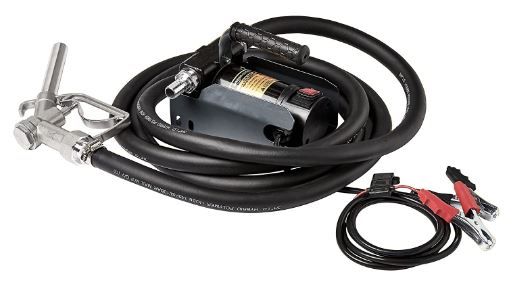
We're excited to introduce our most sought-after product, the Diesel Fuel Transfer Pump Kit. As a part of our proudly presented fuel transfer pump line, this kit stands out for its utility and efficiency. This diesel transfer kit is an exceptional offering in the market of portable transfer pumps, providing unmatched convenience and reliability.
The product specifications of this kit are designed to ensure optimal performance. Included in this portable set is a self-priming 12V DC pump that can transfer diesel at a rate of 10GPM/40LPM. Complementing the pump are red/black (+/-) alligator clamp connections, making it easy to set up and start transferring fuel. The kit also includes a 13ft (4M) delivery/suction hose equipped with a filter and an aluminum manual nozzle. This hose can be easily cut and customized to suit your specific requirements.
One of the standout features of our Diesel Fuel Transfer Pump Kit is its portability and compactness. The pump, hoses, and nozzle are all designed to be easily transportable, making it a breeze to carry wherever you need them. Despite its small size, the system packs in a robust performance. Moreover, the entire kit is compact enough to allow efficient storage, ensuring it doesn't take up unnecessary space.
Another noteworthy aspect of the kit is its resilient design. The pump comes with a secure handle built into the frame, providing stability during operation. This feature makes it a reliable choice for on-the-go pumping requirements or as an emergency backup for diesel fuel transfer applications. With our Diesel Fuel Transfer Pump Kit, you can always be prepared, no matter where you are.

Compact and easy to move from vehicle to vehicle. Self-priming in less than two seconds.

Works fine, but some small niggly things.
Our Thoughts - A nice and compact pump. Some customers suggested having a shut-off nozzle included.

Good
Product information
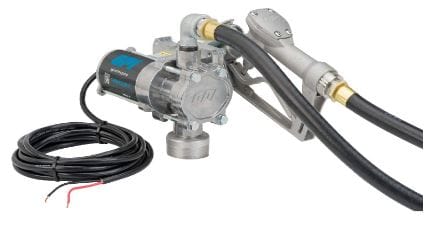
Our 12-volt transfer pumps (pump only) set the standard for reliability and durability. Made from high-quality diecast aluminum, they are both lightweight and robust. This combination of characteristics ensures they are extremely dependable and places minimum stress on your tank bung. The aluminum housing is not just rugged but also corrosion-resistant. This means that it can withstand years of work in a variety of applications, providing you with a long-lasting solution for your fuel transfer needs.
Installation is a breeze with our EZ-8 GPI fuel transfer pumps. Designed for direct tank mounting, these 12-volt pumps can be quickly and easily installed. The pump's design is specifically intended for permanent mounting on fuel storage tanks. This ensures a secure fit and reliable operation, saving you time and effort in the installation process.
At the heart of our transfer pumps is the rotary gear design. This design incorporates fewer moving parts, reducing friction and wear on the pump's components. The simplicity of this design translates into lower maintenance requirements and a longer lifespan than a rotary vane pump. This makes our rotary gear pumps a cost-effective and reliable choice for your fuel transfer needs.
When you require reliable performance, GPI’s gear pumps stand out. Our pumps are over-engineered to deliver exceptional performance consistently. This commitment to quality and performance ensures that our pumps meet and exceed your expectations, providing you with the peace of mind that comes from knowing you have a dependable solution for your fuel transfer needs.

A good pump that works well. Easy to use and well constructed.

Packaging and handling need to improve. Some customers are not happy with the packaging. Have to make a new bracket to install on an RV.
Our Thoughts - A bit overpriced, but other than that, it's a nice transfer pump. Can transfer most flammable liquids.

Good
Product information
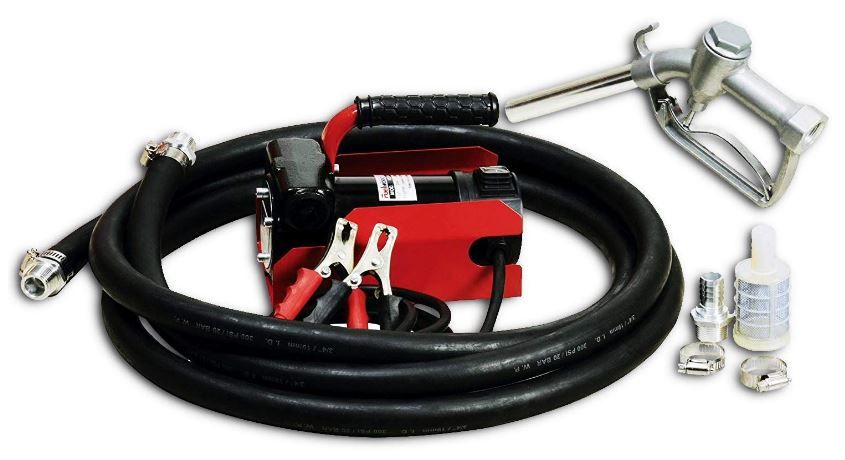
The Portable Fuel Pump Kit is designed with meticulous attention to detail and functionality. This kit features a self-priming DC 12V 220W 24A motor, capable of providing a flow rate of 10GPM / 40LPM. It is fitted with a 3/4” inch NPT Inlet/Outlet for easy connection. The Suction/Delivery Hose is built to withstand a maximum pressure of 300PSI/20BAR. One of the unique aspects of this hose is that it can be cut and customized to meet specific requirements, making it a versatile addition to your fuel transfer equipment.
What sets our fuel pump kit apart is its unique features. The pump comes with thermal protection, allowing operation in temperature ranges from -4°F to 140°F (-20°C to 60°C), ensuring functionality in varying environments. The kit also includes Red/Black Alligator Clamp Connections for quick and secure connections. Additionally, a 13-foot (4m) Nitrile Rubber Suction/Delivery Hose with an integrated filter and an Aluminum Manual Nozzle are included, enhancing the pump's performance and usability.
The design of our Portable Fuel Pump Kit prioritizes compactness without compromising on reliability. The small size of the pump, hose, and nozzle, coupled with their straightforward installation, makes this kit highly portable. An ergonomic grip handle further enhances portability, providing comfortable handling during use. Despite its compact size, the kit is designed to allow efficient storage, demonstrating that great things indeed come in small packages!
We've engineered this pump with portability in mind. It's housed in a robust, heavy-duty shroud to protect it during transit, ensuring its durability and longevity. This makes it an excellent choice for on-the-go fuel transfers, specifically for diesel fuel. To ensure optimal performance and longevity, we recommend a duty cycle of 30 minutes of run time followed by a 30-minute cool-down period. With our Portable Fuel Pump Kit, you can rely on efficient and dependable fuel transfer, wherever you go.

Great pump for the money. It works very well with 55-gallon drums.

The pump is great, but the hose seems to be of lower quality. Customer support needs improving.
Our Thoughts - This pump is ideal for transferring oil-based liquids from wherever.

FAQs: Fuel Transfer Pumps
What is the best flow rate for a fuel transfer pump?
The best flow rate depends on your specific needs. For larger tanks or quicker transfers, a higher GPM (gallons per minute) is preferable. For smaller operations, a lower GPM may suffice.
Can I use the same pump for gasoline and diesel?
It's essential to check the pump's specifications to ensure it's compatible with the fluids you intend to transfer. Some pumps are designed for multiple types of fuel, while others are specific to one kind.
What should I do if I encounter issues with my fuel transfer pump after purchase?
Reach out to the customer service team of the store or brand where you purchased the pump. They should be able to assist with troubleshooting, returns, or warranty claims.
What GPM do I need for a fuel transfer pump?
For most agricultural, fleet, or personal use, 15 GPM is the sweet spot. It fills a 50-gallon auxiliary tank in about 3 minutes without being oversized. Go higher (20–25 GPM) for commercial applications or very large tanks. Manual hand pumps work for small or occasional transfers.
Can I use a diesel transfer pump for gasoline?
No, not unless the pump is explicitly UL-listed for both. Diesel-only pumps lack the explosion-proof motor and anti-static protections required for gasoline, which is far more volatile. Using the wrong pump creates a real fire risk.
How do I power a 12V transfer pump?
Most 12V DC pumps connect directly to a vehicle or equipment battery via heavy-gauge wire (6–8 AWG) with an inline fuse (40–50A) and an on/off switch. Run the engine during long transfers to avoid draining the battery. Some installations use a deep-cycle battery with a solar trickle charger for standalone setups.
Do I need a filter on my fuel transfer pump?
Strongly recommended, especially for diesel. A 10-micron particulate filter with a water separator catches contaminants that would otherwise end up in your equipment's fuel system. Filter elements typically need replacement every 1,000–5,000 gallons or annually.
What's the difference between a transfer pump and a fuel dispensing pump?
Functionally similar, but dispensing pumps typically include calibrated meters, automatic shutoff nozzles, and are designed for commercial fueling. Transfer pumps focus on moving fluid from one container to another with less emphasis on precise measurement.
How long do fuel transfer pumps last?
A quality cast-iron 12V or AC pump used within duty cycle limits typically lasts 10–15+ years. Plastic or entry-level pumps may last 3–5 years with regular use. Neglect, running dry, or improper fuel use can shorten life dramatically.
Can I mount a transfer pump directly on my truck's auxiliary fuel tank?
Yes, and it's one of the most common installations. Most 12V DC pumps come with mounting holes or brackets specifically sized for standard auxiliary tank fittings. Use vibration-dampening mounts if your tank sees rough use.
Is a manual hand pump enough for occasional use?
Absolutely — for 5–15 gallons at a time, once in a while, a $40 rotary hand pump does the job fine. Slow, but functional. No power required, no maintenance, lasts for years.
What's the duty cycle on a typical 12V DC transfer pump?
Usually 30 minutes on, 30 minutes off. This prevents motor overheating. If you need continuous operation, look for pumps rated for continuous duty — typically 115V AC units or heavy-duty DC pumps.
How do I prevent static electricity during fuel transfer?
Use a grounding/bonding cable between the source container and the target container before starting the transfer. This equalizes electrical potential and prevents static discharge that could ignite fuel vapors. Essential for gasoline, good practice for diesel.
Can fuel transfer pumps handle ethanol-blended gasoline (E10, E15, E85)?
Quality pumps rated for gasoline handle E10 (up to 10% ethanol) without issue. E15 and E85 require specific ethanol-compatible pumps — standard rubber seals and some metals degrade rapidly with higher ethanol concentrations. Check the manufacturer's fluid compatibility list.
Do I need a special pump for DEF (Diesel Exhaust Fluid)?
Yes, absolutely. DEF is corrosive to standard steel and most pump materials. Dedicated DEF pumps use stainless steel or specific polymers. Never use a fuel pump for DEF or vice versa — cross-contamination damages both systems.
How fast can I transfer fuel with a 15 GPM pump?
Theoretically, 15 gallons per minute. Real-world flow rates are typically 10–20% lower, depending on hose length, filter restriction, lift height, and fuel viscosity. A 50-gallon transfer takes roughly 3–4 minutes in practice.
Can I leave a transfer pump outside year-round?
Yes, most are rated for outdoor use — but protect the motor housing from direct rain and sun when possible. For freezing climates, drain water-separator filters before freezes to prevent housing cracks. Cover exposed electrical connections.
Looking for additional automotive essentials? Check out our other articles.
 Save With Reviews
 Save With Reviews
 Save With Reviews
and