
The best engine degreasers in 2026 are water-based or solvent-based spray formulas engineered to dissolve baked-on oil, grease, and grime from engine blocks, valve covers, and surrounding components.
Here's something nobody tells you about a dirty engine until you've already spent three hours under the hood trying to find a small oil leak: you can't see anything. Not the gasket surface you're trying to inspect. Not the crack you're looking for in the block. Not even the color of the component you're trying to identify, because everything is the same shade of dark brown, coated in whatever petroleum residue has been slowly accumulating since the last time someone cared.
A clean engine is diagnostic equipment. That's the frame that changes how seriously you take this.
The aesthetics argument — "clean engine looks professional" — is real, but it's not the compelling one. The compelling one is that a layer of grease and grime acts as thermal insulation for a powertrain whose primary mechanical function is to generate and dissipate heat. Add a layer of oil-soaked dirt over your engine block, and you've essentially wrapped part of your cooling system in a blanket. Grime traps heat. Heat accelerates wear. Accelerated wear becomes the repair bill you weren't planning for.
I cleaned a 4.6L V8 on an old F-150 once — hadn't been touched in at least 60,000 miles, judging by the geological layers of buildup. Sprayed it down, let it sit, rinsed it off with a garden hose. Stood back and genuinely did not recognize the engine I'd been working on for three years. Same engine. Looked brand new. Found a weeping valve cover gasket I'd been missing entirely because it was hiding under six millimeters of baked-on oil residue. Fixed it for $14 in gaskets. It would have eventually cost me a lot more in oil consumption and potential contamination if I hadn't seen it.
Key Takeaways
- Water-based degreasers are safer for rubber hoses, electrical connections, and painted surfaces — the correct choice for most engine bay cleaning applications
- Solvent-based degreasers cut through heavier industrial buildup faster but require more careful application to avoid damaging plastics and rubber seals
- Always degrease a cool engine — never spray degreaser on a hot engine block; the thermal differential can cause cracking in certain components, and the chemical evaporates before penetrating
- Dwell time matters more than scrubbing force — most engine degreasers need 5–10 minutes of contact time to fully emulsify grease; agitation helps but doesn't replace contact time
- Rinse thoroughly — degreaser residue left on engine surfaces attracts new dirt faster than a clean surface would
- Top-rated engine degreasers on Amazon range from $8–$12 (standard spray cans) to $18–$25 (concentrated formulas and professional-grade products)
Why a Clean Engine Actually Performs Better (Not Just Looks Better)
The thermal argument first, because it's the most defensible and the most ignored.
Engine blocks, valve covers, oil pans, and surrounding components are designed to dissipate heat into the surrounding air through natural convection and forced airflow from the cooling fan. That dissipation depends on direct contact between the metal surface and moving air. A layer of baked-on grease and oil — which has the thermal conductivity of roughly... burnt cooking oil, which is to say not much — interrupts that contact. The surface stays hotter than it's designed to. Adjacent components — particularly rubber hoses, plastic intake components, and electrical wiring — experience elevated ambient temperatures they weren't rated for.
None of this produces a catastrophic failure in a week. It's cumulative degradation — hoses that age faster, seals that stiffen sooner, wire insulation that becomes brittle ahead of schedule. The kind of maintenance cost that never gets traced back to the dirty engine because the connection isn't obvious.
The diagnostic argument is equally compelling. Mechanics who work on clean engines find problems faster — not because they're better mechanics, but because they can actually see what they're looking at. Oil leaks are visible as wet spots on clean metal rather than indistinguishable dark patches on a uniformly dark surface. Cracks show. Seepage shows. Early-stage corrosion shows. A dirty engine is actively hiding information about its own condition.
Types of Engine Degreasers (What Actually Differs Between Them)
Water-Based / Citrus Degreasers
The current professional preference for most engine bay applications. Water-based formulas use surfactants — the same basic chemistry as dish soap, but engineered for petroleum-based contamination — to emulsify grease and hold it in suspension until rinsed away. Citrus-based variants add d-limonene, a natural solvent derived from citrus peel that cuts through oil effectively while remaining biodegradable.
Advantages: Safe for rubber hoses and seals, minimal risk to electrical connections if used with reasonable care, biodegradable, and no harsh solvent fumes in enclosed spaces.
Limitations: May require longer dwell time or light agitation on heavily baked-on deposits compared to solvent-based formulas.
Best for: Routine engine bay cleaning, modern engines with complex electrical systems and numerous rubber components, and first-time engine cleaning.
Solvent-Based Degreasers
The older category — petroleum distillates, mineral spirits, or chlorinated solvents that dissolve oil-based contamination by chemical affinity rather than surfactant emulsification. More aggressive on heavy industrial buildup. Also, more aggressive on rubber, certain plastics, and painted surfaces.
Gunk Original Engine Brite sits in this category and has been a garage standard for decades. The aggressive formula earns its reputation on seriously neglected engines — the ones where water-based products dwell and struggle, while the solvent formula cuts through in minutes.
Advantages: Fast action on heavy buildup, effective on industrial and agricultural equipment where contamination levels exceed typical passenger car accumulation.
Limitations: Stronger safety precautions required, greater risk to rubber and plastic components if not rinsed promptly, petroleum-based formulas require appropriate disposal rather than simple drain-to-ground rinsing.
Best for: Seriously neglected engines, agricultural and industrial equipment, heavy-duty applications where buildup has accumulated over extended periods.
Aerosol vs. Liquid Concentrate
Aerosol cans are convenient — foam application that clings to vertical surfaces and doesn't run off before dwell time is complete. Slightly more expensive per ounce. Better for targeted application on specific problem areas.
Liquid concentrate — diluted with water per the label instructions — offers significantly better value for full engine bay cleanings where the coverage area is large. The dilution ratio also allows adjusting concentration based on contamination severity: a stronger mix for heavy buildup, a lighter mix for maintenance cleaning of a relatively clean engine.
How to Degrease Your Engine Correctly (The Steps That Actually Matter)
Quick answer: Cool engine, protect sensitive components, apply degreaser generously, wait the full dwell time, agitate stubborn areas with a stiff brush, rinse thoroughly with low-to-moderate pressure, dry with compressed air if available.
Before You Start
The engine must be cool. Not warm — cool. Degreaser applied to a hot engine block evaporates before it penetrates the contamination layer, wastes product, and can cause thermal cracking on certain materials if a cold water rinse follows. Minimum two hours after running, ideally overnight.
Cover electrical components. The ignition coils, distributor (on older engines), fuse box, exposed connectors, and the alternator are the primary concerns. Plastic shopping bags secured with rubber bands. Takes five minutes. Prevents the kind of electrical gremlins that are annoying to diagnose and easy to cause.
Cover the air intake. Depending on your engine configuration, the air filter housing or intake opening may be close enough to get soaked during rinsing. Tape or a plastic bag over the intake prevents a wet air filter.
Application
Apply the degreaser generously — thin coverage defeats itself because dwell time depends on the product staying wet on the surface. Heavy initial coat, additional light coat on areas that absorb quickly.
Let it sit. The label will specify a time — usually 5–15 minutes, depending on product and contamination level. This is not the moment to start scrubbing immediately; the chemistry needs contact time to emulsify the grease rather than just smearing it around.
Agitate stubborn areas with a stiff-bristled brush — engine bay detailing brushes, parts cleaning brushes, even an old toothbrush for tight spaces. The mechanical agitation helps penetrate surface texture and lifts contamination that the chemistry has loosened.
Rinsing
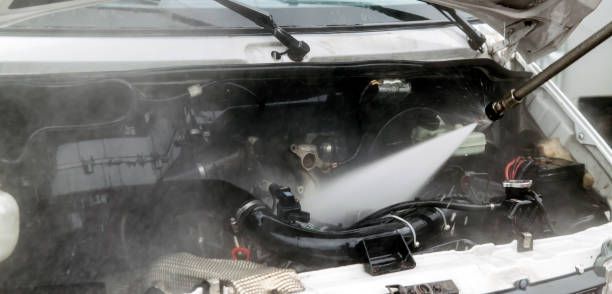
Low-to-moderate water pressure. A garden hose with a trigger nozzle on a focused stream is genuinely sufficient for most applications — high-pressure washers can drive water into electrical connectors and intake systems despite your precautions. Rinse from top to bottom, moving degreaser runoff away from components rather than across them.
Rinse until the water runs clear. Cloudy rinse water means degreaser and emulsified grease are still present. Keep rinsing.
Remove protective covers. Start the engine briefly if you want to use exhaust heat to help dry water from electrical components — or use compressed air to blow water out of connection points and tight spaces.
Maintaining a Clean Engine Between Full Degreasings
The full engine cleaning production — cool down, cover, spray, wait, scrub, rinse, dry — is a twice-a-year project at most for most people. The in-between maintenance that actually keeps buildup from becoming extreme is considerably simpler.
Any time you're under the hood for an oil change, fluid check, or other routine service — a quick spray of diluted degreaser on any new oil seepage or accumulating grime, wiped down with a rag, takes three minutes. Catches contamination before it bakes on. Keeps the inspection surface clean enough to see developing problems.
Oil leaks are the enemy of a clean engine and the primary reason degreasers need to be reapplied repeatedly on older vehicles. No amount of cleaning maintains cleanliness if there's an active leak depositing new oil continuously. Find and fix the leak first — valve cover gasket, crankshaft seal, whatever it is — then clean. Not the other way around.
Final Thoughts
A clean engine is, among other things, an act of respect for the mechanical system you depend on — and occasionally, a financial decision masquerading as an aesthetic one. The oil leak you spot on a clean engine and fix for $20 in gaskets is the catastrophic seal failure you avoid three years later. The overheating problem you diagnose on a clean block is the engine replacement you don't face at 180,000 miles.
None of that is guaranteed, obviously. Clean engines fail, too. But the ones where problems hide undetected under layers of accumulated petroleum grime — those are the engines where maintenance happens reactively rather than proactively, where the repair bill is always a surprise, where the mechanic spends 30 minutes just cleaning before they can see what they're working on.
Buy the degreaser. Pick the formula that matches your contamination level — water-based for modern engines and routine maintenance, solvent-based for the genuinely neglected cases. Wait the full dwell time. Rinse until the water runs clear.
Then actually look at what you've uncovered. That's the part most guides skip entirely — the cleaning isn't the end of the process, it's the beginning of the inspection. Use the clean surface. Find the thing you couldn't see before. Fix it now while it's still a small thing.
That's the whole point.
Need help? We've done the research for you and found the Best Engine Degreaser on Amazon.
Every day, we read hundreds of reviews and try the highest-rated products we have on our list.
Best Engine Degreaser - Reviews
The Best
Product information
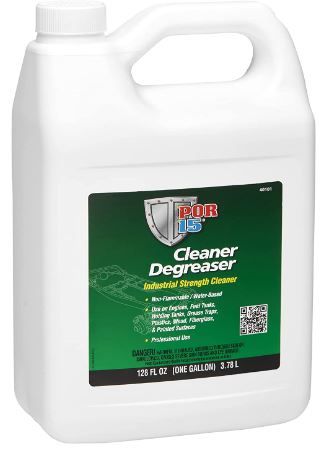
In the realm of cleaning and degreasing, POR-15 Cleaner Degreaser has emerged as a game-changer, offering unparalleled efficiency across a broad spectrum of applications.
This innovative product is designed to tackle the toughest grease, oil, soap scum, and wax without breaking a sweat, making it an ideal solution for various materials, including canvas, vinyl, nylon, and even auto parts.
Its versatility extends to practical uses in both household and industrial settings, such as cleaning holding tanks and grease traps. The effectiveness of POR-15 Cleaner Degreaser in removing unwanted substances quickly and thoroughly sets a new standard in cleanliness, ensuring that surfaces are not just clean but deeply purified.

Great heavy-duty engine degreaser that has multiple uses. It can be diluted for less severe jobs.

Customers reported that when they received the container, it was damaged and leaking.
Our Thoughts - This formula is industrial strength and slightly toxic; you need to wear goggles and gloves. When using it at full strength, it will corrode steel.

Good Value
Product information
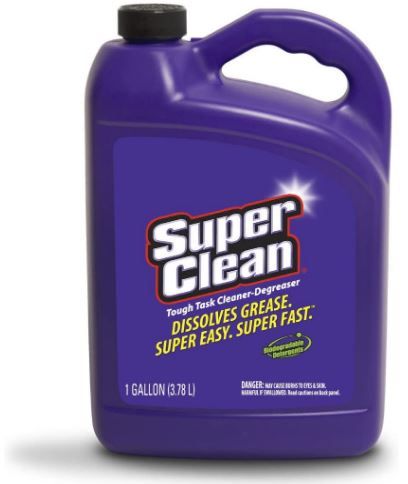
In the world of cleaning and maintenance, finding a solution that can tackle the toughest grime without breaking a sweat is crucial. Enter Superclean 101723, a gallon-sized multi-purpose degreaser that's changing the game.
This powerhouse cleaner doesn't just work on surfaces; it transforms them. By solubilizing grease upon contact, it effectively neutralizes its adhesive properties, ensuring that grease, along with oil, wax, and dirt, can be effortlessly wiped away. Its unique formula is designed to penetrate deeply, breaking down even the most stubborn residues without leaving any trace behind.

It removes oil and dirty grime from the engine very well.

Customers reported that the container was damaged, leaking, and that fluid was missing.
Our Thoughts - Take caution with this product as the fumes are strong. Also, be careful with aluminum polished surfaces.

Good
Product information
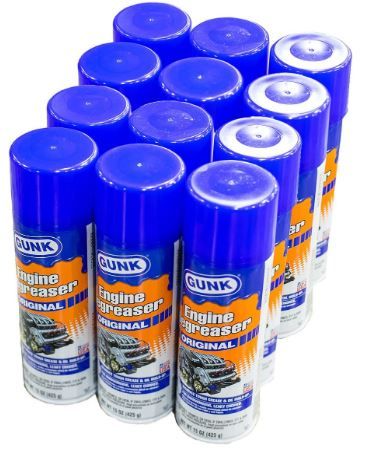
GUNK, a cherished family-owned brand rooted in Charlotte, NC, has been at the forefront of creating high-performance cleaning and degreasing products for over 75 years.
Developed with the insights of those who use them, GUNK has garnered unwavering trust among diligent tradespeople and enthusiastic DIYers alike, thanks to its consistent superior performance and an unwavering commitment to innovation.
Known for its robust cleaning formulas, GUNK products effortlessly tackle the most stubborn grease, dirt, and grime, embodying the essence of heavy-duty cleaning solutions enriched with potent degreasing solvents.
This longstanding dedication to excellence ensures that GUNK continues to stand as a beacon of reliability and effectiveness in the world of cleaning and maintenance products.

Good for heavy-duty cleaning of almost anything with oil and grease.

May give an unpleasant odor.
Our Thoughts - Easy to use, pull the cap, and spray.

Good
Product information
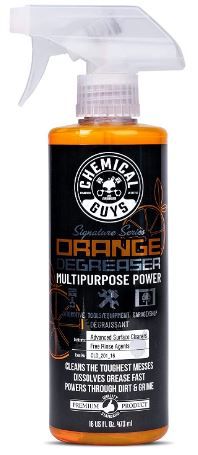
Discover the unparalleled cleaning power of our professional-strength, citrus-based formula, meticulously engineered to obliterate stubborn grease, grime, dirt, and debris with ease.
Ideal for a wide array of applications, including engines, machinery, tools, tires, rims, and undercarriages, this versatile cleaner works swiftly to loosen and emulsify grease, oil, dirt, and grime, ensuring a hassle-free rinse.
Packaged in a super-concentrated spray bottle, it offers the flexibility to be diluted according to your specific cleaning needs, making it a must-have solution for both heavy-duty tasks and everyday maintenance.
Embrace the efficiency of a cleaner that delivers superior results, streamlining your cleaning process like never before.

Can also be used to clean boats, dirty tools, and other greasy areas.

Some customers reported bad packaging and handling.
Our Thoughts - Can be diluted to clean more delicate components. If used at full strength, be careful as it is industrial strength.

Good
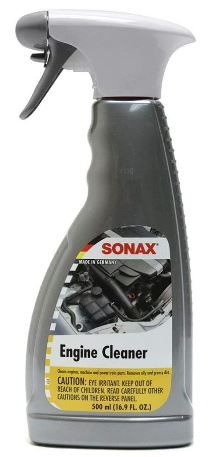
Product information
Discover the ultimate solution for your car engine and machine tool parts with our engine spray bottle degreaser, designed to tackle the most challenging oil, grease, mud, dirt, and grime from all vehicle engines.
This exceptional degreaser excels in removing stubborn deposits on vertical surfaces and hard-to-reach areas, ensuring a thorough clean without damaging your equipment. Its versatile formula is perfect for a wide range of applications, providing a pristine and grime-free surface on various engine components and machinery.
Whether you're dealing with accumulated road grime or oily residues, this degreaser offers a powerful cleaning action that revitalizes your vehicle's engine and tools, leaving them looking and performing their best.

Apart from engine degreasing, it can be used for other oily and greasy surfaces.

Overpriced for what it is.
Our Thoughts - It will not discolor plastic, but be careful with polished aluminum surfaces. It's a good product, but we expected better results for the price.

Good
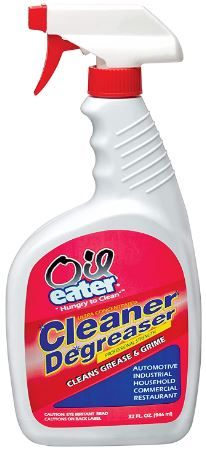
Product information
Dissolves Grease, Oil, And Dirt From Any Washable Surface.
For Use At Food Service Facilities (A1, A4, A8).
No Harsh Solvents And Is Noncorrosive.

This is a water-based product that is safe for septic tanks. Great for a variety of uses.

Whether some customers received a bad batch or not, they reported that the solution didn't seem strong enough to do the job.
Our Thoughts - This is a good choice to pick up if you are looking for a product that is nontoxic and noncorrosive. Can be diluted depending on the job.

FAQs: Engine Degreasers
Can gunk engine degreaser be used on all types of engines?
Yes, gunk engine degreaser is safe for use on most engine types, including those in cars, industrial machinery, and farm equipment. Always check the product label for specific usage instructions.
How often should I use an engine degreaser on my vehicle?
The frequency of use depends on how quickly your engine accumulates dirt and grime. For most vehicles, degreasing once or twice a year is sufficient, but vehicles in harsh environments may require more frequent cleaning.
Is it necessary to rinse off the degreaser after application?
Yes, it is crucial to thoroughly rinse off the degreaser after letting it sit. This prevents any chemical residue from remaining on the engine, which could attract more dirt or cause damage to sensitive components.
Does the engine degreaser damage the belts?
Simple answer, no! Engine degreasers should not damage or deteriorate alternator belts or any other similar belts. These belts are normally made of a rubber compound, and the degreaser should not do any damage. If you have any doubts, try not to spray too much degreaser on the belts.
Any precautions while rinsing the engine after degreasing?
Depending on the age of your vehicle, you may need to take more or fewer precautions. In an older vehicle, the air inlet, electrical system, and ignition systems are not normally protected as well as in a newer one. However, in general, the electrical system should be protected, especially the computer boxes.
What to do with the gunk that drips?
This is a very sensitive area. Nobody would like to have old dirt, oil, and grease on their driveway. Apart from looking disgusting, it can be reported to the authorities. The best way to solve this issue is to slide a large tray under the car to catch it, or a large sheet of heavy plastic with the sides rolled up. Once the degreasing is done, dispose of the plastic in an environmentally safe way.
Is it safe to spray engine degreaser on a running engine?
No. Always degrease a cool engine — ideally one that hasn't been running for at least two hours. Spraying degreaser on a hot engine block causes rapid evaporation before the formula can penetrate, wastes product, and can create steam when the rinse water contacts hot surfaces. Some components can also be damaged by the thermal shock of cold water applied to a heat-soaked surface.
What's the best engine degreaser for a modern car with lots of electronics?
A water-based formula — Chemical Guys Signature Series, WD-40 Specialist Degreaser, or Simple Green Pro HD — is the appropriate choice for modern engines with complex electrical systems, sensors, and numerous rubber components. Cover exposed electrical connectors before application and rinse with moderate rather than high pressure.
Can I use engine degreaser on plastic and rubber components?
Most water-based degreasers are safe for brief contact with rubber hoses and plastic components when used as directed and rinsed promptly. Solvent-based formulas carry more risk to rubber and plastic and require more careful application. Always check the specific product label for compatibility warnings, and avoid prolonged soaking of rubber seals and hoses regardless of formula type.
Do I need a pressure washer to rinse the engine degreaser?
No — a standard garden hose with a focused nozzle is adequate for most engine cleaning applications. High-pressure washers can drive water into electrical connectors, intake systems, and sealed components more aggressively than a garden hose, which creates new problems. Use a focused moderate-pressure rinse rather than maximum pressure.
How often should I degrease my engine?
For most vehicles under normal driving conditions, a full engine degreasing once or twice per year is reasonable maintenance. Vehicles with oil leaks, agricultural or construction equipment, or any application involving heavy dust or off-road contamination may benefit from more frequent cleaning. Light maintenance cleaning — spot-treating new buildup between full sessions — extends the interval between full cleanings significantly.
Can engine degreaser remove oil leaks?
Engine degreaser cleans the evidence of oil leaks but does not fix the leak itself. After degreasing, the clean engine surface will quickly show active leaks as fresh wet spots on metal, which is actually a diagnostic advantage, since the source becomes identifiable on a clean surface. Fix the leak (valve cover gasket, seals, fittings) after identifying it on the clean engine.
Looking for additional automotive essentials?
Check out our other articles!
 Save With Reviews
 Save With Reviews
 Save With Reviews