
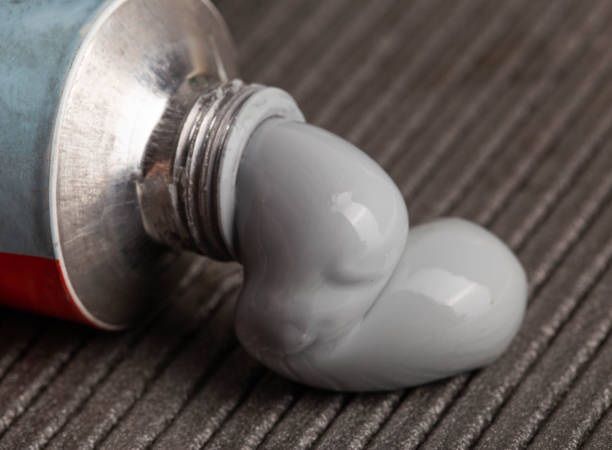
The best gasket adhesive for most automotive jobs is a high-temperature, oil-resistant RTV silicone (rated 500°F or higher).
- Use non-hardening gasket adhesive for parts you’ll remove later (valve covers, oil pans)
- Use RTV gasket maker when no gasket exists (metal-to-metal sealing)
- Use copper or extreme-temp sealant for exhaust parts
- Expect to pay $8–$25 — cheaper options often fail early
And yeah… that $4 tube? It usually costs you twice when you redo the job.
Quick Picks (Straight to the Point)
- Best Overall: High-temp RTV silicone (500°F+, oil-resistant, sensor-safe)
- Best for Valve Covers / Oil Pans: Non-hardening gasket adhesive
- Best Gasket Maker: Form-in-place RTV silicone
- Best for Exhaust / Headers: Copper sealant (1000°F+)
- Best for Cooling Systems: Blue RTV (coolant-safe)
- Best for Cork/Paper Gaskets: Spray adhesive or brush-on cement
Why Choosing the Wrong Gasket Adhesive Ruins Everything
Here’s the part nobody explains in the parts store.
You’re standing there, fluorescent lights buzzing overhead, holding two tubes that look… basically identical. Same size, same branding vibe, same promise: “Stops leaks.”
But they’re not the same. Not even close.
And the worst part? You won’t know you picked the wrong one until later. Not right away. Never right away.
It’s always like:
- You finish the job
- Everything feels solid
- You forget about it
Then — three weeks later — a faint smell, a drip, a slow betrayal forming under pressure and heat cycles.
I once sealed a water pump with a random red RTV I had lying around. Looked perfect. Clean bead, proper torque, everything textbook.
400-ish miles later? Coolant seep. Not catastrophic, just… annoying. Persistent. Like a mosquito you can’t find.
Turns out — and this still irritates me — not all red RTV is coolant-compatible. Color means less than people think. Chemistry matters. Always has.
Understanding Gasket Adhesive Types (Without the Chemistry Degree)
There are really three main types you need to care about. Everything else is just variations or marketing noise.
1. RTV Silicone (The Default Workhorse)
This is what most people grab—and for good reason. It’s flexible, heat-resistant, and easy to use.
It cures with moisture in the air (kind of like how concrete sets… but faster and less forgiving if you mess up the bead).
Typical Temp Range:
400°F to 650°F (some higher)
Best Uses:
- Valve covers
- Oil pans
- Timing covers
- Water pumps
- Thermostat housings
Color Guide (Mostly Useful, Slightly Misleading)
- Red: High-temp, oil-resistant
- Blue: Lower-temp, coolant-focused
- Black: Oil resistance, flexible sealing
- Gray: OEM-style, sensor-safe
- Copper: Extreme heat (exhaust zones)
But here’s the thing—color is more like a suggestion, not a guarantee. Always read the label. Always.
Sensor-Safe Matters More Than You Think
Standard RTV smells like vinegar when curing. That’s acetic acid being released—and yeah, that can mess with oxygen sensors.
If you’re anywhere near O2 sensors (modern engines, basically all of them), go sensor-safe gray RTV.
This is one of those small decisions that saves you from a bigger, expensive headache later.
2. Non-Hardening Gasket Adhesive (The Smart Choice Nobody Talks About)
This is the underrated one.
It doesn’t fully cure. It stays tacky. Slightly flexible. Almost like industrial-grade rubber cement.
Which sounds weak—but it’s actually perfect for certain jobs.
Temp Range:
300–400°F
Best Uses:
- Valve covers
- Oil pans
- Intake gaskets
Basically: anywhere you know you’ll be back in there someday.
Because here’s the frustration—if you use RTV everywhere, you’re basically gluing parts together. Removing them later? Messy. Time-consuming. Sometimes destructive.
Non-hardening adhesive avoids that.
Common Options:
- Permatex Aviation
- Hylomar
- Wellseal
It’s not flashy. But it works. Quietly, consistently.
3. Anaerobic Sealant (Precision-Only Situations)
This one’s a bit different.
It only cures when oxygen is removed—so it stays liquid until clamped between two surfaces.
Which is kind of fascinating, honestly. Like it’s waiting for the moment.
Best Uses:
- Machined metal-to-metal joints
- Transmission cases
- Differential housings
Not for:
Rubber gaskets (won’t bond properly)
If your surfaces are perfectly flat and engineered to seal tightly, this is the right move. Otherwise… skip it.
Comparison Table (Fast Decision Helper)
| Application | Best Adhesive Type | Why It Works |
|---|---|---|
Valve Covers | Non-hardening adhesive | Removable, flexible |
Oil Pan | RTV or non-hardening | Depends on removal needs |
Water Pump | Blue RTV | Coolant resistance |
Exhaust/Header | Copper RTV | Extreme heat tolerance |
Metal-to-metal (no gasket) | RTV gasket maker | Fills gaps |
Precision machined flanges | Anaerobic sealant | Oxygen-cured, tight seal |

Real-World Performance (What Actually Matters)
A gasket adhesive isn’t just about sealing—it’s about surviving:
Heat cycling (expand, contract, repeat… endlessly)
Oil exposure (which breaks weaker compounds down fast)
Vibration (engines don’t sit still, obviously)
The good stuff handles all three. The cheap stuff? It works—until it doesn’t.
And when it fails, it rarely fails dramatically. It just leaks… slowly… persistently.
Final Thoughts
If you take one thing from this—just one—it’s this:
Gasket adhesive isn’t universal. It’s situational.
The right product depends on:
- Temperature
- Fluid exposure (oil, coolant, exhaust gases)
- Whether you’ll reopen the part
And weirdly, the biggest mistakes aren’t from doing something complicated. They’re not assuming all sealants behave the same.
They don’t.
Pick the right chemistry, prep the surface properly, give it time to cure—and you’ll seal it once.
Do it wrong, and you’ll be back under the hood, wondering why it almost worked.
Can we help? We've done the research for you and found the Best Gasket Adhesive on Amazon. Every day, we read hundreds of reviews and try the highest-rated products we have on our list.
Best Gasket Adhesive - Reviews
The Best
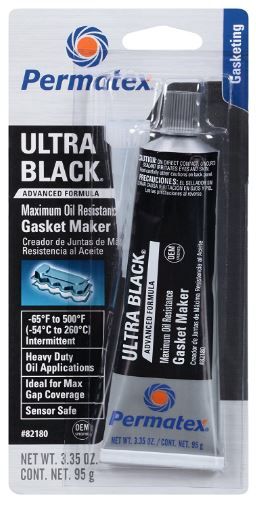
Product information
The innovative formula incorporated in this product is designed to cure quickly, proving to be sensor-friendly with a low odor profile and non-corrosive characteristics. It's an impressive feat of engineering that manages to strike a balance between speed and safety. The patented adhesion system that's been employed ensures the product retains its flexibility and remarkable resistance to oil, even under challenging conditions.
This product is not just about performance; it's also about ensuring compliance with extended drivetrain warranty standards. It can withstand a wide range of temperatures, from as low as -65F to as high as 550F intermittently. The suggested applications for this product are vast, ranging from valve covers and oil pans to intake manifold end seals, timing covers, and transmission pans. This positions it as an incredibly versatile component in any mechanical or automotive toolkit.

Easy to work with and watertight. Bond gaskets with a high-strength compound. Will buy it again.

Bad packaging and shipping. This is a great product, but a very small percentage cannot be used due to bad handling.
Our Thoughts - This special formula works very well for sealing, and with the nozzle, it can be controlled to apply a continuous thin strip.

Very Good
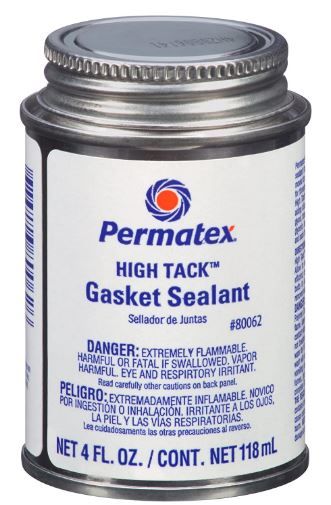
Product information
This all-purpose sealant is a reliable and rapid-drying solution that dries to form a highly adhesive, non-brittle film. The standout characteristic of this product is its enduring tackiness; it's designed to remain indefinitely tacky. The sealant's consistency is akin to a tacky paste, making it ideal for holding cut gaskets in place during assembly. Its versatility extends further, as it aids in sealing cut gaskets against a variety of substances such as gasoline, oil, antifreeze, axle lube, kerosene, propane, and butane. Moreover, it's sensor-safe, making it a trustworthy choice for various applications.
The sealant has an impressive temperature range, able to withstand conditions from -65°F to 500°F (-54°C to 260°C), ensuring its performance isn't compromised in extreme temperatures. Suggested applications of this sealant encompass a wide array of uses, including valve covers, fuel pumps, carburetors, and manifold gaskets. It's capable of sealing any rubber, cork, paper, or composite gasket, showcasing its adaptability. This makes it an indispensable tool in any repair or maintenance task.

This is a very good product to use with an appropriate gasket. It will hold the gasket in place on assembly.

Some customers complained that they received an open can. Not great for
first-time users or newbies.
Our Thoughts - This product is very good. We tested it, and it was very good. Even when the product was slightly dry, it still spread fairly easily and worked very well. However, you need to be a bit experienced to use it properly.

Very Good
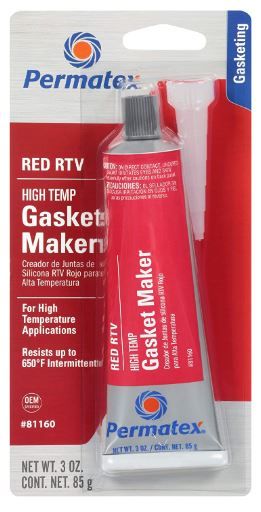
Product information
This product has been carefully formulated for applications that require high temperatures or heavy-duty use. It's an innovative solution designed to replace nearly any cut gasket, adding a layer of versatility and convenience to your toolkit. Furthermore, it has the unique ability to coat pre-cut gaskets, thereby significantly enhancing their reliability. This makes it a robust and dependable choice for a wide range of tasks.
One of the key features of this product is its ability to form 'formed-in-place' gaskets that are known for their resistance against cracking, shrinking, and migrating. It's a testament to the product's superior quality and thoughtful design. The product is also able to withstand a wide temperature range, from as low as -65F to as high as 650F intermittently. This impressive thermal capacity ensures its performance remains uncompromised even under extreme conditions.

This is excellent for hot climates. In some cases, with machine flat surfaces, it may not need a gasket.

If not used properly, it can be messy to use.
Our Thoughts - Another great Permatex product. It will seal and keep the liquids inside the housing.

Good
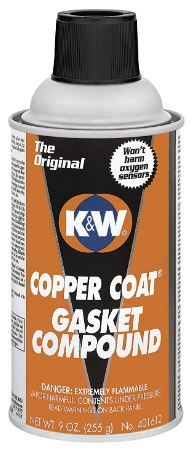
About this item
K&W is a renowned brand that specializes in the production of sealants and solutions. These products are specifically designed to combat leakage problems in aging vehicles. From head gaskets and engine blocks to automatic transmissions and power steering, K&W's range of products provides an effective solution. These sealants serve as a cost-effective alternative to expensive repairs and part replacements, making them a practical choice for maintaining older vehicles.
One of the standout products in their line is the Aerosol Gasket Sealant. This product is specially formulated to prevent compression loss on premium gaskets. The Copper Coat, as it's known, is applied in a tacky state to firmly hold gaskets in place. It contains copper, a material known for its durability and heat-resistant properties, making it ideal for long-lasting and high-temperature applications. Its versatility extends to a wide range of applications, including automatic transmissions, cover plates, diesel heads, high-compression engines, high-speed turbine superchargers, and hydraulic pumps. However, safety should be a priority when handling this highly flammable gasket-sealing compound. It should be stored in a well-ventilated area away from direct heat, and personal protective equipment such as safety glasses and gloves should be worn during use.

Works well, it will even revive old head gaskets. Designed for tough projects.

It may be a little awkward to use if not experienced.
Our Thoughts - Great for head gaskets. Can be a bit tacky.

Best Value
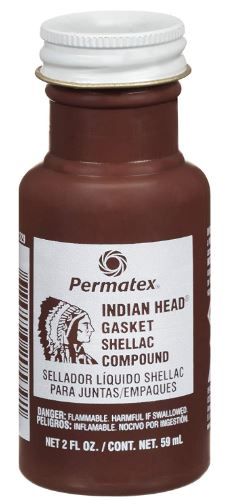
Product information
This sealant is a hard-setting and economical solution, designed to meet a variety of needs. It has been specially formulated to provide lubrication even under the most challenging brake conditions. This makes it a dependable choice in scenarios where other sealants may falter. Additionally, it's capable of sealing all common gasket materials, further enhancing its versatility and utility in a wide range of applications.
The sealant also boasts impressive resistance against diesel fuels and most auto shop fluids. This resistance ensures that its performance and integrity remain uncompromised in environments where it may be exposed to such substances. Moreover, this sealant has been made to withstand a broad temperature spectrum, ranging from -65 F to 350 F. This feature ensures that the sealant's efficacy remains intact even under extreme temperature fluctuations, making it an ideal choice for various automotive and industrial applications.

No problem, it works as the instructions say. Being a shellac-type compound, it dries very hard.

Packaging and shipping are not good. Some customers complained that the contents had leaked. Containers are damaged, and caps are lost.
Our Thoughts - Although we think it's a good value, it's also a very good product. Some customers commented that the applicator was difficult to use.

Good LONG-LASTING
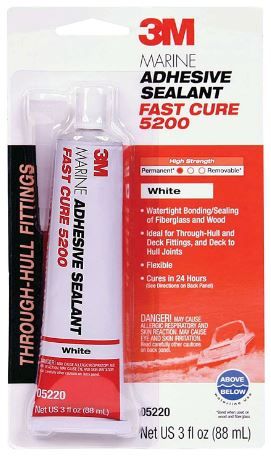
Product information
This one-part adhesive sealant is designed for those who value speed and efficiency. It eliminates the need for mixing, drastically simplifying the application process. Typically, it cures within a time frame of 48 hours, allowing you to return to your water-based activities without unnecessary delay. The quick cure time combined with the ease of use makes this product a practical choice for fast-paced environments.
The strength of this adhesive sealant is remarkable, retaining its potency whether applied above or below the waterline. This feature makes it a trusted choice among professionals in various fields. The sealant's ability to bond permanently makes it ideal for a wide range of applications. Whether you're working on the interiors of boats and RVs or exteriors below the waterline and shielded from the sun, this sealant provides a reliable solution for sealing, bonding, and attaching tasks.
The longevity of this sealant is ensured by its tough polyurethane polymer composition, which resists weathering and saltwater. This resilience extends the lifespan of the sealant, reducing the need for frequent reapplications. Furthermore, the sealant remains flexible even after curing, ensuring that strong bonds are maintained even during vibration, structural movement, or shock. Its resistance to cracking or peeling under such conditions underscores the sealant's superior quality and performance.

Great product, but the nozzle kept falling off. Works well for sealing above and below the water line.

Packaging and shipping need to improve. Some customers mentioned that the nozzle was missing on arrival.
Our Thoughts - 3M is a well-known brand with great products. Only a small percentage of customers had issues with the product due to packaging and handling. Wipe the tip threads before closing the cap.

FAQs: Gasket Adhesive
Can gasket adhesives be used on all types of gaskets?
While many gasket adhesives are versatile, it's important to choose one that is compatible with the specific gasket material you are using. Check the product details for compatibility with rubber, neoprene, EPDM, and other materials.
How important is heat resistance for a gasket adhesive?
Heat resistance is crucial for applications involving high temperatures, as it prevents the adhesive from softening, cracking, or degrading, which could compromise the seal.
What should I look for in a gasket adhesive for industrial use?
For industrial use, look for adhesives that offer strong bonds, resist harsh chemicals like oils and solvents, and can withstand extreme temperatures and environmental conditions.
What is the best gasket adhesive for cars?
A high-temp RTV silicone (500°F+) that’s oil-resistant and sensor-safe is the best all-around choice for most automotive applications.
Can I use RTV instead of a gasket?
Yes—if the surface is designed for it. RTV works well as a formed-in-place gasket, but only when applied correctly and evenly.
What gasket adhesive stays removable?
Use a non-hardening gasket adhesive. It holds the gasket in place but allows easy removal later.
Is copper RTV better than red RTV?
Not better—just different. Copper RTV handles higher temperatures (up to 1000°F), making it ideal for exhaust systems.
Why did my gasket still leak after using RTV?
Common reasons:
- Wrong type of RTV (not oil/coolant resistant)
- Too much or too little applied
- Dirty or uneven surfaces
- Improper cure time
Honestly… It’s usually surface prep.
Looking for additional automotive essentials? Check out our other articles.
 Save With Reviews
 Save With Reviews
 Save With Reviews