
If you own anything that runs on gasoline—and let's be honest, most of us own several things that run on gasoline—a portable gas can isn't optional. It's essential. It's one of those items that sits in the garage looking boring and unremarkable until the exact moment you desperately need it, and then it becomes the most important thing you own.
We're talking about lawn mowers, leaf blowers, snow blowers, chainsaws, generators, pressure washers... the list goes on. And yeah, your car. the actual vehicle that you drive every day. That needs gas, too, and sometimes it needs gas at inconvenient times in inconvenient places.
But here's the thing people overlook—a quality gas can isn't just a container. It's a safety device. A bad one can leak fumes, spill fuel, fail to seal properly, or—worst case—become a genuine hazard around heat or static electricity. The right one? It stores fuel securely, pours cleanly, vents safely, and basically sits there being quietly reliable while you forget it exists. Until you need it.
Why You Need a Portable Gas Can (More Reasons Than You Think)
The obvious use case is refueling equipment. Your gas-powered lawn mower runs dry halfway through the backyard—you grab the can, top it off, and keep going. Simple. Your generator kicks on during a power outage (which, if you've lived through any of the recent grid issues in California or Texas, you know is not a hypothetical scenario anymore), and you need diesel or gasoline to keep it running through the night. The gas can handle that.
But the less obvious reasons are honestly just as compelling.
Avoid Running Out of Gas on the Road
Running out of gas while driving is one of those experiences that ranges from "mildly embarrassing" to "genuinely dangerous" depending on where it happens. Coasting to a stop on a quiet suburban street? Annoying. Running dry on a highway shoulder at night with traffic blowing past at 70 mph? That's a different conversation entirely.
I ran out of gas once—once—on Interstate 80 heading back from Reno. It was late, it was dark, and the nearest gas station was apparently on the moon. Sat there for 45 minutes waiting for roadside assistance while semis shook my car every time they passed. Never again.
Having a small gas can in your trunk—even just a 1 or 2-gallon container—gives you a backup plan. It's not about being paranoid, it's about being practical. The peace of mind alone is worth the $30 or whatever a decent portable fuel container costs.
Save Money and Time on Roadside Emergencies
Let's talk numbers for a second. A tow truck call in 2025-2026 averages somewhere between $75 and $150 just for the hookup, more if they're hauling you any real distance. AAA membership helps, sure, but even then, you're sitting on the side of the road for 30 to 60 minutes waiting. Maybe longer on a busy weekend.
Or—and hear me out—you could pour a gallon of gas from the can in your trunk, drive to the nearest station, fill up properly, and be on your way in five minutes. The math is not complicated here.
Emergency Preparedness and Natural Disaster Fuel Storage
This one feels more relevant every year, honestly. Hurricanes, earthquakes, wildfires, ice storms—pick your regional disaster. When the power goes out, and gas stations can't pump (because the pumps run on electricity, which is one of those fun circular problems), having fuel already stored means your generator runs, your vehicle has gas to evacuate if needed, and you're not standing in a four-hour line at the one station that has a backup generator.
FEMA actually recommends keeping emergency fuel supplies as part of household disaster preparedness. Not huge quantities—we're not talking about hoarding—but enough to run a generator for 24-48 hours or top off a vehicle tank. A couple of well-sealed 5-gallon gas cans stored properly in a garage or shed covers that pretty comfortably.
Keeping Your Outdoor Equipment Running
This is the everyday use case that most people buy gas cans for, and it's straightforward. The mower needs gas. The blower needs gas. The chainsaw you use twice a year after a storm needs gas. You fill the can at the station, bring it home, and pour it into the equipment. No drama.
But—and this is a small thing that matters—the quality of the can determines whether "pour it into the equipment" is a clean, controlled operation or a sloshy mess that gets fuel on your hands, your shoes, and the garage floor. A good spout with proper flow control makes a surprising difference. A bad one turns every refueling session into a minor hazmat situation.
Gas Can Safety Tips: How to Store and Transport Fuel Safely
Alright, let's get serious for a minute. Gasoline is legitimately dangerous. It's flammable (obviously), the vapors are heavier than air and can accumulate in enclosed spaces, and static electricity can ignite those vapors under the wrong conditions. This isn't meant to scare you—millions of people handle gas cans safely every single day—but it does mean you should actually pay attention to a few things.
Buy a quality gas can made from approved materials. Look for cans that meet ASTM or OSHA standards. Cheap, flimsy containers from questionable sources are not worth the savings. Just... don't.
Make sure the seal is airtight. A properly sealed gas can prevent vapor escape, reduce evaporation, and eliminate the risk of spills during transport. The cap, the spout, the vent—all of it should close securely. If you can smell gas when the can is sealed, something's wrong.
Store gas cans in a cool, shaded, well-ventilated area. Not in direct sunlight. Not next to the water heater. Not in the trunk of your car long-term (short trips to and from the station are fine, but don't leave a full gas can baking in a hot trunk for weeks). A garage shelf or a shed works. Keep it away from ignition sources—this includes pilot lights, electrical panels, and that one outlet in your garage that sparks sometimes and you keep meaning to fix.
Follow the manufacturer's instructions. I know, I know—nobody reads instructions. But gas can manufacturers include specific guidance on fill levels (don't overfill—fuel expands with heat), venting procedures, and pouring techniques for a reason. Skim them at least once.
Ground yourself before filling. Static discharge at a gas pump is rare but real. Touch the metal frame of your vehicle before handling the nozzle or the can. It takes half a second and eliminates the risk.
Type 1 vs. Type 2 Safety Gas Cans: What's the Difference?
If you're buying gas cans for a business, a workshop, or any commercial setting, you'll run into the Type 1 and Type 2 classification. This comes from OSHA regulations, and it's worth understanding even if you're just buying for personal use—because the design differences actually affect usability.
OSHA's baseline requirements for safety cans: they should be metal construction, hold no more than 5 gallons, include a spring-loaded closure that seals automatically, and be designed to relieve internal pressure (vent) when exposed to fire to prevent explosion. These aren't suggestions—for workplace use, they're requirements.
Type 1 Gas Cans
One opening. That single spout handles both filling and pouring. Simple design, fewer parts, generally a bit cheaper. The trade-off is that pouring can be slightly less controlled since you're tilting the whole can, and fuel is coming out of the same hole, so air needs to get in. It works fine, it's just... less elegant.
Type 2 Gas Cans
Two openings. One spout for filling, a separate spout for pouring. The fill spout doubles as a vent, which means when you're pouring from the other spout, air flows in through the fill opening, and you get a smooth, steady, controllable pour instead of that glugging, splashing mess that happens when air and liquid are fighting over the same hole. (Think about pouring juice from a carton with a tiny opening versus a wide-mouth pitcher. Same principle.)
Type 2 cans are generally easier to use, especially for precise pours into small equipment tanks. They cost a bit more. For most home users, either type works fine—but if you're pouring fuel regularly, the Type 2 design is noticeably more pleasant to work with.
How to Choose the Best Gas Can for Your Needs
A few things to think about before you buy:
Capacity. Gas cans range from 1 gallon (great for keeping in the car as emergency backup) up to 5 gallons (standard for lawn equipment and generators). Bigger isn't always better—a full 5-gallon can weighs over 30 pounds, which is a lot to lift and pour with one hand. If you don't need 5 gallons, don't buy 5 gallons.
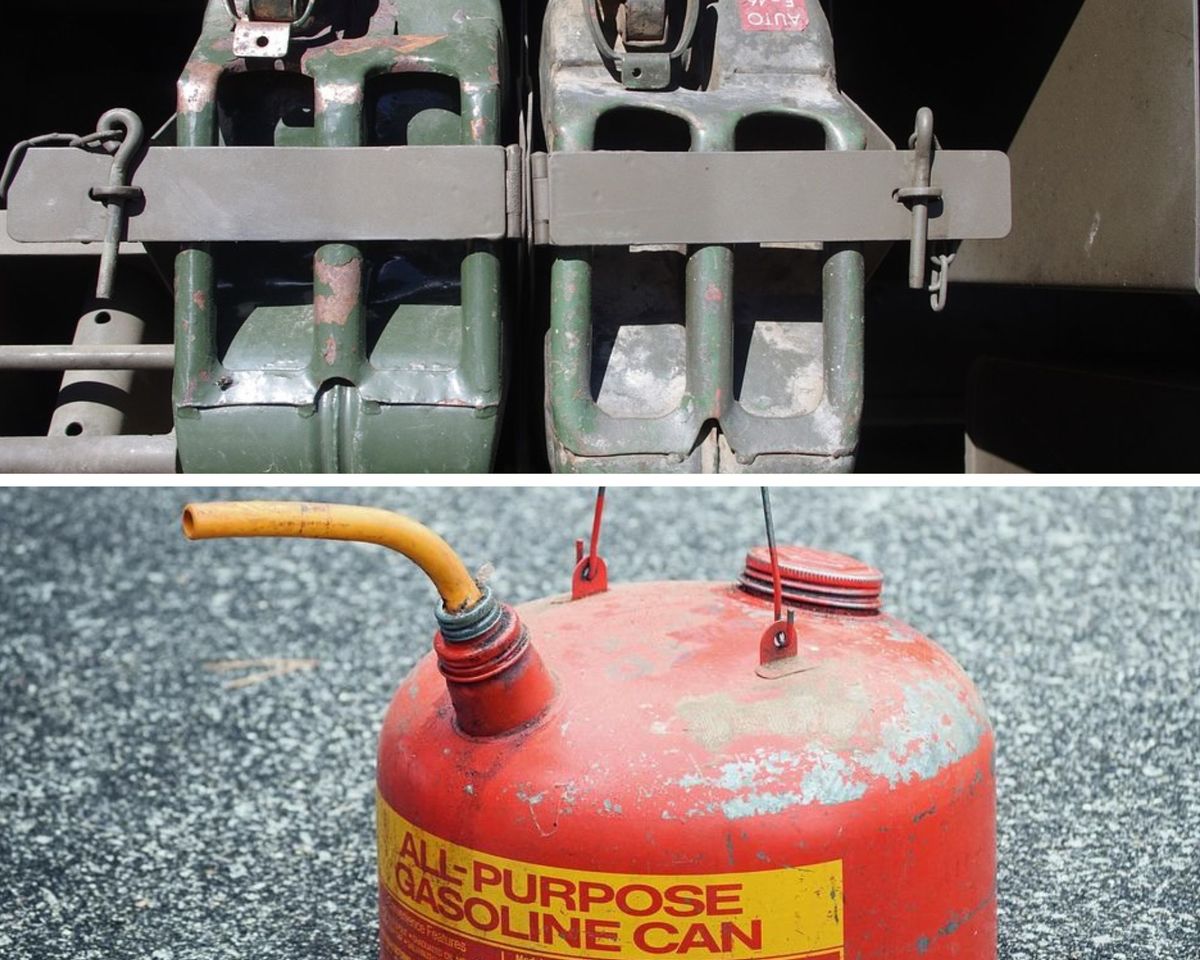
Material. Most consumer gas cans are high-density polyethylene (HDPE) plastic—UV-resistant, lightweight, won't rust, and reasonably durable. Metal cans (steel or aluminum) are heavier and more expensive but more durable and required in some commercial settings. Plastic is fine for the vast majority of home users.
Spout design. This is where cheap gas cans really fall apart—literally and figuratively. A good spout has a controlled flow, doesn't drip, seals tightly, and doesn't require three hands to operate. Some of the EPA-compliant spout designs introduced in recent years have been... controversial, let's say. A lot of people find them frustrating to use. Read reviews specifically about the spout before buying. It matters more than you'd think.
Venting. Proper venting prevents vacuum lock when pouring (that annoying thing where fuel stops flowing and you have to tip the can back and forth to get it going again). It also prevents pressure buildup during temperature changes. Some cans vent automatically; others have a manual vent cap. Either works, as long as it actually works.
Wrapping Up: Why the Right Gas Can Matter More Than You'd Expect
Gas cans seem simple. They're containers. You put gas in them. You pour gas out of them. How complicated can it be?
More complicated than you'd think, honestly. The difference between a well-designed portable fuel container and a cheap one is the difference between a clean, safe, frustration-free experience and a leaky, fumey, potentially dangerous mess. And when you're dealing with a substance as volatile as gasoline, "good enough" isn't really a standard you want to aim for.
Get a decent gas can. Store it properly. Learn how to use it safely. It's one of those boring, practical, unsexy purchases that quietly make your life better in a dozen small ways—and could genuinely save you from a bad situation when things go sideways.
Not the most exciting gear recommendation in the world. But sometimes the most important tools are the ones you barely think about.
Can we help? We've done the research for you and found the Best Gas Cans on Amazon. Every day, we read hundreds of customer reviews, search for the appropriate reviews, and try the highest-rated products we have on our list.
Gas Can - Reviews
The Best
Product information
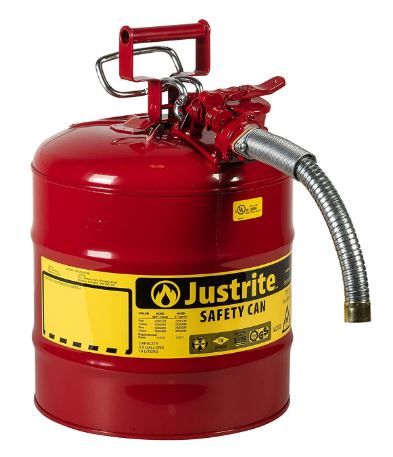
Minimize risks with our user-friendly safety can, cleverly designed with color coding to prevent mishaps. It comes equipped with a stainless steel flame arrester that effectively guards against flashback ignition. The Safe-Squeeze trigger is simple to use and ensures regulated pouring for better control.
Furthermore, it features two distinct openings - one for easier and full precision pouring and the other complemented by an ergonomically crafted lift lever for easier and effortless filling. Our safety can has garnered approvals from FM, UL/ULC, and TUV, and complies with OSHA and NFPA regulations.

The best gasoline can that can deliver or store gas. However, it would be better if they deliver products with no dents and scratches from bad transport and/or packaging.

Definitely non-returnable, no matter what.
Our Thoughts - This is a great gasoline storage can, but it is a pity that they are not treated more carefully during packaging and/or transport.
If you are present when delivered, open the box and inspect it in front of the delivery person. If it's dented, tell him/her to bring it back.
Very Good
Product information
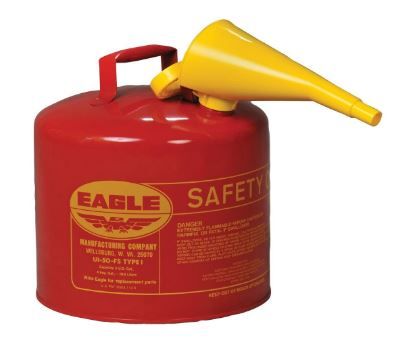
Experience unmatched value with our durable, easy-to-use 5-gallon gasoline safety can. Made in the USA, this top-quality product boasts a leak-proof design that's been tested to ensure 100% efficiency. It's UL and ULC listed, FM Approved for maximum safety, and features a full flame arrestor screen for additional protection.
The patented comfort grip trigger release, spring-closing lid, and fixed handle make it convenient for everyday use. Its standout red, baked-on powder coat finish is applied over lead-free galvanized steel construction, adding to its robustness. Choose our safety can for reliable and safe gasoline storage.

Great galvanized steel design. Very good gasoline can, if you are willing to put up with the dents from bad handling.

Again, this product can't be returned. Some dents and/or scratches are possible.
There seems to be a problem with steel-made gas cans and similar products not being handled with care, and the purchaser has to take the damage, no matter what the price.
Our Thoughts - This is a very good can to store gas. Keep it in your garage or workshop.
Best Value
Product information
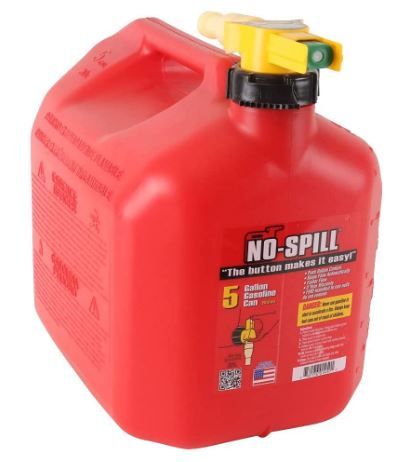
Discover the unparalleled efficiency of our 5-gallon gas can, designed with innovative push-button control and an auto flow stop feature for safe fuel management. Proudly made in the USA, these professional-grade gas cans boast the fastest flow rate in the market, ensuring quick and efficient fuel transfer. The large neck opening is complemented by a wide, stable design for easy usage. An extra handle at the back facilitates heavy lifting, making it a practical choice for various needs.
Fully compliant with EPA, California, and CPSC regulations, each 5-gallon can is sold individually and measures 15" HT x 10" W x 15" D. This product replaces OEM Numbers: No-Spill: 1450, Stihl: NOSPILLCAN 5.0, Toro: 127-3202. Trust in the Stens brand, renowned among professional dealers for delivering repairs of OEM quality. Every genuine Stens product packaging proudly displays the Stens name.

It's a very good gas can for the price, and it has the latest safety features.

It may leak, but it's an O-ring problem.
Our Thoughts - This can pour gasoline anywhere you want with the latest safety features.
Very Good
Product information
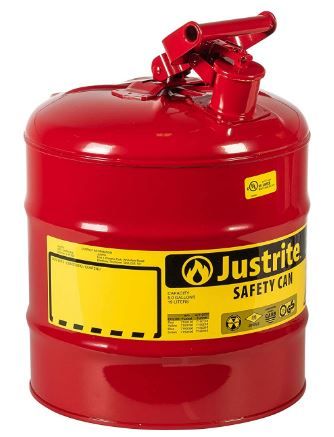
Enhance your safety measures with our high-grade coated steel gas can, manufactured in the United States. Each can undergo rigorous testing to confirm its 100% leakproof construction, offering you reliability and peace of mind. Designed with a precision arrester screen, it effectively halts flashback ignition, significantly mitigating fire risks.
The can's sturdy powder-coat finish not only resists chemicals but also withstands the wear and tear of intensive use. It offers superior chemical resistance and exceptional corrosion protection, further extending its lifespan. Moreover, its elongated design ensures safe gas nozzle insertion while promoting faster liquid flow.

The spring-loaded cap works well, with no more gas vapors or spillage. Built with non-corrosive materials. Has a flashback switch in case of fire.

This product can't be returned, so if it arrives damaged, you are stuck with it. They are made of sheet metal and some dings and dents are possible. Some cans seem to leak.
Our Thoughts - This is of very good quality and non-corrosive.
Good
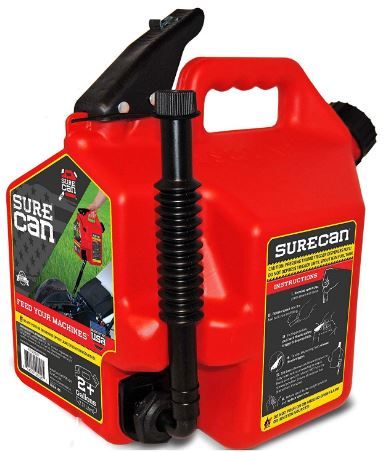
Product information
Experience convenient delivery and safe fueling with our self-venting can, featuring a flexible spout that rotates to suit any machine requiring filling. The unique thumb trigger allows for precise, spill-free pouring, while the integrated hand grips ensure hassle-free handling during both delivery and refills.
Prioritizing safety, the can is equipped with a childproof cap to protect inquisitive youngsters. Rigorously tested, it withstands up to 60 PSI in high temperatures and remains functional even at -40 degrees Fahrenheit.

Nice gas can, no fuel leaks when pouring. Easy to use.

The nozzle can break if one is not careful. If the nozzle is rotated to position before pulling, it will not break. However, the company will replace it if the can is still under warranty.
Our Thoughts - We found that this can do the job well.
Good
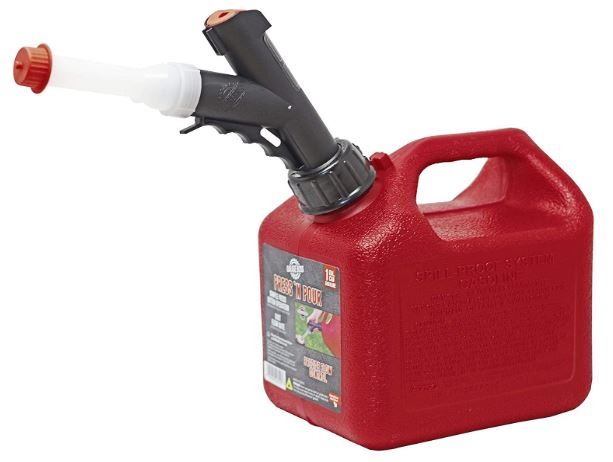
Product information
Introducing the GARAGE BOSS, a universally fitting 1-gallon container designed to cater to your diverse needs. This item comes in a vibrant red color that is hard to miss even in a cluttered garage. Made from durable plastic, it promises longevity and robust performance.
The 1-gallon gas can has compact dimensions of 8 x 6 x 8.1 inches, ensuring that it doesn't take up much space, making it a perfect fit for any setting. Weighing just 0.73 pounds, it's incredibly lightweight, enhancing its portability and ease of use.

A great little gas can. It does the job it's supposed to.

At times, the can will leak gas while pouring.
Apparently, some of the bad reviews about this gas leak are due to people not reading the instructions on how to effectively release the safety catch to press the dispensing button. Please, read the directions literally right below the button.
Our Thoughts - A misunderstood gas can brand but once the instructions are read it becomes a great little gas can.
FAQs
Which is better metal gas cans or plastic gas cans?
Everything depends upon how much time you will be keeping your gas. For lasting gas storage space, go with a steel gas container. The steel containers will not expand or contract in ambient temperatures and also unlike plastic containers, there are no chemicals to contaminate the gasoline, keeping it fresher for a longer time.
There is no risk of plastic fuel gas canisters corroding and also in a situation of a fire, the plastic gas container will simply melt. However, a steel can will possibly explode. Therefore, whether you use metal or plastic if there is a fire in the garage it will not be a nice place to be in.
Where is the best place to store gas cans?
Fuel that will not be used for a while ought to be saved in a well-ventilated garage or shed. You should not keep the fuel inside the home, whatever sort of can it is, and/or the quantity of gas. Therefore, it's important to keep a properly maintained fire extinguisher close by.
Gas containers might appear easy in concept to buy, yet the best style can imply the distinction between risk-free transport of gas and/or dealing with a dangerous spill. The ideal gas container does even more than simply lug the harmful fluid around on the go. It will store the gasoline, sealed until it's needed.
Why my new car doesn't take gas from gas cans?
Tried to add some gas to the gas tank and couldn't. This is an issue you might have, and not understand why.
New cars without an alternate gas cap normally have 2 flaps: the first flap serves as a closure at the top and the second flap further down the filler neck. Most of the time the gas spout doesn't have enough length to push the 2nd flap open. Therefore, the gasoline will feel up the section between the first flap and the second flap and that's it. If you keep pouring the gasoline it will overflow and pour over your nice paint.
So far, there is no standardization in regards to how long, how short the distance between the center of the two flaps, or just how narrow the filler neck has to be. Some Original Equipment Manufacturers (OEMs) makers may supply a long-neck funnel with the vehicle but some do not. If you are ever stuck by the side of the road, this is not the place to learn about or address this issue.