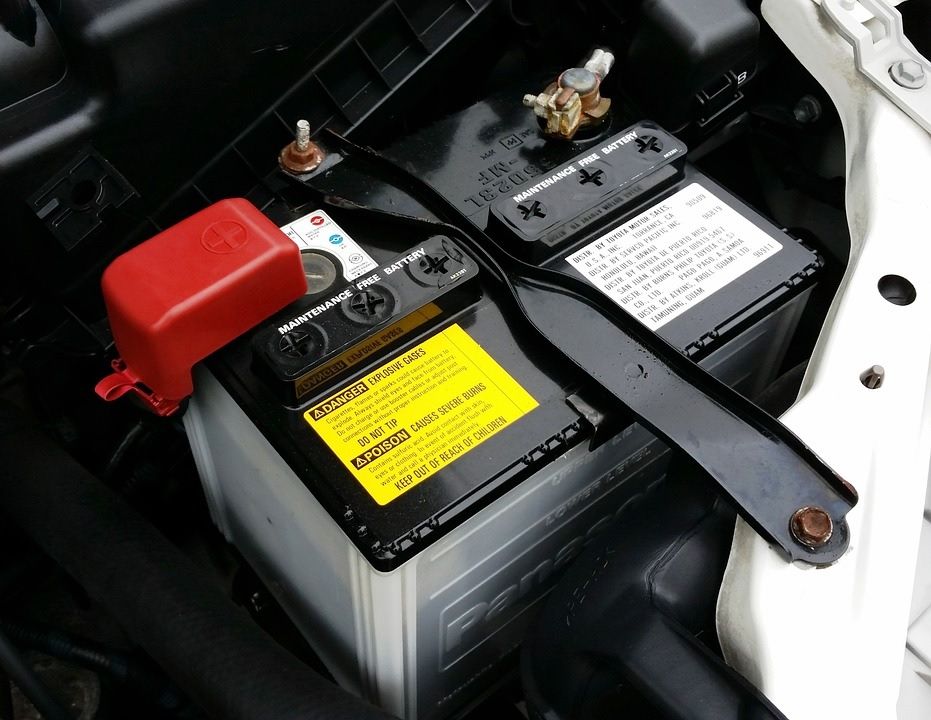


The best car battery tester for most vehicle owners is a digital conductance tester that reads voltage, Cold Cranking Amps (CCA), internal resistance, and state of health (SOH) without applying a heavy load. These testers are compact, safe, and give you a clear pass/fail/replace recommendation in under 30 seconds. For professional shops or advanced DIY users, a carbon pile load tester provides the most definitive assessment of a battery's ability to deliver current under real-world starting conditions.
Quick Picks:
- Best Overall → Digital CCA/conductance tester with LCD and print capability
- Best for Home Use → Compact digital tester with 12V auto battery support and SOH reading
- Best for Professionals → Carbon pile load tester with adjustable load and analog gauge
- Best Budget → Basic digital voltmeter with battery health indicator (under $25)
- Best Multifunctional → Tester that also reads charging system and starter motor draw
Why You Need a Car Battery Tester
Car batteries do not fail with a warning light. They fail on a cold Monday morning, in a parking garage after work, or at a gas station 200 miles from home. The average 12V car battery lasts 3 to 5 years, but degradation happens gradually. A battery that starts your car fine today can be operating at 60% capacity without you knowing it, one cold snap or one long parking session away from leaving you stranded.
A battery tester tells you where your battery actually stands before it becomes an emergency. Specifically, it can tell you:
- Whether the battery is fully charged, partially charged, or dead
- Whether the battery can still deliver enough cranking amps to start the engine
- Whether the battery is healthy, degrading, or due for replacement
- Whether the charging system (alternator) is working correctly (on testers with system analysis)
Most auto parts stores will test your battery for free, but owning your own tester means you can check it anytime, on any vehicle, without driving anywhere. For a tool that costs $25 to $100, it can save you from a $150+ tow truck call and the markup on an emergency battery replacement.
What Is a Car Battery Tester?
A car battery tester is an electronic device that evaluates the condition of a vehicle's battery. It goes beyond simply measuring voltage (which only tells you the surface charge level) and assesses the battery's actual ability to store energy and deliver current.
Different types of testers use different methods to evaluate the battery, but the core goal is the same: determine whether the battery is healthy, weak, or failing, and whether it can reliably start the engine.
What a battery tester measures (depending on type):
| Measurement | What It Tells You |
|---|---|
Voltage (V) | Surface charge level (12.6V = full, below 12.0V = significantly discharged) |
Cold Cranking Amps (CCA) | The battery's ability to deliver starting current in cold conditions |
Internal resistance (mΩ) | How efficiently the battery can deliver current (higher resistance = weaker battery) |
State of Charge (SOC) | Percentage of available charge remaining |
State of Health (SOH) | Overall battery condition as a percentage of original capacity |
Conductance (Siemens) | The battery's ability to conduct current, which correlates with remaining capacity |
A simple voltmeter can tell you the battery's charge level at that moment. A proper battery tester tells you whether the battery can actually do its job.
Types of Car Battery Testers
There are four main categories of battery testers, each using a different testing method and suited to different users.
1. Digital Conductance Testers
These are the modern standards for battery testing. They send a small AC signal through the battery and measure the response to calculate conductance, CCA, internal resistance, and state of health. No heavy load is applied, making them safe and fast.
| Feature | Details |
|---|---|
Test method | AC conductance measurement |
Test time | 10 to 30 seconds |
Display | Digital LCD with pass/fail/replace recommendation |
Battery types | 12V (most models), some support 6V and 24V |
Typical price | $40 to $150 |
Strengths: Fast, safe (no high-current load), accurate for predicting battery failure, compact, easy to use. Many models also test the charging system and starter motor.
Limitations: Cannot simulate actual starting conditions the way a load tester can. Very cheap models may have questionable accuracy.
Best for: Home users, fleet managers, and anyone who wants a quick, reliable health check without specialized knowledge.
2. Carbon Pile Load Testers
The traditional professional tool. A carbon pile load tester applies a heavy electrical load (typically half the battery's CCA rating) for 15 seconds and measures how well the battery maintains voltage under that stress. This simulates the actual demand of starting an engine.
| Feature | Details |
|---|---|
Test method | Resistive load (carbon pile) |
Test time | 15 seconds under load |
Display | Analog gauge (most models) or digital |
Battery types | 12V and 24V |
Typical price | $50 to $200+ |
Strengths: The most definitive test of a battery's ability to deliver current under real starting conditions. Trusted by professional mechanics for decades.
Limitations: Bulky and heavy. Generates significant heat during testing. Can further drain a weak battery. Requires the battery to be at least 75% charged for accurate results. Not as convenient for quick checks.
Best for: Professional shops, experienced DIY mechanics, and situations where a definitive load test is needed to confirm a borderline battery.
3. Digital Voltmeters with Battery Indicators
Basic handheld devices that measure battery voltage and display a simple health indicator (good/low/replace) based on the voltage reading. Some include a small built-in load to provide a slightly more meaningful reading than open-circuit voltage alone.
| Feature | Details |
|---|---|
Test method | Voltage measurement (some with small load) |
Test time | Instant |
Display | LED indicators or basic LCD |
Battery types | 12V (most), some test household batteries too |
Typical price | $10 to $30 |
Strengths: Extremely affordable. Simple to use. Compact enough to keep in a glove box.
Limitations: Voltage alone does not reliably indicate battery health. A battery can show 12.6V (full charge) and still fail under load due to internal degradation. These testers cannot measure CCA, conductance, or state of health.
Best for: Quick voltage checks only. Not a substitute for a proper conductance or load test if you need to know whether the battery is actually healthy.
4. Multifunctional Diagnostic Testers
Advanced units that combine battery testing with charging system analysis, starter motor current draw measurement, and sometimes OBD-II diagnostics. These are essentially mini diagnostic stations.
| Feature | Details |
|---|---|
Test method | Conductance + system analysis |
Test time | 30 seconds to 2 minutes (full system test) |
Display | Large LCD or color screen with detailed readouts |
Battery types | 6V, 12V, 24V, multiple chemistries |
Typical price | $80 to $300+ |
Strengths: Test the entire starting and charging system in one session. Identify whether a problem is the battery, the alternator, or the starter. Detailed data output. Some models print results or connect to smartphone apps.
Limitations: More expensive. More features than most home users need. Can be overkill for simple "is my battery good?" checks.
Best for: Professional technicians, fleet maintenance, and advanced DIY users who want comprehensive electrical system diagnostics.
Quick Comparison
| Tester Type | Accuracy | Ease of Use | Portability | Price | Best For |
|---|---|---|---|---|---|
Digital conductance | High | Very easy | Compact | $40 to $150 | Most users |
Carbon pile load | Very high | Moderate | Bulky | $50 to $200+ | Pros, definitive testing |
Basic voltmeter | Low (voltage only) | Very easy | Pocket-sized | $10 to $30 | Quick voltage checks |
Multifunctional | Very high | Moderate | Medium | $80 to $300+ | Full system diagnostics |
How to Test a Car Battery (Step by Step)
The exact process varies by tester type, but here is the general procedure that applies to most digital conductance testers and load testers.
Step 1: Prepare the Vehicle
Turn off the engine, headlights, and all electrical accessories. Remove the key from the ignition. The battery should be at rest (no charging, no discharging) for the most accurate reading.
For the most precise results: If the vehicle has been driven recently, let the battery rest for at least 30 minutes before testing. If the battery has been on a charger, disconnect the charger and wait 30 minutes.
Step 2: Inspect the Battery
Check the terminals for corrosion (white or greenish buildup). Clean corroded terminals with a baking soda solution and a wire brush before testing. Corrosion creates resistance that can skew test results.
Check the battery case for cracks, bulging, or leaking fluid. If the case is damaged, skip the test and replace the battery.
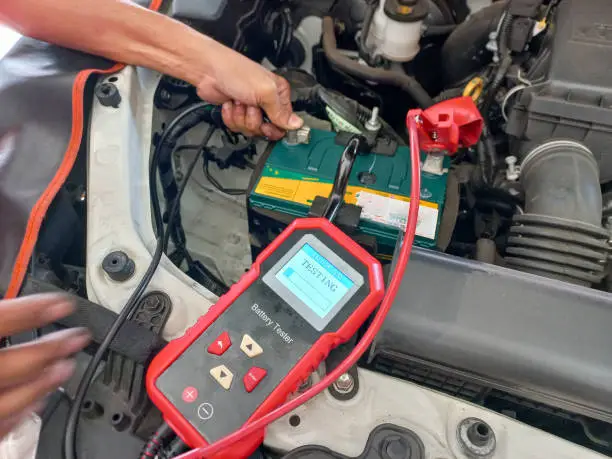
Step 3: Connect the Tester
- Connect the red (positive) clamp to the positive (+) terminal on the battery.
- Connect the black (negative) clamp to the negative (-) terminal on the battery.
Ensure the clamps make solid contact with the terminal posts, not just the cable connectors. A loose connection produces inaccurate readings.
Step 4: Enter Battery Specifications (If Required)
Many digital testers ask you to input the battery's rated CCA, battery type (flooded, AGM, gel), and voltage (12V or 24V) before testing. This information is printed on the battery label. The tester uses these specs as a baseline to compare against the measured values.
Step 5: Run the Test
Press the test button. Digital conductance testers complete the test in 10 to 30 seconds. Load testers apply a load for approximately 15 seconds (the tester or your manual will specify the correct load setting, typically half the battery's CCA rating).
Step 6: Read the Results
Digital conductance testers typically display:
- Measured voltage
- Measured CCA vs. rated CCA
- State of health percentage
- A recommendation: Good, Recharge and Retest, Replace, or Bad Cell
Load testers display voltage under load. A healthy 12V battery should maintain at least 9.6 volts during a 15-second load test at half its rated CCA. If the voltage drops below 9.6V, the battery is weak or failing.
Step 7: Interpret and Act
| Result | What It Means | Action |
|---|---|---|
Good / Pass | Battery is healthy and performing within spec | No action needed. Retest in 6 to 12 months. |
Recharge and Retest | Battery is too discharged for an accurate health reading | Fully charge the battery, then test again |
Weak / Marginal | Battery is degrading but still functional | Plan for replacement soon, especially before winter |
Replace / Fail | Battery cannot deliver adequate cranking power | Replace the battery before it fails completely |
Bad Cell | One or more internal cells have failed | Replace immediately. Cannot be recovered. |
How to Choose the Right Battery Tester
1. Battery Compatibility
Verify that the tester supports the battery types you need to test.
| Battery Type | Voltage | Common Applications |
|---|---|---|
Standard flooded (SLI) | 12V | Most passenger vehicles |
AGM | 12V | Newer vehicles, start-stop systems, premium cars |
Gel cell | 12V | Some marine and specialty applications |
Deep cycle | 12V | RVs, boats, solar systems |
Heavy-duty | 24V | Commercial trucks, heavy equipment |
Motorcycle/powersport | 6V or 12V | Motorcycles, ATVs, lawn equipment |
Most consumer-grade testers handle 12V flooded and AGM batteries. If you also work on 6V, 24V, or gel cell batteries, confirm support before purchasing.
2. Display Type
- LED indicators (green/yellow/red): Simplest readout. Quick pass/fail, but no detailed data.
- Analog gauge: Traditional needle display. Provides a voltage reading under load. Requires some interpretation.
- Digital LCD: Shows voltage, CCA, SOH, and a clear recommendation. The most informative and easiest to read.
- Color screen with graphing: Found on premium multifunctional testers. Displays detailed data, trends, and printable reports.
For home use, a digital LCD with a pass/fail recommendation is the most practical choice. It removes guesswork.
3. Additional Features Worth Having
- Charging system test: Checks whether the alternator is charging the battery correctly (output voltage and ripple).
- Starter motor test: Measures cranking voltage to identify a weak starter or excessive current draw.
- Built-in printer or app connectivity: Useful for professionals who need to document results for customers.
- Multiple language support: Helpful if English is not the primary language.
- Reverse polarity protection: Prevents damage if you accidentally connect the clamps to the wrong terminals.
4. Size and Portability
If you plan to keep the tester in your vehicle, a compact digital conductance tester (roughly the size of a paperback book) is ideal. Carbon pile load testers are significantly larger and heavier, better suited for a garage or shop.
5. Warranty
Battery testers are simple devices, but quality varies. Look for at least a 1-year warranty. Premium brands often offer 2 to 5 years. A 30-day warranty suggests the manufacturer is not confident in the product's longevity.
When Should You Test Your Car Battery?
Regular testing catches problems before they leave you stranded. Here is a practical schedule:
| Situation | Recommended Action |
|---|---|
Battery is less than 3 years old | Test once per year |
Battery is 3 to 5 years old | Test every 6 months |
Battery is over 5 years old | Test every 3 months (and budget for replacement) |
Before winter | Test in early fall, before cold weather increases starting demand |
Before a long road trip | Test before departure |
After the vehicle has been sitting unused for 2+ weeks | Test before driving |
After a jump start | Test within 24 hours to determine if the battery is recoverable or needs replacement |
Slow cranking or dim lights noticed | Test immediately |
Understanding Battery Voltage Readings
Even without a full conductance or load test, a simple voltage reading provides useful baseline information.
| Resting Voltage (Engine Off, No Load) | Approximate State of Charge |
|---|---|
12.6V or higher | 100% (fully charged) |
12.4V | ~75% |
12.2V | ~50% |
12.0V | ~25% |
Below 11.8V | Effectively dead (deep discharge) |
Important: Voltage alone does not indicate battery health. A battery can read 12.6V and still fail a load or conductance test because its internal plates are degraded. Voltage tells you the charge level. CCA and conductance testing tell you the capacity.
Common Mistakes When Testing Car Batteries
- Testing immediately after driving. Surface charge from the alternator inflates the voltage reading. Let the battery rest for at least 30 minutes after the engine is turned off.
- Testing a discharged battery and concluding it is bad. A deeply discharged battery may test as "failed" simply because it is empty, not because it is damaged. Fully charge it first, then retest.
- Ignoring corroded terminals. Corrosion adds resistance between the clamp and the terminal, producing inaccurate (usually lower) readings. Clean terminals before testing.
- Using a basic voltmeter and assuming the battery is fine because it reads 12.6V. Voltage only shows charge level, not health. A proper CCA or conductance test is needed to assess whether the battery can still deliver adequate starting power.
- Not entering the correct battery specs. If your tester asks for rated CCA and battery type, enter the values from the battery label. Incorrect specs produce misleading pass/fail results.
Conclusion
A car battery tester is one of the most underused tools in vehicle maintenance. For $40 to $100, a quality digital conductance tester gives you a clear, accurate picture of your battery's health in under 30 seconds, no appointment, no trip to the auto parts store, no guesswork.
Test your battery at least once a year (twice a year after the 3-year mark), before winter, and before any long trip. Replace batteries that test as "weak" or "marginal" before they fail on their own schedule, which is always the worst possible time.
The goal is simple: know your battery's condition before it surprises you. A $50 tester today prevents a $200 tow and emergency replacement tomorrow.
Can we help? We've done the research for you and found the Best Battery Tester on Amazon. Every day, we read hundreds of reviews and try the highest-rated products we have on our list.
Best Car Battery Tester - Reviews
The Best
Product information
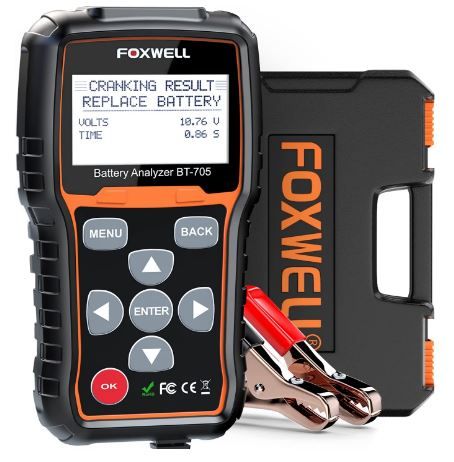
The FOXWELL BT705 battery testers are a professional-grade tool with over 13 years of industry experience behind them. This highly accurate device boasts an upgraded copper clamp, secure mechanical connection, clip-on leads, and advanced conductance technology. Its user-friendly LCD makes reading and understanding results effortless. The BT705 is comprehensive in its testing abilities, covering 12V to 24V batteries from 100 to 2000 CCA. It includes regular flooded, AGM flat plate/spiral, and GEL batteries, providing an in-depth analysis of the battery's health, cranking, and charging system.
One of the main features of the BT705 is its efficiency in assessing the overall condition of multiple batteries. As a CAR BATTERY ANALYZER, it measures cell health (SOH) and charge state (SOC) accurately. This helps avoid early battery failures and reduces unnecessary maintenance tasks. It provides critical information such as available power, CCA, cranking voltage/time, alternator output, and no-load/loaded voltage, ensuring reliable performance.
The BT705 also excels in battery cranking testing. With this easy-to-use CAR STARTER TESTER, you can quickly and accurately test your vehicle's battery cranking and starter system. The precise readings for cranking voltage and time help identify potential issues before they become severe. You'll know exactly when to charge or replace your battery for optimal performance, eliminating any guesswork.
In terms of charging system diagnosis, the BT705 is highly efficient. It diagnoses the charging system after cranking the engine by checking the output voltage of the alternator, rectifier diode, and charging current. This allows for the detection of potential alternator issues like no output, low output, high output, and excessive ripple, ensuring a regular charging system function.
The BT705 comes with several unique features that set it apart. It can conduct battery testing using the "outside the vehicle" setting to determine parasitic draw when your vehicle cannot crank. The 7.8ft cable provides maximum flexibility for skilled technicians, DIYers, enthusiasts, drivers, and specialized garages alike. No app is required for operation, and it remembers the last rating to save time and hassle. The 24V and 12V battery tester comes in a protective case, making it easy to carry and use daily.
The BT705 ensures your battery's status using advanced conductance testing technology and an upgraded copper clamp for stable communication and precise readings. This makes it great for 12V & 24V vehicles like SUVs, ATVs, electric mowers, tractors, boats, motorcycles, agricultural machinery, construction machinery, buses, heavy-duty truck trailers, and more. FOXWELL is committed to providing a worry-free purchase experience with a dedicated customer service team ready to address all your concerns promptly and continuously. Trust us for a seamless experience.
Please note that correct usage is crucial for accurate results. Ensure that both contacts of the positive and negative clips are in good contact to get the right values. If you're testing inside a vehicle, make sure all accessory loads are cut off, the key is in the OFF position, and the doors are closed. Follow the instructions on the screen to do the charging test and cranking test. Any car brand logo and brand name appearing on the detail page are solely to describe the item's compatibility with vehicles. We are not selling products manufactured/sold by any car brand.

On par with the professional mechanic's tester. Easy to use, and the software is easy to follow. Feels solid and has that industrial feel.

Difficult to get answers from FOXWELL. Doesn't seem to do well with 24-volt batteries.
Our Thoughts - We found this tester to be the most reliable and problem-free. Compared to other testers on the market, it's a bit expensive, but it does the job.

Very Good
Product information
The battery tester we're discussing today is not just any ordinary tool. It's ergonomically designed to be a heavy-duty battery tester that delivers accurate and reliable test results. What sets it apart is its speed - in just 10 seconds, you can have a comprehensive understanding of your battery's health. This quick and precise functionality makes it an indispensable tool for anyone looking to maintain their vehicle's optimal performance.
These battery testers come with uniquely designed clamps that ensure a positive grip on both top and side post batteries. These specially engineered clamps provide a secure connection, minimizing the risk of slippage or poor contact. This design feature ensures that the tester can effectively deliver the accurate results you need, regardless of the battery's orientation.
One of the standout features of this battery tester is its extra-large, easy-to-read display. This oversized screen allows for easy reading of test results, ensuring you won't miss any critical information. Moreover, this display has been designed with zero adjustment, providing straightforward readings without the need for constant recalibration or manual tweaking.
Another significant advantage of this battery tester is its versatility. It can work on both 6V and 12V batteries, making it suitable for a wide range of vehicles. Whether you're testing a 6V battery in a classic car or a 12V battery in a modern vehicle, this tester is up to the task. Its ability to cater to different voltages makes it a flexible and valuable tool for any vehicle owner.
Finally, the thoughtful design of this battery tester extends beyond its core functionality. It includes side tabs for on-tool clamp storage, ensuring that the clamps are always within reach and neatly stored when not in use. Moreover, the back of the tester is equipped with brackets for easy storage on a wall or toolbox. This attention to detail in design makes the battery tester as convenient to store as it is effective in use.

The build quality is not great, but it seems to work and gives results. The results compare well to a professional workshop tester.

Received the wrong tester. Quality needs improvement.
Our Thoughts - Try to do the voltage test first and second, and the load test if the voltage is correct.

Very Good
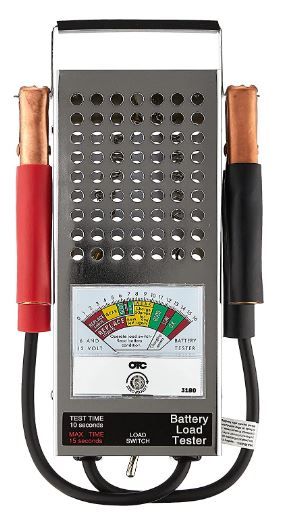
Product information
The battery tester we're showcasing today is designed with convenience in mind. Its portable size ensures that it can be easily carried and used wherever needed, making it a handy tool for both professional mechanics and car enthusiasts alike. This compact design doesn't compromise on usability, though, as it features easy-to-read scales that allow for quick and precise readings. Whether you're in a well-lit garage or working under the hood in less ideal lighting conditions, the clear, intuitive scales ensure you get accurate results every time.
One of the highlights of this battery tester is its ability to test batteries either on or off the car. This flexibility means you can conduct tests in the most suitable environment, whether that's within the vehicle's system or on a workbench. Moreover, it delivers these results in just 10 seconds, providing swift insights into your battery's health without the need for lengthy procedures or complex equipment.
The tester also provides a clear good/bad status indicator. Thanks to its extra-large display with zero adjustment, you can immediately see the condition of your battery. There's no need for constant recalibration or complicated interpretations - the tester does all the hard work for you. By providing a clear, straightforward assessment, it takes the guesswork out of battery testing, making it a user-friendly tool for anyone.
Beyond just indicating a good or bad status, this battery tester also determines the state-of-charge, cranking, and charging volts. These details provide a comprehensive overview of your battery's performance, allowing you to make informed decisions about maintenance, charging, or potential replacement. By offering these insights, the tester enables you to properly care for your battery and extend its lifespan.
Finally, this battery tester is designed to work on both 6-volt and 12-volt batteries. This versatility makes it a valuable tool for a wide range of vehicles, from vintage models to modern cars. No matter what type of battery you're working with, this tester ensures you have the necessary information to keep your vehicle running smoothly.

Nice, clear screen to read the results. A good tool to find out if the battery is healthy or not, no need to know much more.

The cables seem to be a little too short. Only for use on 6-volt and 12-volt batteries. After checking a battery, let it cool down before checking the next one.
Our Thoughts - A good tester for both 6-volt and 12-volt batteries. We checked this meter with another meter at the auto workshop, and the readings were spot on.

Best Value
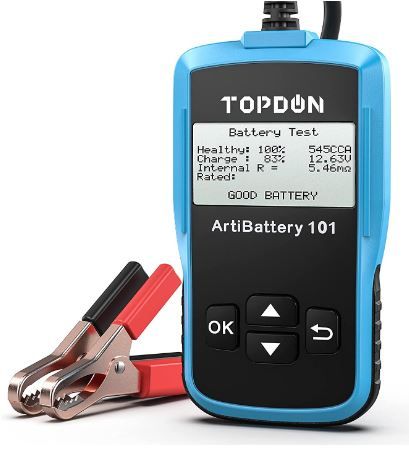
Product information
The AB101 car battery tester isn't just another tool in your garage; it's an essential device highly recommended by experts like Scotty Kilmer and BestReviews. One of its core functions is to conduct a comprehensive battery health test. This feature allows you to directly evaluate the condition of your battery, offering advice on whether a replacement is necessary. Additionally, this versatile device doesn't stop at just assessing battery health; it also includes tests for your vehicle's cranking and charging systems.
One of the most common concerns among users is, "Will it work on my battery?" The AB101 battery tester is designed with this in mind. It caters to a wide range of 12V batteries, including regular flooded, AGM flat plate, AGM spiral, and Gel batteries. This broad compatibility ensures that the AB101 can serve a variety of needs, all while strictly adhering to battery rating standards such as CCA, BCI, CA, MCA, JIS, DIN, IEC, EN, SAE, and GB.
The AB101 isn't just a battery tester; it's also an efficient auto battery tester. It provides valuable insights into your car's starter system by displaying the actual cranking voltage and cranking time within seconds. These quick, precise results help you understand if your cranking system is performing optimally. Furthermore, the AB101 conducts an integrated check on the 12V charging system, ensuring that your generator output is normal, your rectifier diode is functioning correctly, and your charging current is under control.
When it comes to user experience, the AB101 stands out from traditional load battery testers. Its design is significantly lighter and more user-friendly, making it a pleasure to use. The easy-to-read backlight screen delivers results in just three seconds, saving you precious time. Additionally, it offers multilingual support, including English, Russian, Spanish, French, German, and Italian, making it a versatile tool for a diverse range of users. With the AB101, you can trust in its quality, stability, and reliability.
The AB101 isn't just a powerful tool; it's also designed with safety in mind. It's durable yet lightweight and features a menu-driven operation that even beginners can navigate with ease. Additionally, the metal alligator clips are covered with a rubberized sleeve protector to ensure safe use. All these features, coupled with a 1-year warranty, make the AB101 car battery tester a valuable addition to any vehicle owner's toolkit.

It will test golf cart batteries. The display has easy-to-understand results.

Documentation needs improvement.
Our Thoughts - For a quick, basic check on your car's battery, this tester will do the job.

Good
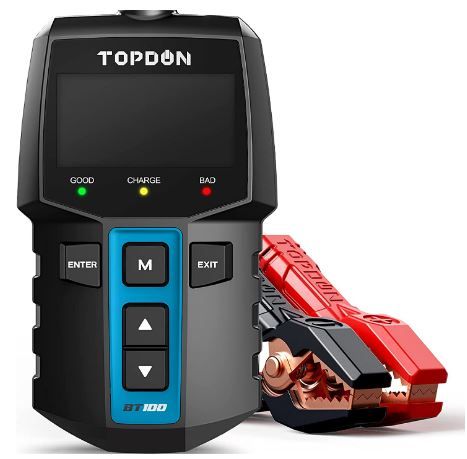
Product information
The TT TOPDON car battery tester is a device that simplifies the process of inspecting your 12V lead-acid battery. This tester provides a wealth of analytical data in an easy-to-understand format, including the State of Health (SOH), State of Charge (SOC), Voltage, Current, and Rating. It's compatible with a range of battery types, from 100-2000CCA regular flooded to AGM flat plate/spiral, EFB, and GEL batteries, ensuring their optimum performance and longevity.
One of the standout features of this battery tester is its wide application. Utilizing a safe passive testing approach, it only powers on when properly attached, eliminating the need for pre-charging. This feature enables you to test batteries across a variety of vehicles, such as cars, motorbikes, trucks, RVs, ATVs, SUVs, boats, yachts, lawnmowers, and even golf carts, making it a versatile tool for any vehicle owner or mechanic.
The TT TOPDON car battery tester isn't limited to just testing battery health. It offers three distinct testing functions to provide a comprehensive understanding of your vehicle's electrical system. The battery health test assesses the overall condition of the battery, while the cranking test checks if there's enough power to start the engine. Finally, it tests the charging system to ensure the rectifier diode, generator, and charging current are all functioning normally. This analyzer ensures your summer road trips won’t be cut short by a flat battery.
Designed with user convenience in mind, this battery tester features several ergonomic attributes. It's equipped with three different colored LEDs to help you quickly determine the battery's health. The menu-driven operation makes it easy to use, even for beginners. Furthermore, the high-quality copper clamps are designed with polarity reverse prevention and spark-proof features, ensuring a safe and reliable connection during the testing process.
The TOPDON BT100 is a compact device, making it easy to store in a glove box or center console. Its quick and accurate results help you decide whether your car battery needs replacing or jump-starting. This makes it an excellent choice for auto shops, garages, and DIY users who frequently check batteries. With the TOPDON BT100, maintaining your vehicle's battery health is as easy as it gets.

The display is nice and bright. The results match the tester at the mechanic's garage.

The cables may be a little short. Can't test small sealed lead-acid batteries.
Our Thoughts - Good all-around tester for a variety of automotive batteries.

Good
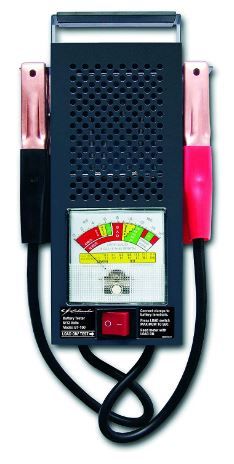
Product information
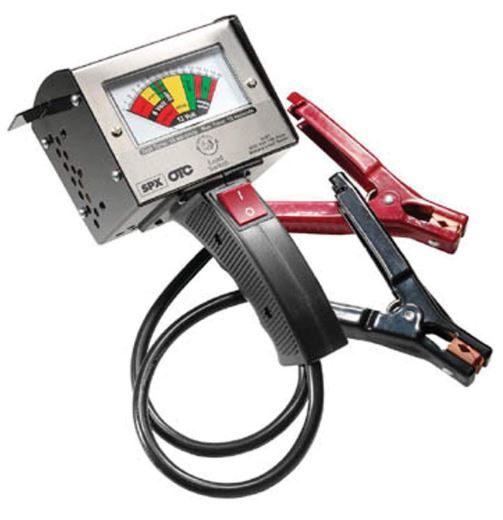
When it comes to battery testing, this device offers the trusted testing you need. It gives you the ability to test load, battery condition, and starter motor draw. The tester is equipped with a 50 Amp load test for 6V batteries and a 100 Amp load test for 12V batteries, catering to a wide range of battery types. With the capacity to test up to 1000 CCA, this tool ensures that your battery's performance is always at its peak.
Beyond just testing, this device delivers a complete diagnosis of your charging system. This comprehensive approach makes it suitable for a variety of vehicles and equipment. Whether you're working with cars, small trucks, RVs, motorcycles, ATVs, boats, or lawn tractors, this tester provides detailed insights into your battery's health. Offering a full charging system diagnosis allows you to take proactive steps in maintaining your battery.
User-friendliness is at the core of this battery tester's design. It features a top-mounted rocker switch, making it incredibly easy to operate. Furthermore, the meter readings are highly visible, ensuring you can quickly and accurately interpret the results. This simple operation, combined with clear readings, makes this battery tester an accessible tool for both professionals and DIY enthusiasts.
The tester also boasts heavy-duty, super-grip battery clamps. These clamps are color-coded, simplifying the process of connecting them to the right terminals. The sturdy construction of these clamps ensures a solid connection during testing, providing accurate and reliable results every time.
Durability is another key feature of this battery tester. It's housed in a robust steel case, designed to withstand the rigors of regular use. The case is coated with a baked enamel shell for added protection, while a rubber-insulated carrying handle enhances portability. Additionally, the case is ventilated to stay cool, ensuring the tester operates efficiently even under heavy load. With its combination of trusted testing, comprehensive diagnosis, easy operation, heavy-duty clamps, and durable design, this battery tester is a valuable tool for maintaining optimal battery health.

Considering that it is built cheaply, it will do a good job. Simple to use.

The clamps are weak. Quality control needs improving. Some users reported smoke while checking the loading test.
Our Thoughts - Seems to be made cheaply. The instructions need to be read.

FAQs: Car Battery Testers
What is the best type of battery tester for home use?
A digital conductance tester with an LCD is the best choice for most home users. It is fast (under 30 seconds), safe (no heavy load), compact, and provides a clear pass/fail/replace recommendation along with measured CCA and state of health.
Can a battery tester tell me if my alternator is bad?
Some testers include a charging system test that checks alternator output voltage and ripple. If the alternator is undercharging or overcharging, the tester will flag it. Basic voltage-only testers cannot diagnose alternator problems.
How accurate are cheap battery testers?
Basic LED-indicator testers ($10 to $20) measure voltage only and cannot assess true battery health. They will tell you if the battery is charged, but not whether it can deliver adequate cranking power. For meaningful health data, spend at least $40 to $60 on a digital conductance tester from a reputable brand.
Do I need to disconnect the battery to test it?
For most digital conductance testers, no. You can test the battery while it is connected to the vehicle with the engine off. For carbon pile load testers, some manufacturers recommend disconnecting the battery to prevent voltage spikes from affecting vehicle electronics. Check your tester's manual.
How often should I test my car battery?
At a minimum, once per year for batteries under 3 years old, and every 6 months for batteries over 3 years old. Test before winter, before long trips, and any time you notice slow cranking or electrical issues.
Can a battery tester revive a dead battery?
No. A battery tester only diagnoses. It does not charge or recondition. If the tester indicates the battery needs charging, use a battery charger. If it indicates replacement, the battery has reached the end of its useful life.
What is the difference between a battery tester and a multimeter?
A multimeter measures voltage (and optionally current and resistance) but does not perform CCA, conductance, or load testing. A dedicated battery tester applies specific test protocols designed to evaluate battery health, not just voltage. A multimeter can tell you the battery's charge level. A battery tester can tell you whether the battery is healthy.
Should I test a new battery before installing it?
Yes. New batteries can sit on shelves for months and lose charge. A quick test confirms the battery is fully charged and within CCA spec before installation. If a new battery tests below its rated CCA, replace it.
Check out the battery reviews below.
 Save With Reviews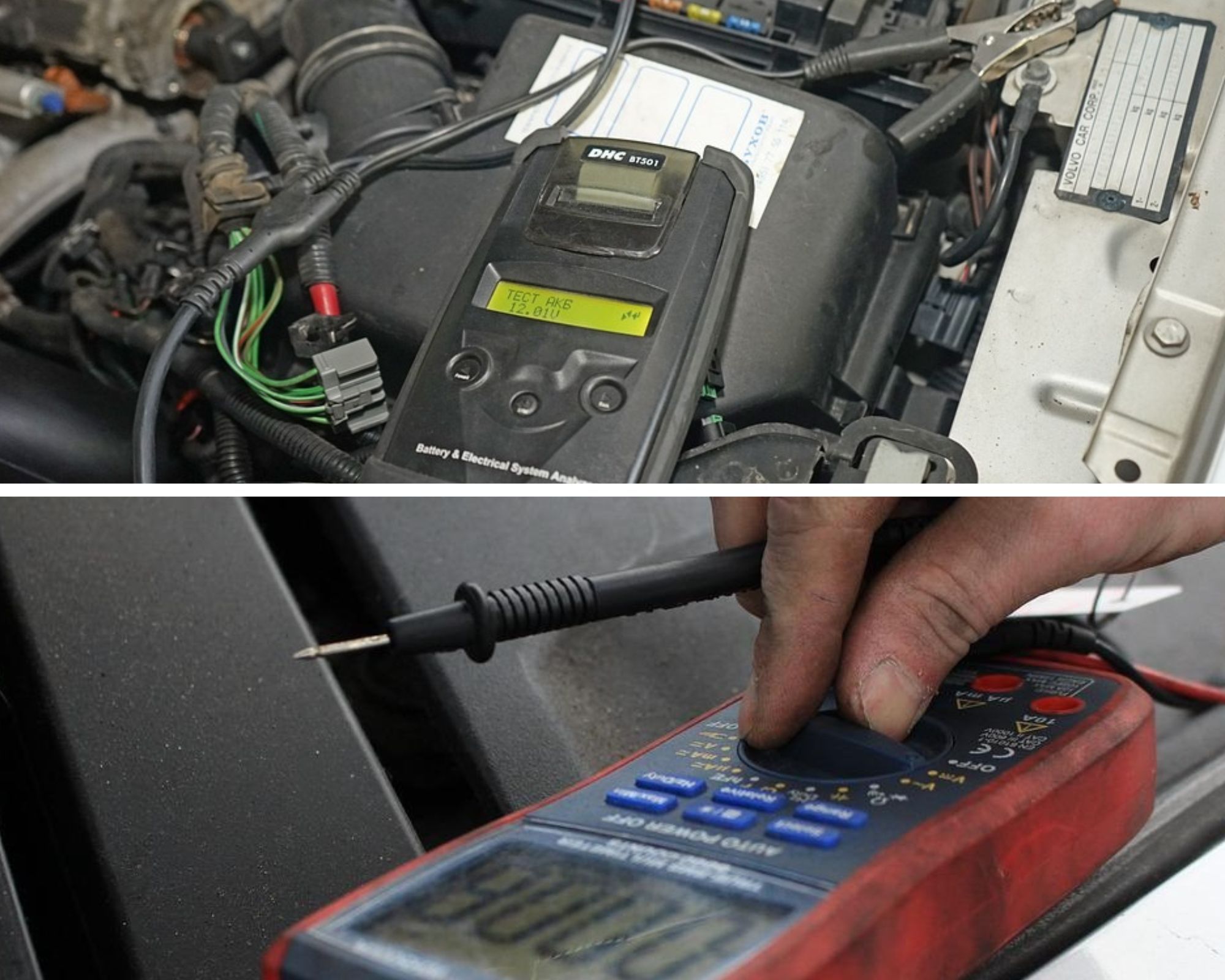
 Save With Reviews
 Save With Reviews